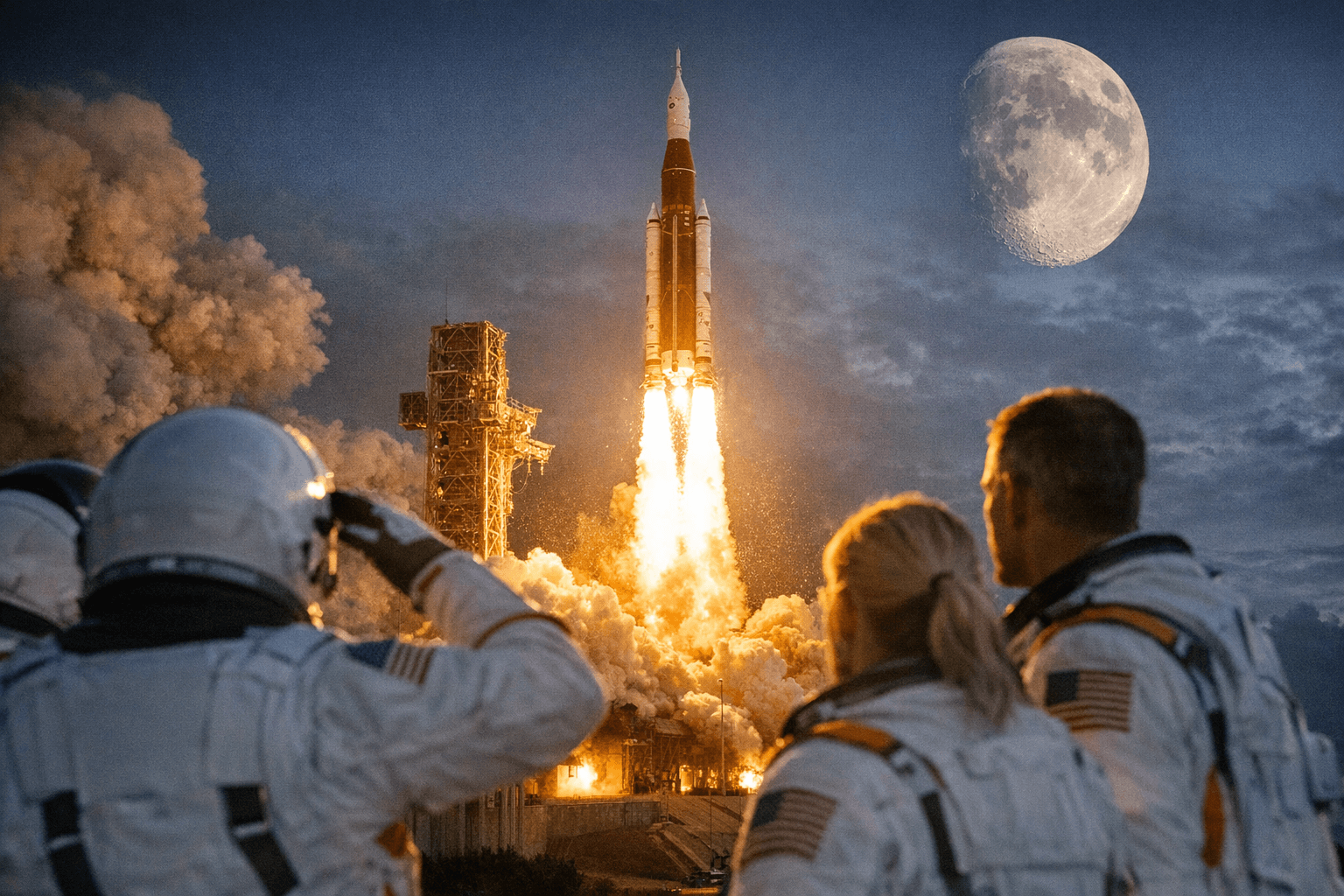
Artemis II Crew Approaches Historic Lunar Flyby, Describing Far Side Views
Artemis II broke Apollo 13's 56-year distance record Monday, carrying four astronauts to 252,757 miles from Earth during humanity's first crewed lunar flyby since 1972.
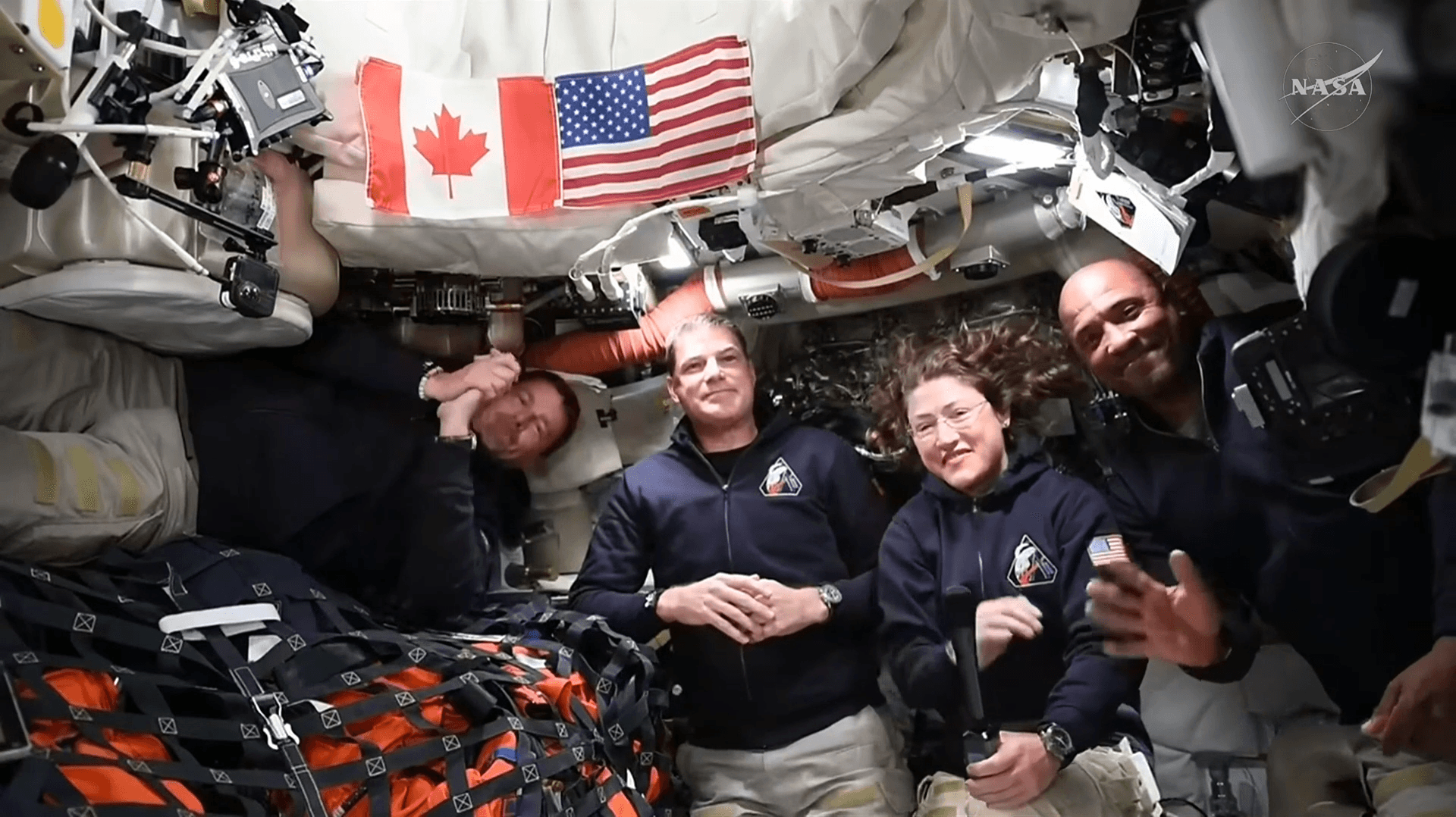
The Artemis II crew broke a record that had stood for 56 years Monday, surpassing the 248,655-mile mark set during the Apollo 13 emergency at 1:56 p.m. ET as Commander Reid Wiseman, Pilot Victor Glover, and Mission Specialists Christina Koch and Jeremy Hansen became the farthest-traveling humans in history. By 7:05 p.m. ET, Orion reached its maximum distance of 252,757 miles from Earth, beating Apollo 13's record by 4,102 miles.
The irony of the comparison runs deep. Apollo 13's figure-eight free-return trajectory in April 1970 was an improvised survival maneuver after an oxygen tank explosion forced James Lovell, Jack Swigert, and Fred Haise to abort their planned lunar landing. Artemis II follows the identical orbital path, but as a meticulously engineered test of Orion's human-rated deep-space systems rather than a desperate bid to bring a crew home alive.
During the mission's formal lunar observation window, which ran from 1:45 p.m. through 8:20 p.m. CT, the crew photographed and filmed the Moon from within approximately 4,066 to 4,070 miles of its surface. The closest approach included views of the lunar far side, the hemisphere permanently turned away from Earth that no human had seen until Apollo 8 in 1968. One crew member, speaking from inside the Orion capsule, described the sight as "not the moon that I'm used to seeing," conveying both awe and disorientation at terrain that carries none of the familiar markings visible from any backyard on Earth. One limiting factor shaped what they could see: because Artemis II launched on April 1, the rendezvous left less of the far side illuminated than other launch windows would have afforded.
Lori Glaze, who leads NASA's Artemis program, said Monday that "our mission continues to go incredibly well," as the crew prepared to address the public live from the Orion spacecraft at approximately 9:30 p.m. CT. The crew also glimpsed the lunar south pole during the flyby, the targeted landing site for Artemis IV, currently scheduled as the first crewed lunar surface mission for early 2028.
This is the first time Orion has flown with a human crew. Artemis I, launched in November 2022, was an uncrewed test of the same spacecraft and Space Launch System rocket, a vehicle weighing approximately 5.75 million pounds that launches on twin solid rocket boosters alongside four RS-25 engines. The April 1 departure from Launch Complex 39B at Kennedy Space Center was the first crewed launch from that pad since STS-116 in December 2006.
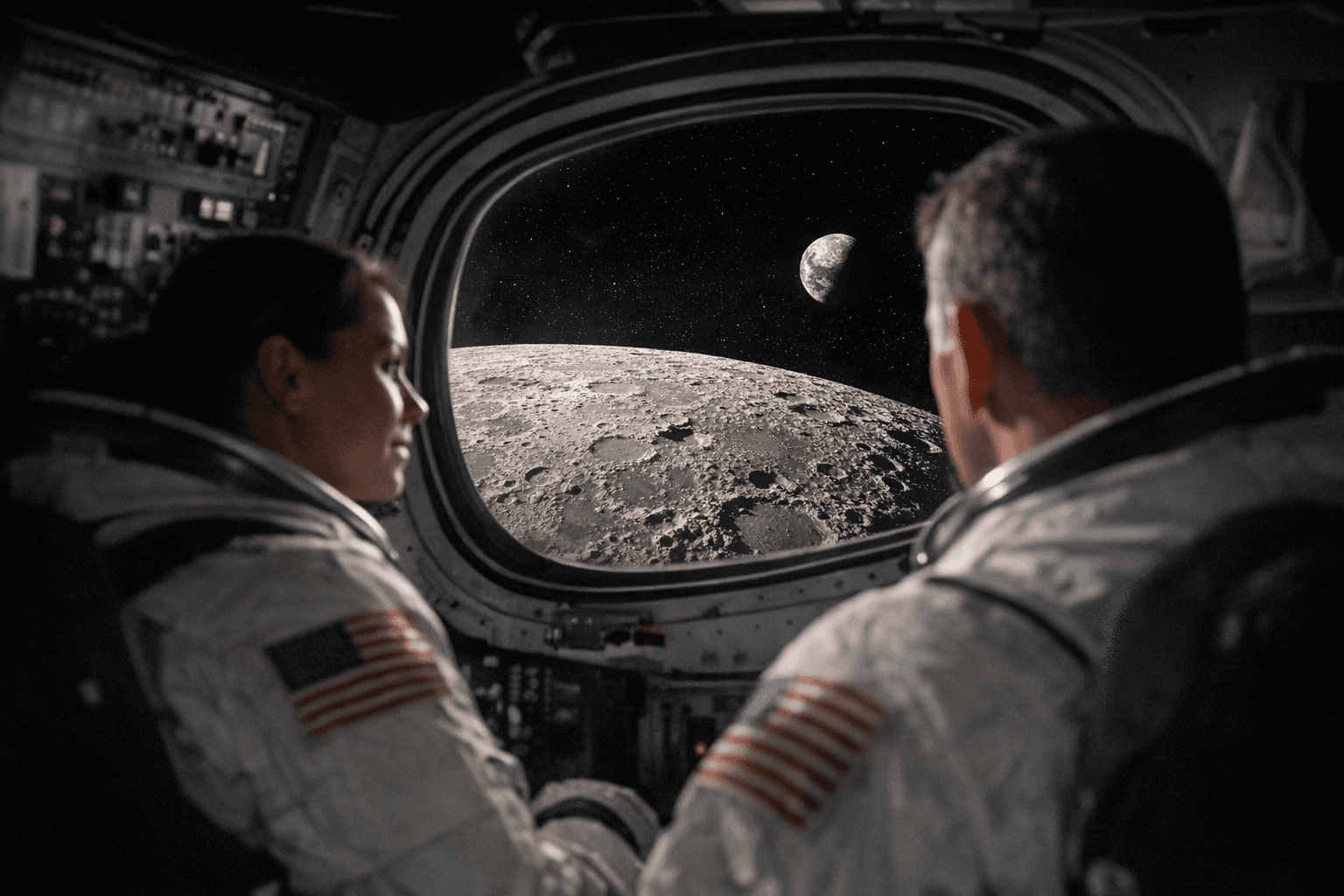
In the days before Monday's flyby, the crew demonstrated their Orion suits, tested emergency communications in deep space, practiced medical response procedures, and configured the cabin for the observation window. Each systems check feeds directly into the risk calculus for Artemis IV.
No human has traveled beyond low Earth orbit since Gene Cernan commanded Apollo 17 in December 1972. Hansen, representing the Canadian Space Agency, became the first Canadian to travel toward the Moon on this mission, while Koch became the first woman to fly on a lunar mission. The approximately 10-day mission concludes with a splashdown off San Diego, the first crewed return from the vicinity of the Moon in more than 53 years.
NASA Administrator Jared Isaacman is watching mission results closely as the agency prepares for Artemis III, now restructured as a mid-2027 low Earth orbit demonstration to test commercial lunar landers from SpaceX and Blue Origin before any crew descends to the surface.
Know something we missed? Have a correction or additional information?
Submit a Tip