Internet Brain Rot Has Escaped Our Phones and Infected Everything
Meme culture, once a harmless internet quirk, now shapes elections, public health outcomes, and official White House policy — with measurable, high-stakes consequences.
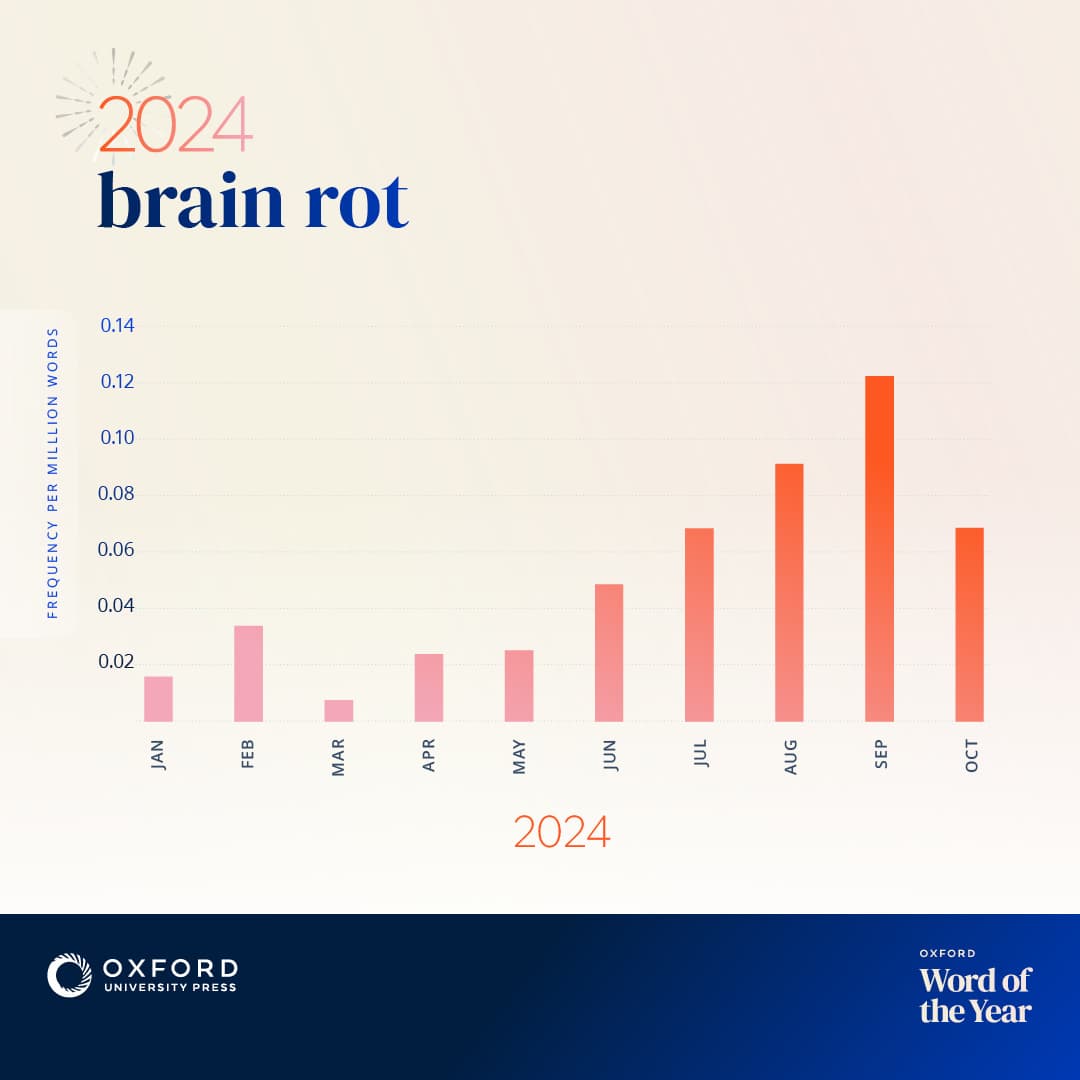
When Oxford University Press named "brain rot" its Word of the Year for 2024, chosen after a public vote of more than 37,000 people, it wasn't just crowning a viral phrase. It was acknowledging something that researchers, strategists, and public health officials had been watching with mounting alarm: the logic of the internet feed, with its compression of nuance into shareable absurdity, had long since jumped the boundary of your phone screen. It now runs through the circuits of democratic elections, official government communication, and medical decision-making alike.
What "Brain Rot" Actually Means
Oxford defines "brain rot" as the "supposed deterioration of a person's mental or intellectual state" resulting from the consumption of excessive amounts of low-quality online content. The term's usage frequency increased by 230% between 2023 and 2024. That is a staggering velocity for any piece of language, but the etymology makes the cultural moment even sharper: its first recorded use appeared in 1854 in Henry David Thoreau's book "Walden," in which Thoreau criticized society's tendency to devalue complex ideas. Thoreau was worried about tabloid newspapers. He could not have imagined TikTok.
Initially gaining traction on social media platforms, particularly among Gen Z and Gen Alpha communities on TikTok, "brain rot" is now seeing more widespread use in mainstream journalism, amid concerns about the negative impact of overconsuming online content. Casper Grathwohl, president of Oxford Languages, captured the stakes plainly: "brain rot speaks to one of the perceived dangers of virtual life, and how we are using our free time." The danger, it turns out, isn't merely personal. It's structural.
The Mechanics of Meme Logic
The core problem with brain rot as a governance and information crisis is mechanical: memes compress. A 500-page climate bill becomes a reaction GIF. A contested immigration statistic becomes a two-second caption. An entire public health campaign collapses into a shareable image with a slogan. One industry report described the condition as requiring "at least two videos playing at the same time to hold our attention for more than just a few seconds, or videos that are so potently absurd they can't be ignored." When that is the audience's baseline state, nuanced policy communication doesn't just struggle; it becomes structurally impossible.
The same format that makes a meme share-worthy, its emotional punch, its in-group shorthand, its refusal of complexity, also makes it a vehicle for distortion. And once a distorted frame goes viral, correcting it is orders of magnitude harder than spreading it.
Case Study: The 2024 Election
The 2024 U.S. presidential election was the first campaign cycle in which brain rot aesthetics became a deliberate strategic tool at the highest levels. Gone were the days of press releases and dry interviews; political marketing thrived on TikTok, packed with flashing graphics, memes, and Gen Z slang. Parties leaned hard into viral trends like Italian AI brain rot videos, Minecraft parodies, and popular movie audios to grab young voters' attention.
The effects went beyond campaign aesthetics. According to a Brookings Institution analysis, disinformation defined the 2024 election narrative because it was "disseminated broadly on social media platforms, promoted through funny memes, picked up and publicized by mainstream media outlets, circulated by internet mega-influencers, and amplified by leading candidates during rallies, debates, and interviews." The pipeline is the point: a meme born in an anonymous forum could, within days, surface in a presidential debate. The joke becomes the message; the message shapes the vote.
Research specifically investigating how political memes on TikTok affected the 2024 U.S. presidential election found that, despite the rapid growth of video-based memes, their actual influence on politics remains underexplored — a lag that itself represents a risk. Campaigns are deploying tools whose downstream effects on voter perception and political extremism are still being measured in real time.
Case Study: Governing by Meme
Nowhere has brain rot logic colonized official communication more completely than in the current White House. The Trump administration has developed a communication strategy that relies on viral moments, custom-made memes, and snarky insults to reach audiences in the digital age. To mark the first six months of President Donald Trump's second term, the White House shared a social media post promising three things would continue: the "winning," the deportations, and the memes.
The administration defended its use of memes explicitly: "Nowhere in the Constitution does it say we can't post banger memes," the White House posted in July. "The memes will continue," it posted days later. The official White House account ran memes about seizing Greenland. Agencies began posting songs associated with white supremacists and QAnon slogans. The Trump administration also posted deepfake videos, including one depicting Project 2025's co-author as the "Grim Reaper" and another mocking House Minority Leader Hakeem Jeffries.
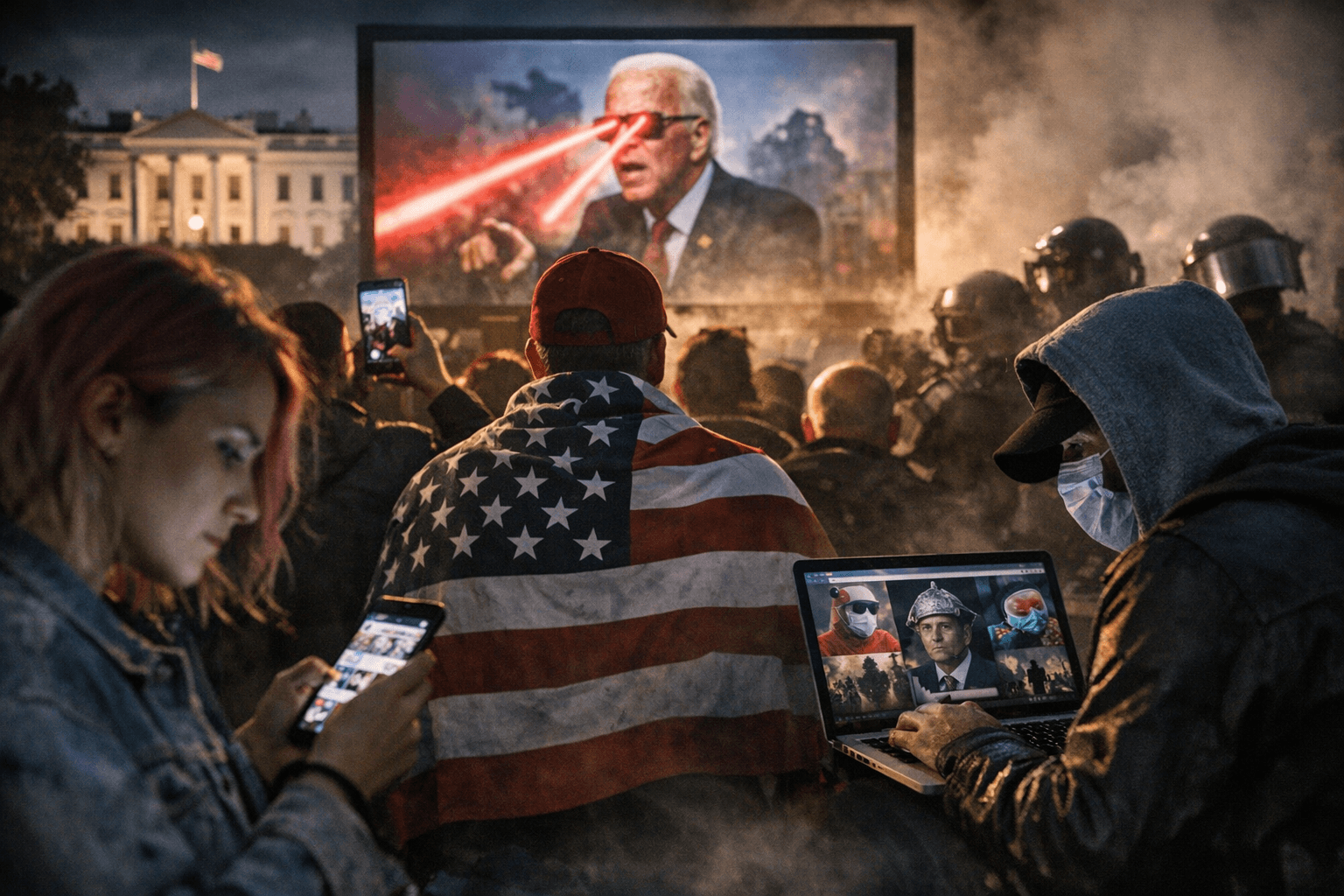
It represents a significant break not only from how past administrations have used social media, but also from how Trump's White House operated online in his first term. Trump himself often favors using informal posts to Truth Social to provide details on critical meetings and policies rather than press releases or more official statements. Parker Butler, who ran the @KamalaHQ accounts as director of digital rapid response for the 2024 Harris campaign, was direct in his assessment: "They are just basically throwing toxic sludge out there and trying to gin up people's reactions," Butler said. "And they call that a digital strategy."
The administration's own digital team framed it differently. In a Fox News account of the One Big Beautiful Bill Act push, Trump's social media staff described a deliberate philosophy: "Our meme-heavy, content-first strategy was aligned with the president's priorities. Digital was not a sideshow. It was a frontline tool for shaping narratives, building momentum, and applying pressure." They added: "We turned policy into content people wanted to share." The question is what gets lost in that translation from policy to shareable content, and who never sees the original.
Case Study: Public Health at Meme Speed
The public health stakes of meme-speed information are quantifiable and serious. A study analyzing 100 trending TikTok videos under the hashtag #covidvaccine found that collectively those videos garnered over 35 million views. The category with the highest number of videos was "Discouraged a Vaccine" (38 videos), followed by "Encouraged a Vaccine" (36 videos). While videos encouraging vaccines garnered over 50% of total cumulative views, the sheer volume and emotional intensity of discouraging content drove comparable engagement.
The asymmetry between spreading misinformation and correcting it is even starker on Facebook. Research published in Science, drawing on a framework combining lab experiments across nearly 19,000 participants and machine learning applied to Facebook's approximately 233 million U.S. users, estimated that the impact of unflagged content that nonetheless encouraged vaccine skepticism was 46-fold greater than that of flagged misinformation. The content doesn't need to be labeled false to do its damage. It simply needs to be emotionally resonant, visually striking, and frictionlessly shareable — all properties that meme formats optimize for by design.
Anti-vaccine sentiment became a powerful gateway to promote potentially harmful health products, with memes used to market unauthorized medical products by directing consumers to online stores. A Columbia University Mailman School of Public Health study found that misinformation about vaccines proliferated on social media and led to rising vaccine hesitancy at a faster rate than public health interventions are able to address.
What Can Actually Be Done
The counters to brain rot's real-world consequences fall into three interlocking categories: media literacy at the individual level, platform incentive reform at the structural level, and newsroom strategy at the institutional level.
Media literacy efforts increasingly focus not on debunking specific false claims, which tend to amplify them through repetition, but on "prebunking": inoculating audiences against manipulation techniques before they encounter specific misleading content. Researchers have found that brief exposure to the mechanics of how memes distort information can reduce susceptibility to that distortion, even when the specific false content is novel.
At the platform level, the problem is that virality algorithms reward exactly the properties that make content misleading: emotional intensity, brevity, and tribal signaling. Reforming those incentives, whether through friction mechanisms that slow sharing, reach limits on unverified health claims, or revenue-sharing models that reward accuracy over engagement, requires regulatory and commercial pressure that has so far outpaced political will.
For newsrooms, the challenge is covering viral narratives without amplifying them. Reporters increasingly face a version of the same compression problem politicians do: a nuanced 2,000-word debunking will never reach the same audience as the meme it corrects. In a situation where public confidence in news reporters is low, the traditional authority of the press as a corrective institution carries diminishing weight. The most effective newsroom strategies in 2025 involve meeting meme logic on its own terrain, native-format explainers, short-form video debunks, and platform-specific distribution, without sacrificing the factual density that distinguishes journalism from content.
Brain rot as a cultural joke, a self-deprecating Gen Z shorthand for doom-scrolling too long, was never just that. It was always a description of a new information architecture, one that compresses, distorts, and amplifies at the speed of a share button. The architecture is now running government communications, shaping election outcomes, and determining whether millions of people vaccinate their children. The phones didn't start the infection. They just made it impossible to quarantine.
This article was produced by Prism’s automated news system from verified source data, official records, and press releases, then run through automated quality and moderation checks before publishing. The system is built and supervised by the people who set the standards it runs under. Read our full AI policy.
Did this article answer your question?