Trump's International Student Crackdown Spreads Far Beyond Elite Universities
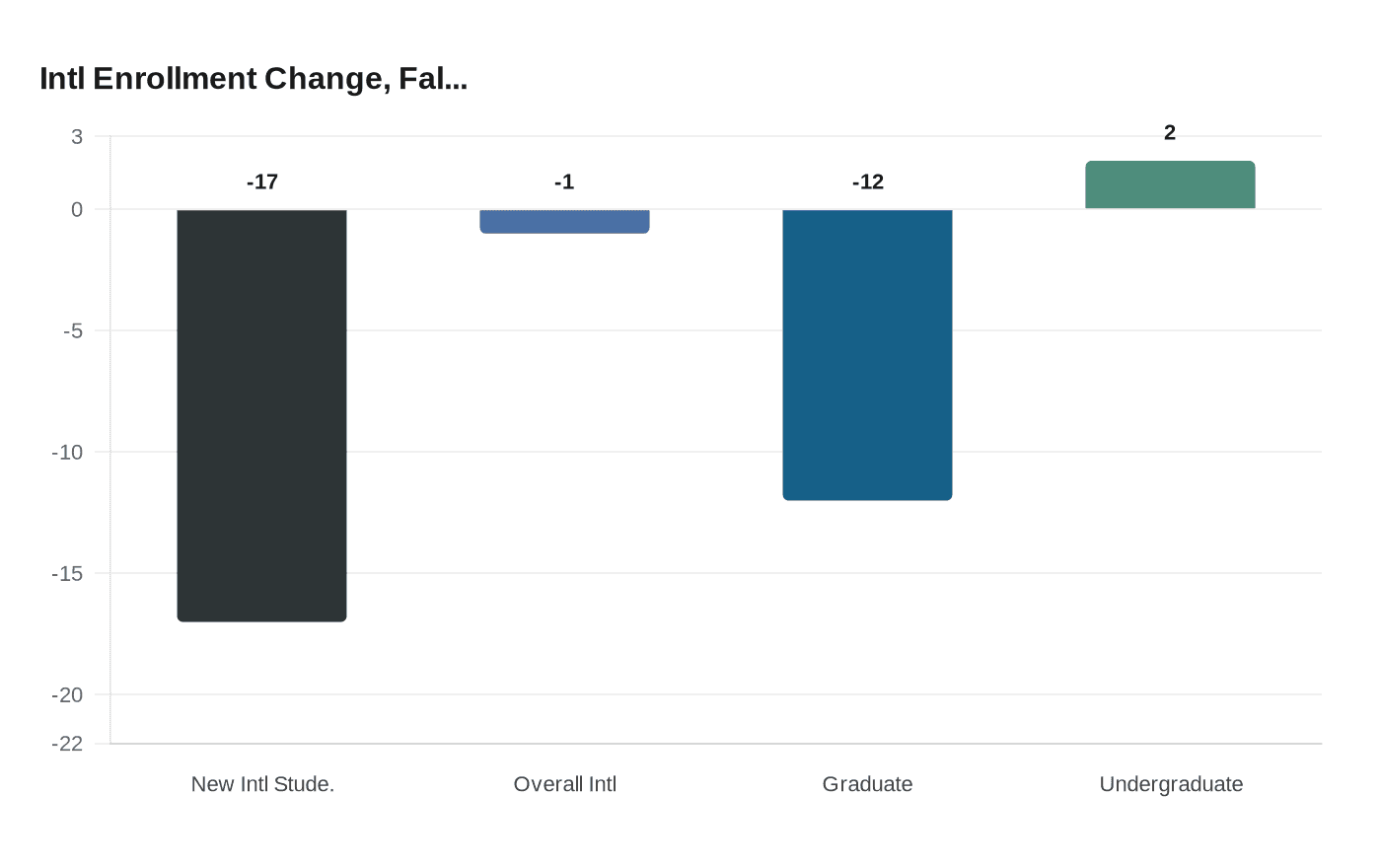
New international student enrollment fell 17% in fall 2025, the steepest nonpandemic drop in 11 years, as visa terminations spread to 280-plus schools in 23 states.
While Harvard and Columbia have absorbed the most headline-grabbing blows in the Trump administration's campaign against international students, the enforcement machinery has reached deep into America's less celebrated campuses, reshaping enrollment ledgers at regional public universities, smaller state schools, and institutions where international tuition revenue is far less cushioned against disruption.
New international student enrollment in U.S. higher education institutions declined by 17% in fall 2025, the largest nonpandemic decline in the last 11 years, according to data from the Institute of International Education. Overall international student enrollment fell 1%, with graduate enrollment down 12% and undergraduate enrollment rising 2%.
The mechanisms driving those numbers go beyond high-profile visa reviews at flagship research universities. Immigration officials rapidly revoked hundreds of student visas, with many more cases going unreported at small colleges anxious to avoid federal scrutiny. Nine students at Texas A&M had their Student Exchange and Visitor Information System records terminated, while two students at the University of Akron, a public regional institution in Ohio, had their SEVIS status terminated and were working with immigration attorneys.
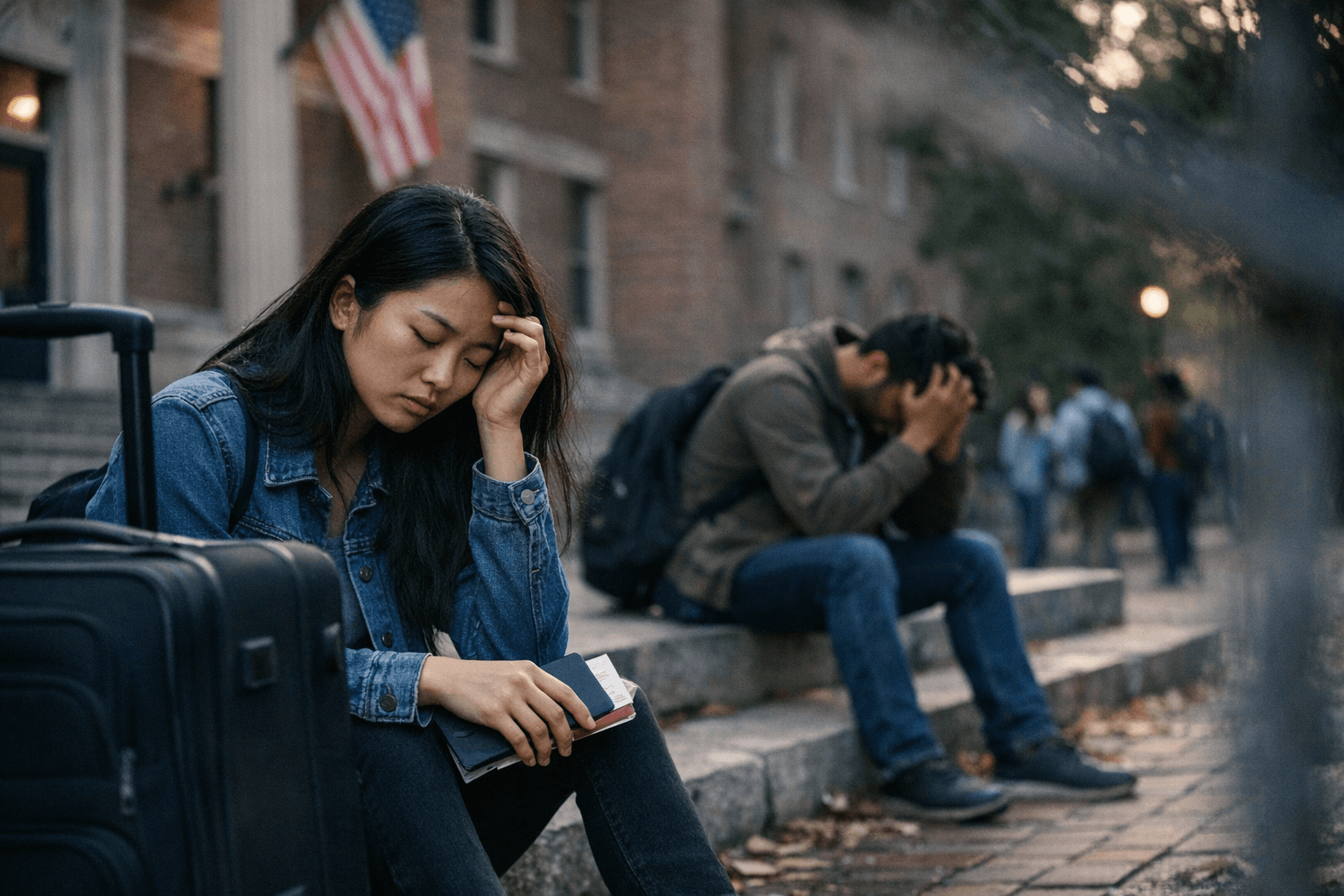
Colleges and universities across the country reported that at least 1,680 international students, but likely thousands more, had their statuses terminated in SEVIS, the federal digital records system that has tracked international student data for over 20 years. By January 2026, the Trump administration said it had revoked 8,000 student visas. In some cases, the terminations appeared to be related to encounters with police where the student was a witness to or even a victim of a crime, rather than a perpetrator.
The geographic spread of the enforcement was striking. More than 280 colleges and universities were affected by SEVIS terminations, and the terminations took place in at least 23 states, hitting large, high-profile institutions as well as much smaller public institutions.
The pipeline of incoming students also contracted sharply before classes began. The number of student visas issued in the summer of 2025 declined by more than 100,000 from the previous summer, falling to 186,160, a drop of 35.6%. The decline came almost 10 months after the Trump administration temporarily froze all student visa interviews in spring 2025.
The economic stakes extend well beyond campus borders. The 1.1 million international students enrolled in U.S. colleges during the 2023-24 academic year contributed a record $43.8 billion to the economy and supported more than 378,000 American jobs, according to NAFSA. Institutions reliant on international student tuition, particularly small private colleges, faced a projected 30-40% enrollment drop in 2025-26, threatening $7 billion in revenue and 60,000 jobs.
Analysts projected another 10-15% decline in new international student enrollment in 2026 if current policies hold, raising the prospect that the U.S. could permanently cede market share to Canada and Europe, particularly in high-demand STEM graduate programs where international students have long formed the backbone of university research labs.
This article was produced by Prism’s automated news system from verified source data, official records, and press releases, then run through automated quality and moderation checks before publishing. The system is built and supervised by the people who set the standards it runs under. Read our full AI policy.
Did this article answer your question?