Trump Administration Shuts Down CIA World Factbook, Eliminating Free Global Reference
The CIA's 64-year-old World Factbook vanished from the internet on February 4, 2026, leaving teachers, librarians, and researchers scrambling for a trusted replacement.
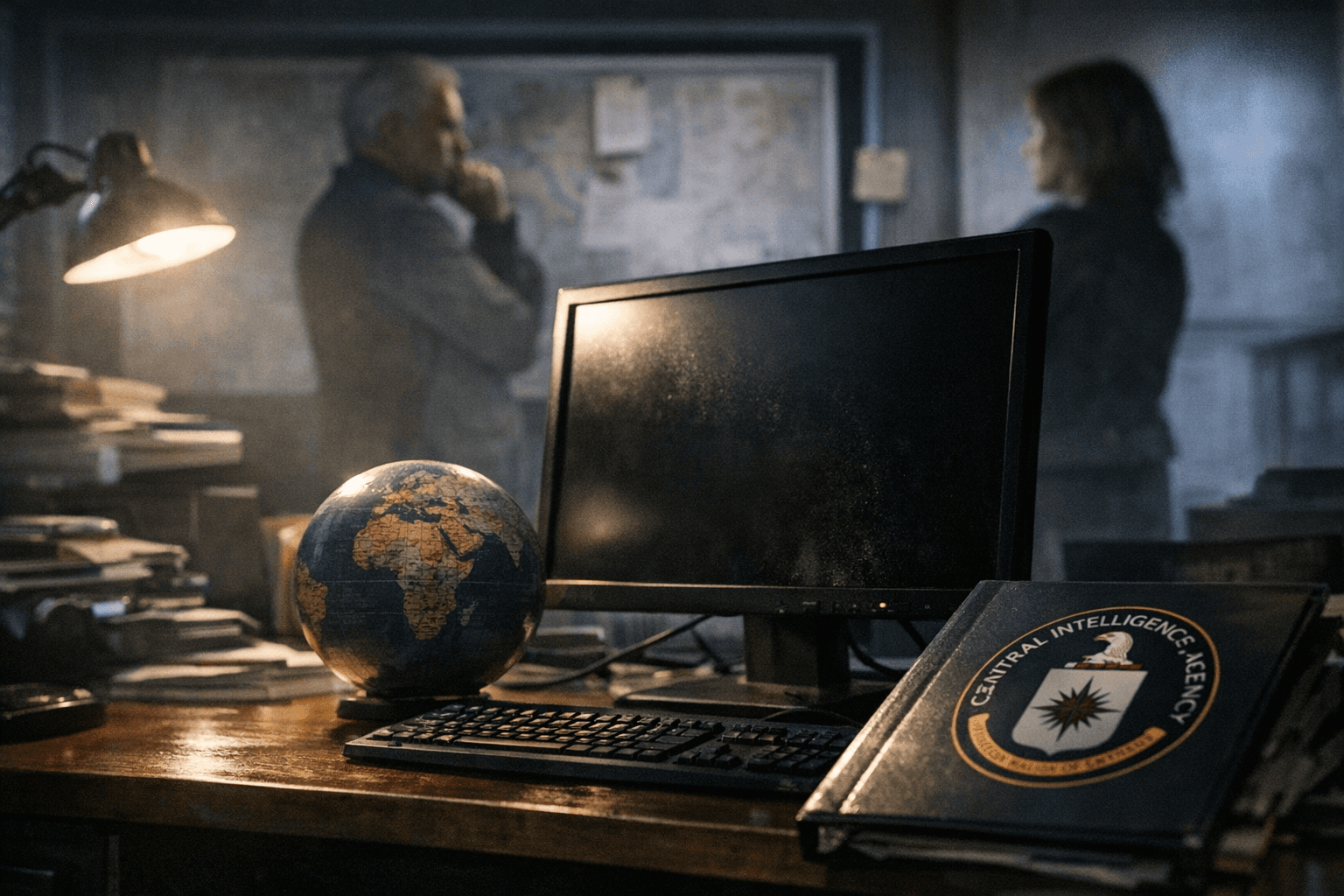
Without advance notice or public explanation, the Trump administration pulled the CIA World Factbook offline on February 4, 2026, ending more than six decades of free, government-produced country data that educators, journalists, librarians, and policymakers had treated as the unimpeachable baseline for understanding the world.
The site, which the CIA itself described in 2020 as "a resource used by presidents, by warfighters, and by the world's greatest scholars," was replaced by a brief farewell message. "Though the World Factbook is gone, in the spirit of its global reach and legacy, we hope you will stay curious about the world and find ways to explore it in person or virtually," the CIA posted on its website, without elaborating on what prompted the shutdown or whether any of the material would be archived.
The Factbook began as a classified Cold War document titled The National Basic Intelligence Factbook in 1962, before an unclassified companion appeared in 1971. A public version, renamed The World Factbook, launched in print in 1981 and moved online in 1997. The website drew millions of views each year, according to the CIA.
The closure landed mid-lesson for Taylor Hale, a sixth-grade teacher in Oklahoma City. Hale had instructed his students to compare the gross domestic products of Honduras, El Salvador, and Nicaragua when they informed him the site was gone. Instead of the usual country index, they found a blue webpage announcing the Factbook was no more. Hale said the Factbook was "way better than a lot of other sources out there" and found it invaluable for assignments on topics like gross domestic product and demographics.
Boston Public Library researcher John Devine called it "the singular best source" for population statistics, citing annual updates that were more consistent than those of other sources.
Alexi Lenington, a high school social studies teacher in Texas, had just co-announced a schoolwide initiative in which students would explore and present information about various cultures, and his guide recommended starting with The World Factbook on the very first page. "It was just raw data, so nobody could accuse me of having an agenda or anything, which is important if you're teaching in Texas," Lenington said.
Simon Willison, a programmer who works on data journalism, downloaded the available Factbook data and made it accessible to browse online after the shutdown, though the most recent material in that archive dates to 2020.
The CIA framed the closure as one of progress for an agency whose core mission has changed, though no specific rationale was offered publicly. The Trump administration had been planning to cut more than 1,000 employees at the CIA and other intelligence agencies, including the National Security Agency, with CIA Director John Ratcliffe described as "moving swiftly to ensure the CIA workforce is responsive to the Administration's national security priorities."
The Factbook's end was part of a broader pattern of federal information removals, including alterations to CDC resources covering HIV and LGBTQ health data and a White House-ordered review of Smithsonian Institution exhibits in August 2025. The Factbook's shutdown came on the same day the Washington Post announced it was laying off a third of its newsroom, including much of its international reporting staff, compressing what had been two separate pillars of accessible global information into a single news cycle.
The CIA gave no indication whether any future public-facing reference would take the Factbook's place.
This article was produced by Prism’s automated news system from verified source data, official records, and press releases, then run through automated quality and moderation checks before publishing. The system is built and supervised by the people who set the standards it runs under. Read our full AI policy.
Did this article answer your question?

