New Mexico Teen Cancer Survivor to Meet Historic First American Pope
Albuquerque teen Elizabeth Solis visited the Vatican through Make-A-Wish New Mexico to meet Pope Leo XIV just weeks into his historic papacy as the first American pope.
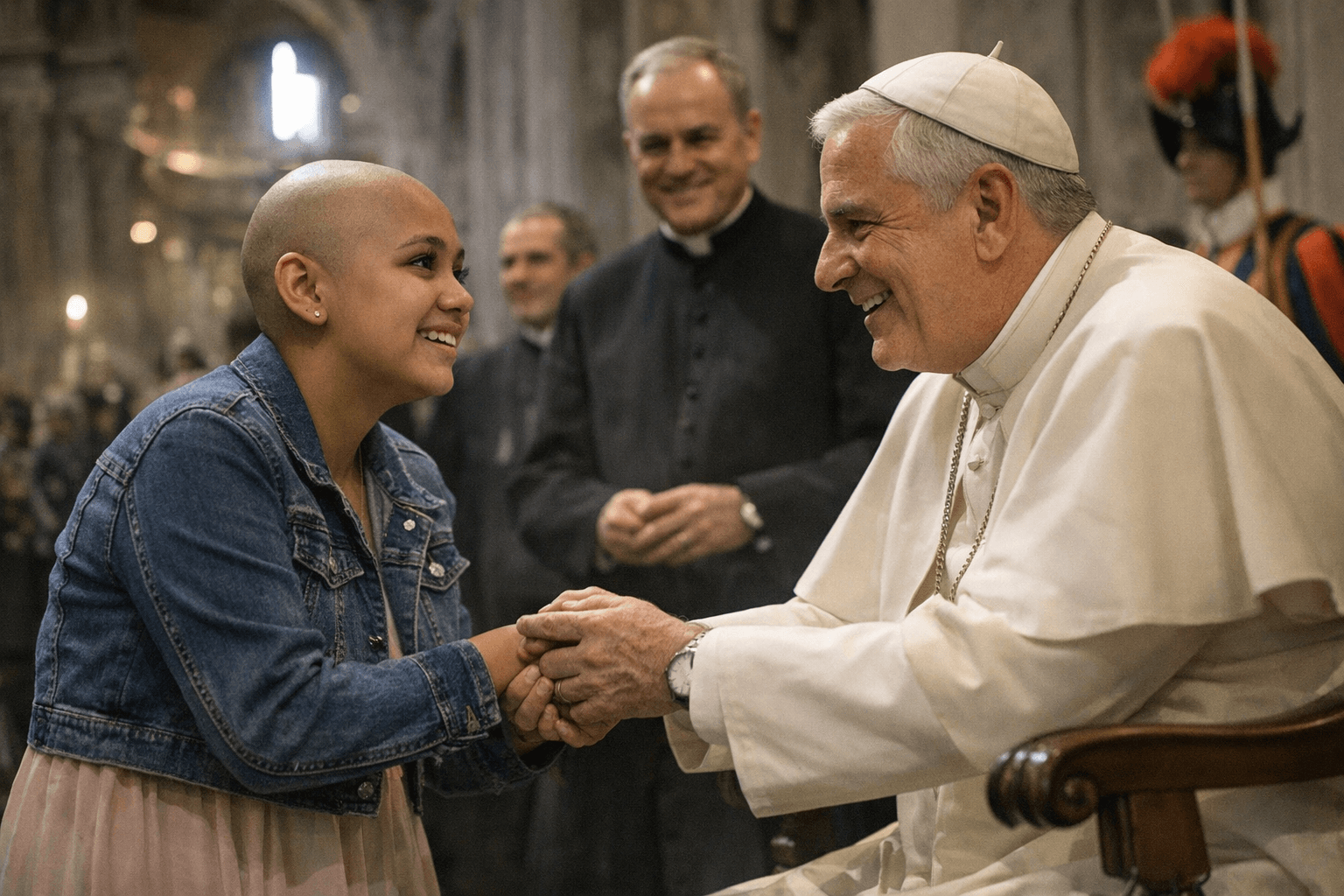
Elizabeth Solis walked into the Vatican in May 2025 carrying a history that most teenagers never face: a cancer diagnosis behind her, and in front of her, an audience with the most recently elected pope in nearly two millennia of Catholic Church history.
Pope Leo XIV, born Robert Francis Prevost on September 14, 1955, in Chicago, had been pope for only weeks when Solis arrived. Elected on May 8, 2025, as the 267th pontiff and the first American-born pope in the history of the Catholic Church, Prevost stepped onto the world stage just as Make-A-Wish New Mexico was finalizing travel clearances, medical documentation, and logistics for the Albuquerque teen's trip. The timing made the visit something the organization almost never encounters: a wish granted within the opening chapter of a new papacy.
Make-A-Wish New Mexico, the regional chapter of the Phoenix-based nonprofit founded in 1980, arranged the audience through coordination with the Holy See, a process requiring medical clearance from the child's care team, Vatican-level scheduling approvals, and family travel logistics assembled under a single funding structure. The organization has granted more than 500,000 wishes across the United States since its founding, when a 7-year-old Phoenix boy named Chris Greicius, diagnosed with leukemia, fulfilled a dream of becoming a police officer before dying shortly after. The foundation built in his name now operates in all 50 states and more than 50 countries, serving children ages 2½ to 18 diagnosed with critical illnesses.
The systems that deliver a wish also reveal the complexity of what cancer survivorship actually demands. The American Cancer Society estimates that between 15,000 and 16,000 children and adolescents are diagnosed with cancer in the United States each year, making cancer the leading disease-related cause of death among children. For survivors, the challenges rarely end at remission. Ongoing medical monitoring, developmental follow-up, and the psychological weight of a life interrupted by illness persist well past the last treatment, in a landscape where institutional support thins out precisely when families most need it.
The papal name Leo XIV carries its own weight in that context. Prevost chose it as a tribute to Pope Leo XIII, whose 1891 encyclical "Rerum Novarum" became a cornerstone of Catholic social teaching on labor, poverty, and human dignity, themes that resonate in the underfunded world of pediatric oncology, where families routinely navigate financial ruin alongside medical trauma. Prevost's own biography deepens the resonance: an Augustinian friar who spent decades as a missionary in Peru, held dual U.S.-Peruvian citizenship, and served as Prefect of the Dicastery for Bishops under Pope Francis before being chosen as his successor following Francis's death.
For Solis, the audience placed a teenager from Albuquerque, newly out of cancer treatment, inside a pontificate the Catholic world was watching with unusual scrutiny. Make-A-Wish's infrastructure made that convergence possible. What the broader health system offers young survivors as they rebuild with ongoing medical needs and no comparable safety net remains a far harder problem to wish away.
This article was produced by Prism’s automated news system from verified source data, official records, and press releases, then run through automated quality and moderation checks before publishing. The system is built and supervised by the people who set the standards it runs under. Read our full AI policy.
Did this article answer your question?

