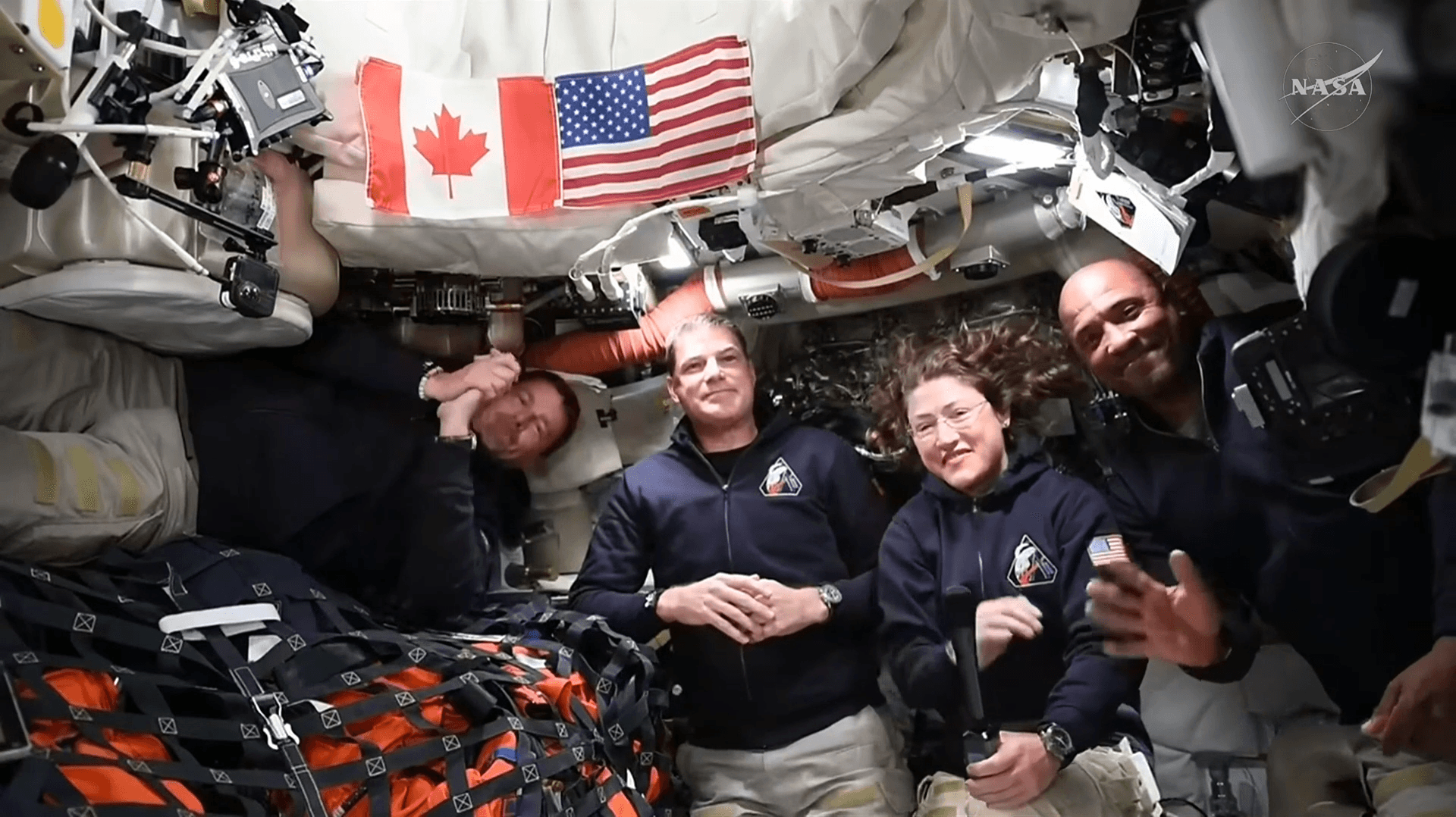
Artemis II Crew Completes Historic Lunar Flyby, Heads Home to Earth
Artemis II reached 252,756 miles from Earth, shattering Apollo 13's 56-year record, as four astronauts completed humanity's first lunar flyby since 1972.
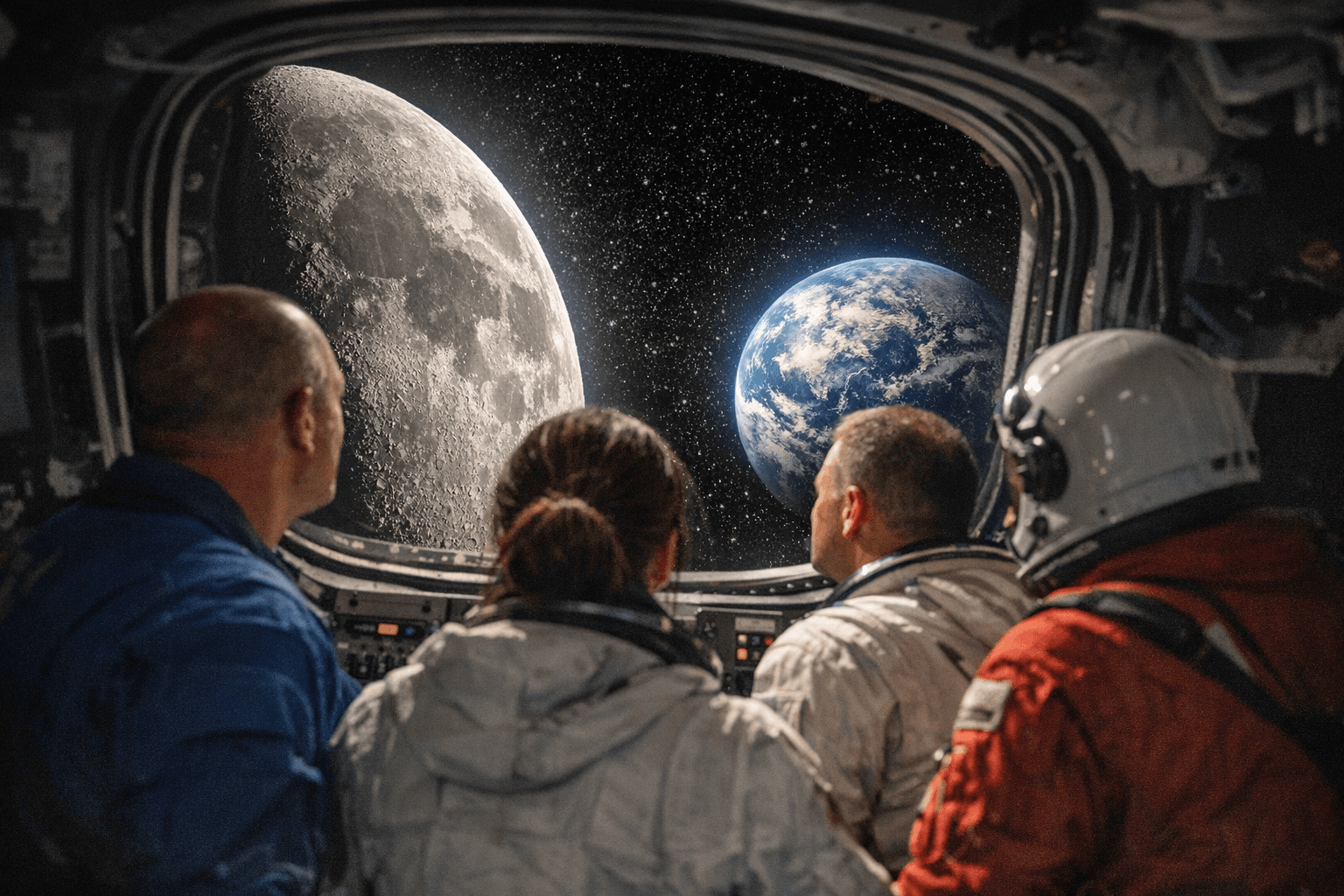
Four astronauts aboard NASA's Orion capsule "Integrity" completed humanity's first crewed lunar flyby since Apollo 17 in 1972 on Monday, traveling 252,756 miles from Earth to shatter a 56-year-old distance record before beginning their journey home.
Commander Reid Wiseman, Pilot Victor Glover, the first Black astronaut assigned to a lunar mission, Mission Specialist Christina Koch, and Mission Specialist Jeremy Hansen of the Canadian Space Agency, the first Canadian to travel to the Moon, launched April 1 from Kennedy Space Center aboard NASA's Space Launch System rocket.
At 1:57 p.m. EDT, the crew broke Apollo 13's distance record of 248,655 miles, set in April 1970 after an oxygen tank explosion forced that crew into an emergency free-return trajectory. Artemis II used the same fuel-conserving free-return path by design and reached its farthest point of 252,756 miles at 7:02 p.m. EDT, more than 4,100 miles beyond any human in history.
The seven-hour flyby included 30 designated lunar targets, among them the Orientale basin, a nearly 600-mile-wide, 3.8-billion-year-old crater, and Hertzsprung basin, a nearly 400-mile-wide formation on the far side. Closest approach came at 4,067 miles at approximately 7:00 p.m. EDT, a vantage point that allowed the crew to view parts of the lunar far side no human had ever seen with the naked eye.
At 6:43 p.m. ET, the Moon cut all contact. Orion slipped behind the lunar surface, blocking radio signals from NASA's Deep Space Network, a global array of antennas in California, Australia, and Spain, for roughly 40 minutes. The first time in more than 50 years that humans were entirely unreachable from Earth, the planned blackout offered a preview of the communication gaps any permanent lunar base would face, and an early benchmark for crew and systems performance under complete signal loss.
Before contact broke, Glover addressed mission control: "Thank you to all of you for allowing us the immense privilege to be on this journey together. It's quite amazing." Capsule Communicator Jenni Gibbons signed off: "From all of us, it's a privilege to witness you carrying the fire past our farthest reach. Thank you. Godspeed."
Retired NASA astronaut and Navy SEAL Chris Cassidy said such blackouts are "sometimes welcome," adding that crew members "will know that they are the only eyes watching the safety of this vehicle, and they'll feel the onus of that responsibility all while they're looking out the window." Wiseman later revealed the four shared maple cream cookies during the silence before returning immediately to science work.
Contact resumed at approximately 7:25 p.m. ET. The crew then witnessed Earthrise, Earth reappearing above the lunar horizon, echoing the iconic Apollo 8 photographs from 1968. Koch, who had an Earthrise photo on her bedroom wall as a child, called it instrumental "both to our crew as our ethos of values, but also just personally to myself."
Hansen, reading a statement as the distance record fell, said the crew honored "the extraordinary efforts and feats of our predecessors" and challenged "this generation and the next to make sure this record is not long-lived." NASA Administrator Jared Isaacman said the four had "traveled farther from Earth than any humans in history." President Trump spoke live with the crew Monday evening, calling them "modern-day pioneers."
Splashdown off San Diego is scheduled for approximately 8 p.m. ET on Friday, April 10, with the USS John P. Murtha on recovery duty. Glover said the crew had accumulated enough knowledge to fill "almost a book" to hand off to Artemis III, planned for next year, with the first crewed lunar surface landing since 1972 as its mission objective.
Sources:
Know something we missed? Have a correction or additional information?
Submit a Tip