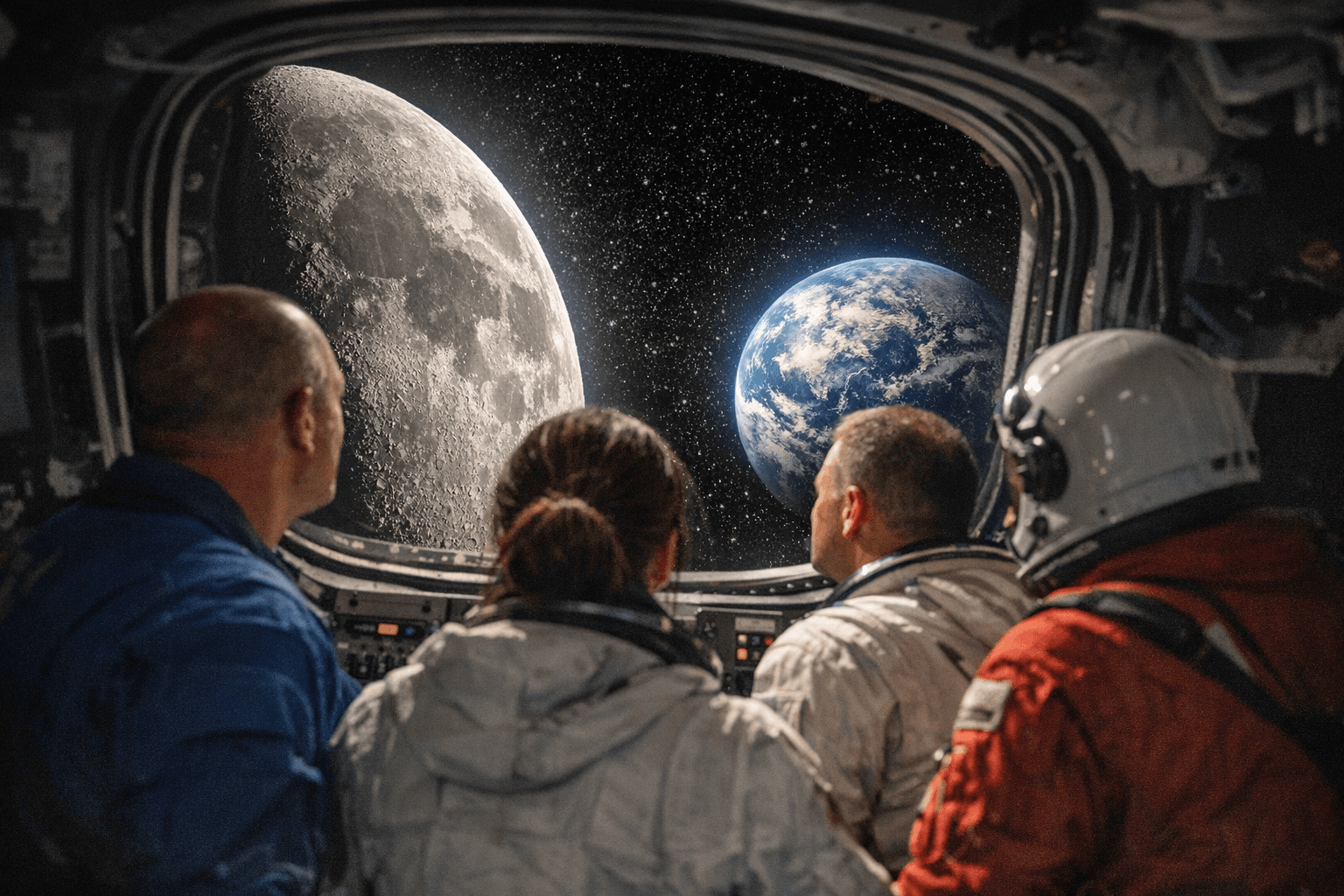
Trump Praises Artemis II Crew After Historic Moon Flyby Distance Record
Six days into Artemis II, the crew broke Apollo 13's 56-year distance record at 252,756 miles from Earth, then took a call from President Trump.
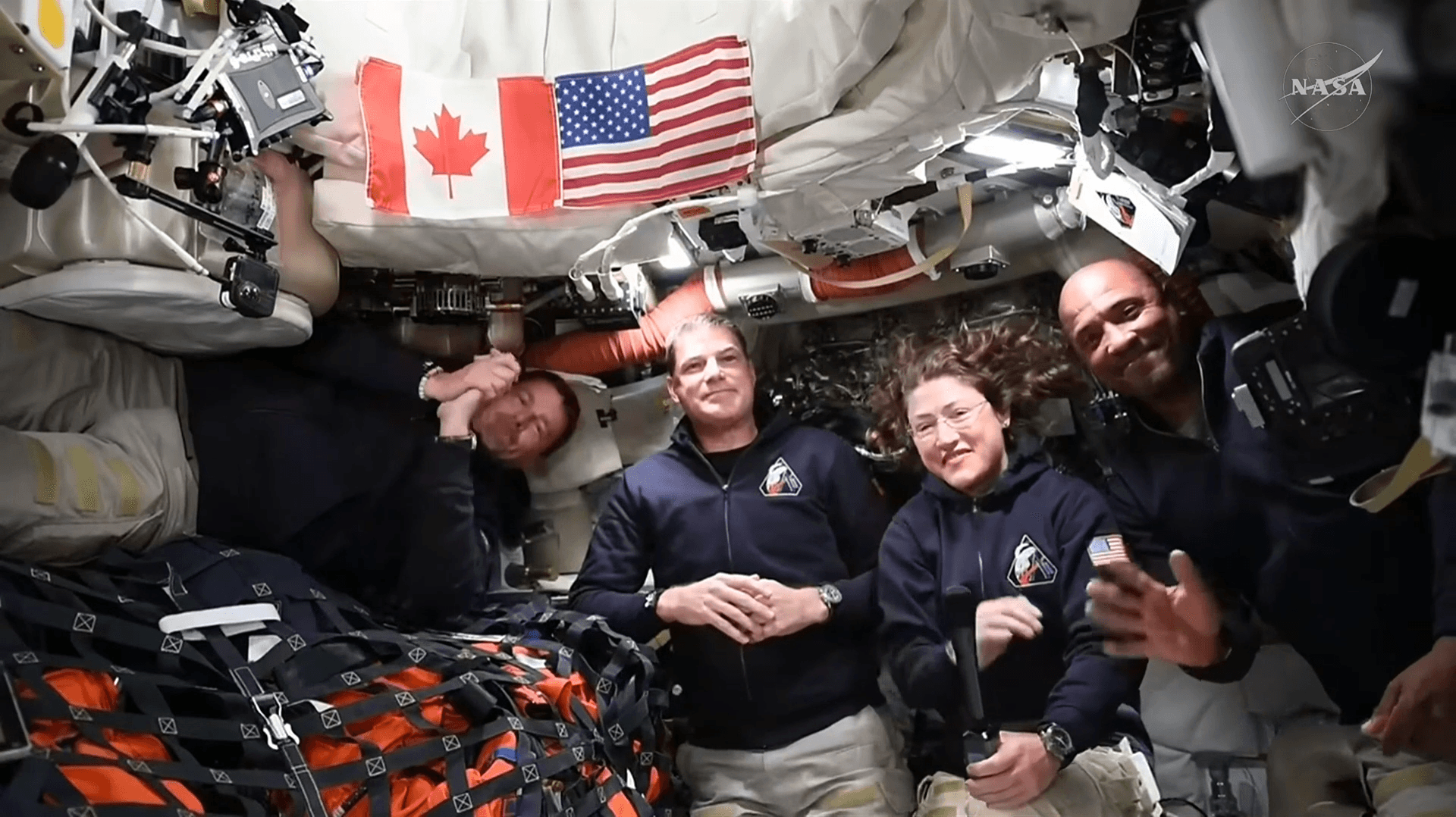
Six days into a voyage that already rewrote the record books, the four astronauts aboard NASA's Orion spacecraft took a phone call from President Trump, who hailed them as "modern-day pioneers" and invited them to the Oval Office upon their return to Earth.
The call came hours after Commander Reid Wiseman, Pilot Victor Glover, Mission Specialist Christina Koch, and Canadian Space Agency astronaut Jeremy Hansen broke Apollo 13's 56-year-old record for the farthest human spaceflight from Earth. At 1:57 p.m. EDT on April 6, the Orion capsule reached approximately 252,756 miles (406,771 km) from Earth, surpassing the previous mark of 248,655 miles (400,171 km) set under harrowing circumstances when Apollo 13's lunar landing was aborted in April 1970. The Artemis II crew had ventured roughly 4,101 miles farther from the planet than any humans before them.
Trump, calling each astronaut by name, told the crew: "Today you've made history and made all of America really proud. Incredibly proud." He also said, "There's nothing like what you're doing, circling around the moon for the first time in more than a half a century, and breaking the all-time record for the farthest distance from planet Earth."
The record came hours after the crew completed a lunar flyby that included a communications blackout as Orion passed over the far side of the Moon. During that pass, the crew witnessed a total solar eclipse from orbit. In a moment that drew a long group hug from all four astronauts, Wiseman named a lunar crater "Carroll," after his late wife.
The crew carries a remarkable set of firsts beyond the distance record itself. Glover, 49, is the first Black astronaut assigned to a lunar mission. Koch, 47, holds the record for the longest single spaceflight by a woman at 328 days. Hansen, 50, is the first Canadian ever to travel beyond low-Earth orbit. NASA has tasked all four with observing, photographing, and analyzing approximately 30 features on the Moon's surface over the course of the 10-day, 685,000-mile mission.
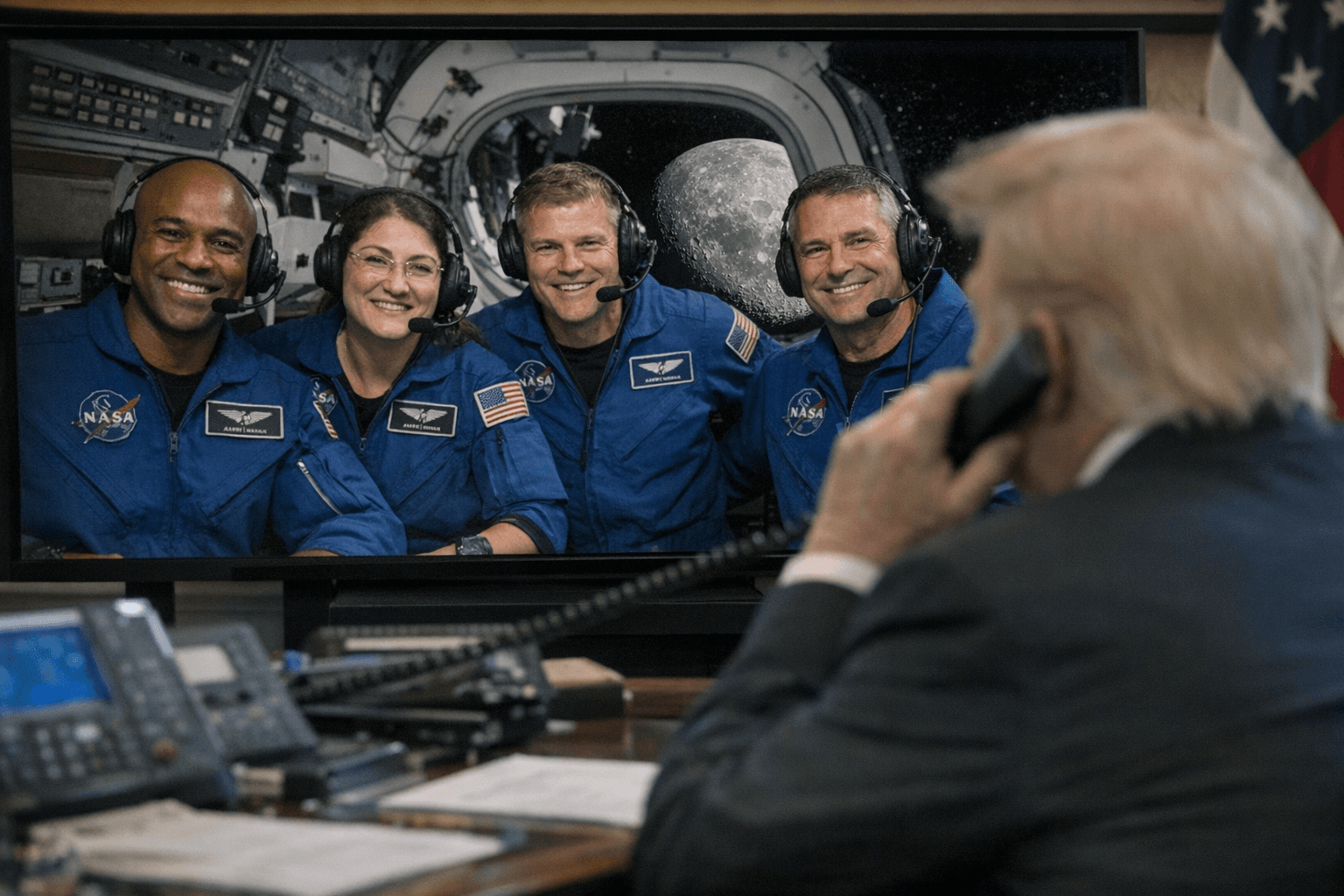
Trump also told Hansen that hockey icon Wayne Gretzky and Canadian Prime Minister Mark Carney were "so proud" of him. Hansen thanked Trump for NASA's partnership with the Canadian Space Agency. Trump added that he would ask the crew for autographs, something he noted he "doesn't really ask for" often.
NASA Administrator Jared Isaacman said in a separate interview that Artemis II would not have been possible "if it wasn't for President Trump," and called Orion's performance "better than we would have expected" before launch. That enthusiasm, however, arrives against an uncomfortable backdrop: just days before the flyby, reports surfaced that the Trump administration had proposed significant cuts to NASA's budget. NASA officials declined to comment on the proposal when asked at a Houston press conference Saturday.
Artemis II launched April 1 at 6:35 p.m. EDT from Launch Pad 39B at Kennedy Space Center in Florida, the second flight of NASA's Space Launch System. It is the first crewed deep-space mission since Apollo 17 in December 1972. The crew is now on its return path to Earth. Re-entry and recovery, the final tests of a mission that has already exceeded expectations at nearly every turn, remain ahead.
Sources:
Know something we missed? Have a correction or additional information?
Submit a Tip