Artemis II Crew Sends Easter Messages Before Historic Moon Pass
Pilot Victor Glover compared Earth to a spaceship in an unrehearsed Easter message from 211,000 miles away, ahead of Monday's record-setting lunar flyby.
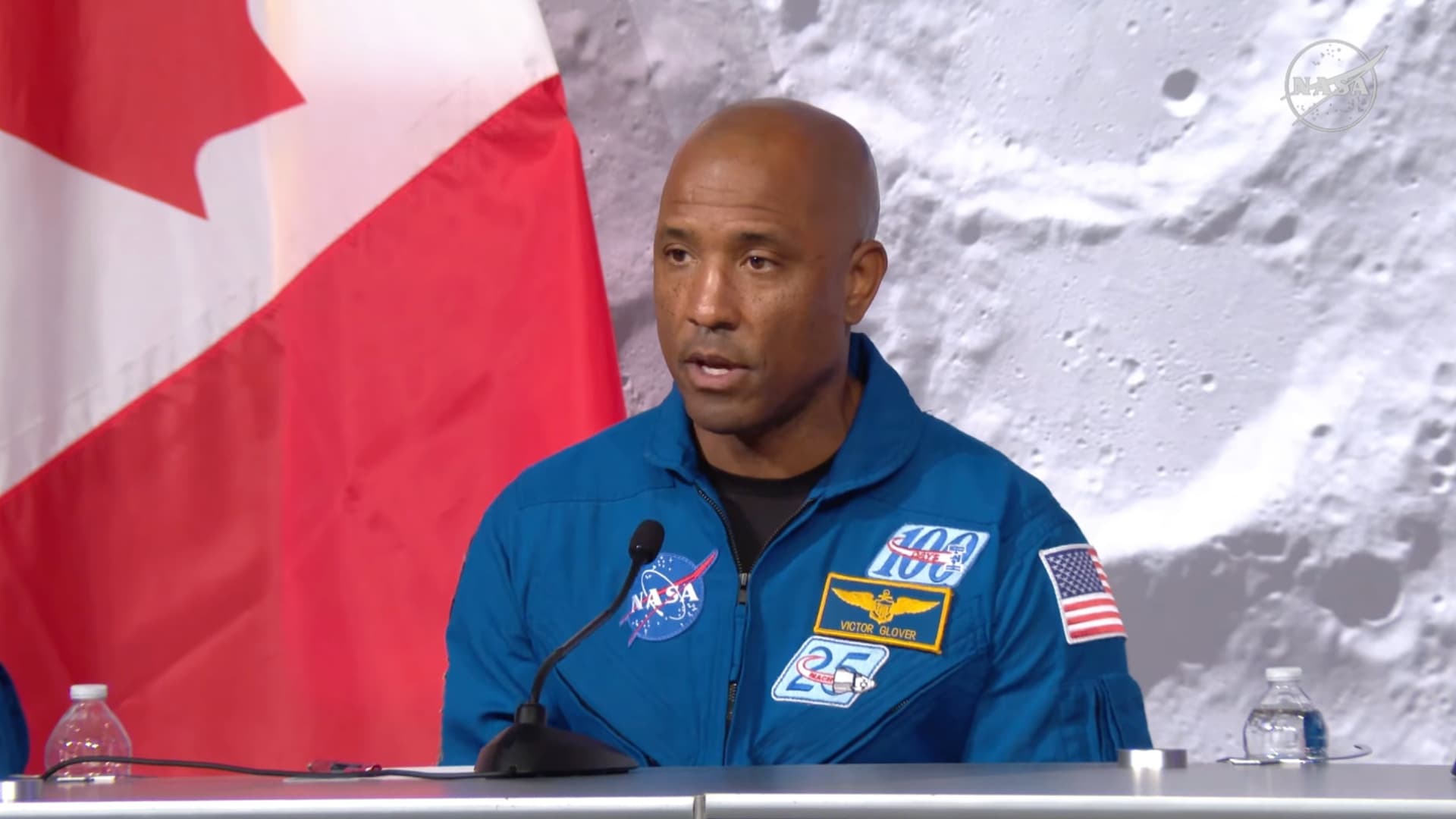
From more than 211,000 miles out, Artemis II pilot Victor Glover delivered an unrehearsed Easter message that drew a quiet parallel between his crew's journey and humanity's place in the cosmos.
Asked by a CBS News reporter on Saturday whether he had Easter thoughts to share, Glover responded without notes. "I don't have anything prepared. I'm glad you brought it up, though; I think these observances are important," he said, before adding: "You guys are talking to us because we're in a spaceship really far from Earth, but you're on a spaceship called Earth that was created to give us a place to live." He concluded: "This is an opportunity for us to remember where we are, who we are, and that we are the same thing, and that we've gotta get through this together."
The moment carried a notable historical echo. The Apollo 8 crew read from the Book of Genesis while orbiting the moon on Christmas Eve 1968, and Artemis II entered the moon's gravitational sphere of influence on Easter Sunday, connecting the two missions across 57 years.
Commander Reid Wiseman brought his own layer of meaning to the holiday, revealing before launch that the mission patch contained deliberate hidden references. "There's some Easter eggs in our patches," Wiseman said. "Some of the folks online have already discovered the Earth is in the Apollo 8 Earthrise formation. So some astute folks have picked up on that on the internet, which I really love." That same photograph inspired the mission's zero-gravity indicator, a plush toy named "Rise," designed by Lucas Ye, an 8-year-old from Mountain View, California, selected from more than 2,600 submissions from over 50 countries.
The crew woke Sunday to CeeLo Green's "Work" and heard a message from Apollo 16 moonwalker Charlie Duke, who once descended to the lunar surface in a module also named Orion. "I'm glad to see a different kind of Orion helping return humans to the moon as America charts the course to the lunar surface," Duke said. The astronauts then ran an operational demonstration in their Orion Crew Survival System suits, pressure suits capable of supplying up to six days of breathable air in a depressurization emergency.
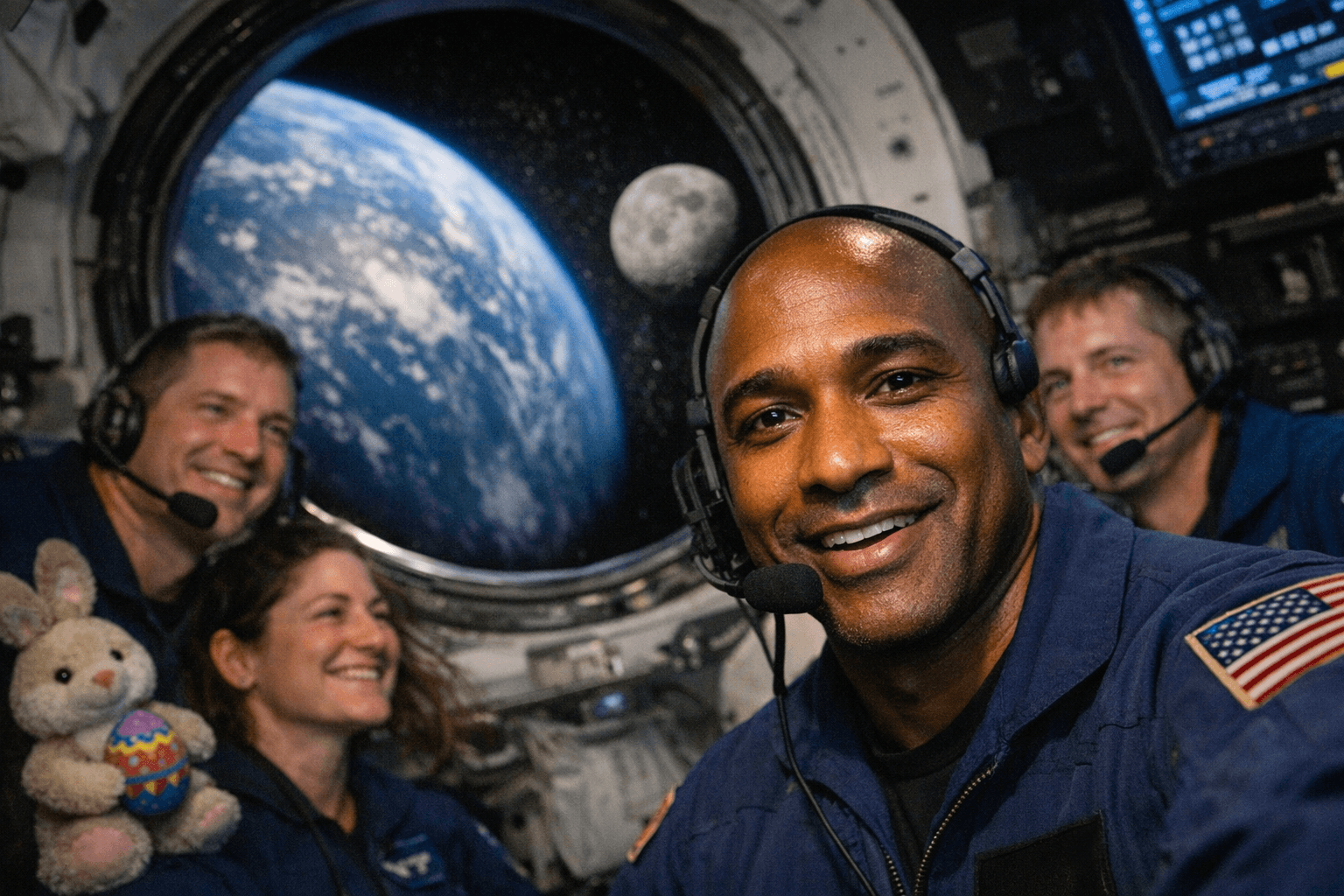
Monday's six-hour flyby carries live NASA coverage beginning at 1 p.m. EDT. At 1:56 p.m. EDT, the crew is expected to pass the Apollo 13 distance record of 248,655 miles, reaching a maximum of 252,757 miles from Earth to become the farthest humans in history. The spacecraft will pass within 4,066 miles of the lunar surface. Working through 30 targeted observation sites across five shifts, the crew will be the first humans to view the full Orientale Basin and will attempt to recreate the original Earthrise photograph from the vantage that inspired their patch.
Launched April 1, 2026, at 6:35 p.m. EDT from Kennedy Space Center pad 39B, Artemis II is the first crewed lunar flight since Apollo 17 in December 1972. Christina Koch, 47, who holds the record for longest single spaceflight by a woman at 328 days, is the first woman to travel to the moon; Victor Glover, 49, is the first Black astronaut assigned to a lunar mission; and Jeremy Hansen, 50, is the first Canadian to travel to the moon.
Splashdown is targeted for April 10 in the Pacific Ocean near San Diego. During the return, the crew plans to radio-link with the International Space Station, the first time a moon crew has had colleagues simultaneously in low-Earth orbit. The mission sets the stage for Artemis III, planned for 2027, which aims to land astronauts on the lunar surface.
This article was produced by Prism’s automated news system from verified source data, official records, and press releases, then run through automated quality and moderation checks before publishing. The system is built and supervised by the people who set the standards it runs under. Read our full AI policy.
Did this article answer your question?