Artemis II Launches, Returning Humans Beyond Earth Orbit After 53 Years
NASA's Artemis II carried the first woman, first person of color, and first Canadian beyond Earth orbit on April 1, ending a 53-year gap in crewed deep space flight.
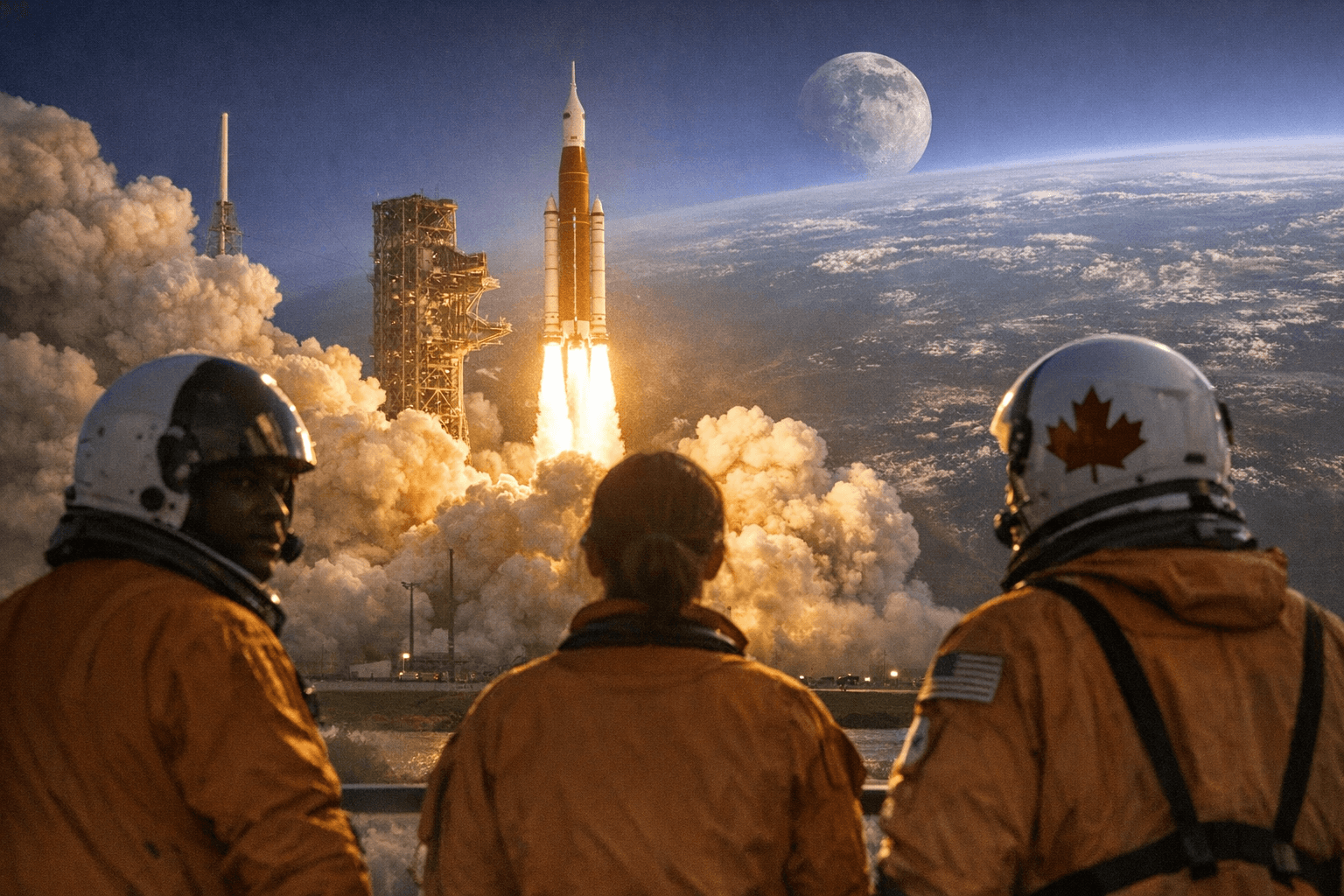
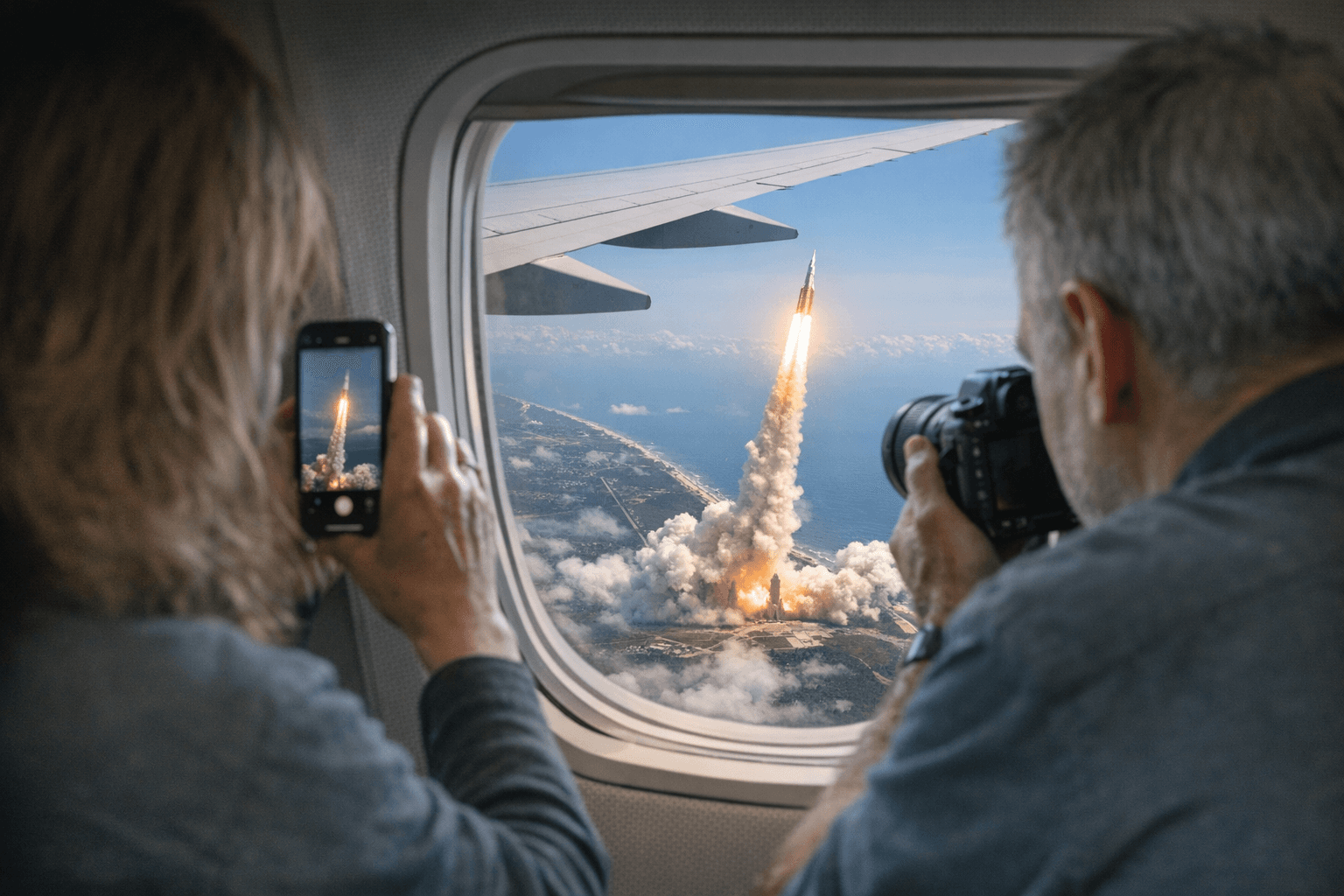
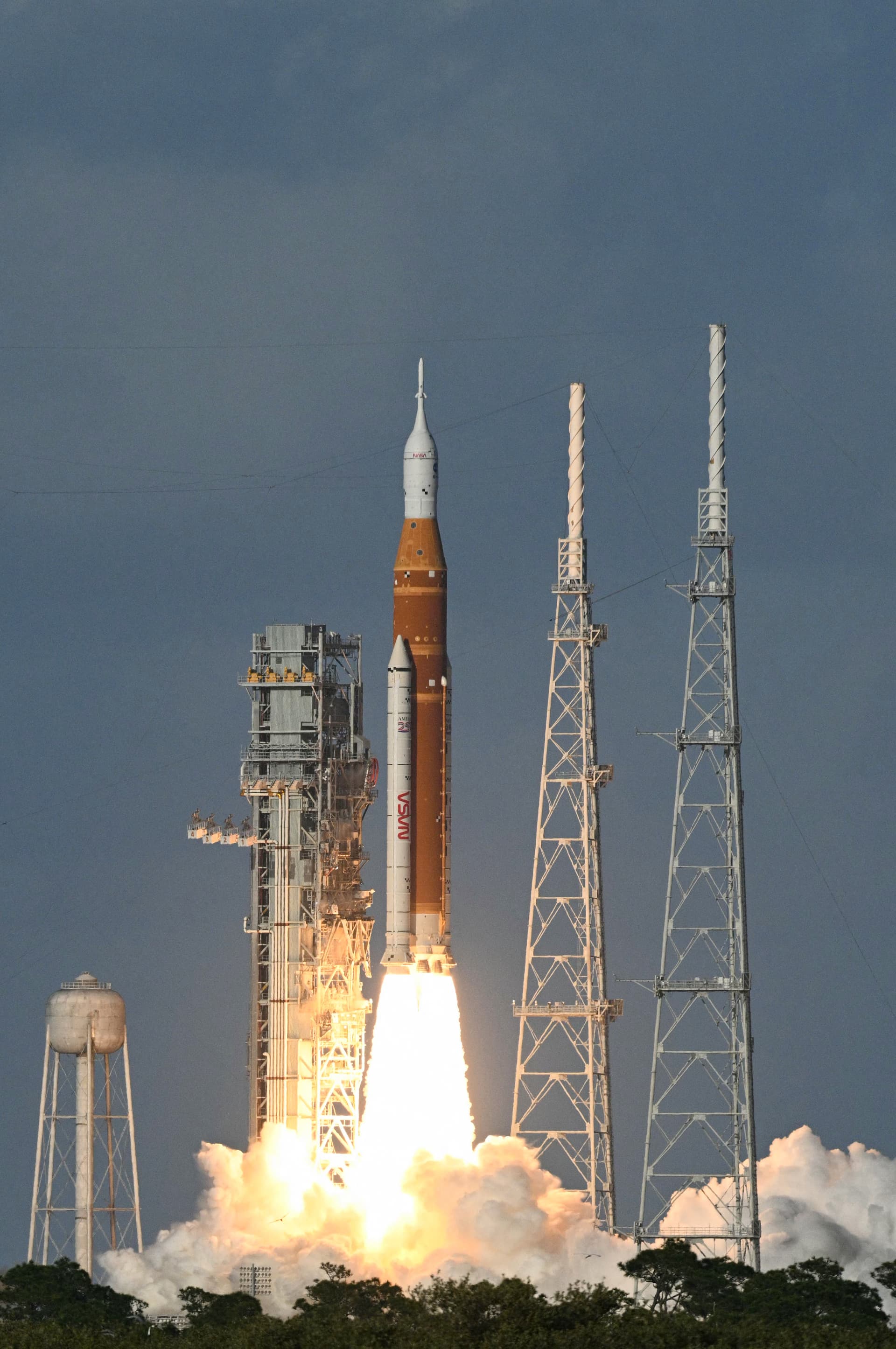
For the first time since Gene Cernan climbed the ladder of Apollo 17's lunar module in December 1972, humans are bound for the Moon. NASA's Artemis II lifted off from Launch Complex 39B at Kennedy Space Center at 6:24 p.m. EDT on April 1, 2026, carrying four astronauts on a 10-day free-return trajectory around the Moon and back, a journey of nearly 700,000 miles that closed more than half a century's gap in crewed deep space exploration.
Commander Reid Wiseman, Pilot Victor Glover, Mission Specialist Christina Hammock Koch, and Canadian Space Agency Mission Specialist Jeremy Hansen rode aboard NASA's Orion spacecraft, atop the Space Launch System rocket, into territory no crew had crossed since the Nixon administration. Each carries a milestone: Glover becomes the first person of color to travel beyond Earth orbit, Koch the first woman, and Hansen the first Canadian.
The mission's numbers carry their own weight. The Artemis II trajectory could push the crew past 248,655 miles from Earth, a record set not by triumph but by catastrophe, when the Apollo 13 crew was driven to that distance during their emergency free-return after an oxygen tank explosion in 1970. Fred Haise, one of those three astronauts and now 92 years old, made the stakes personal before launch, telling Koch directly: "I heard you're going to break our record." Orion's reentry, expected at approximately 25,000 miles per hour, would also surpass Apollo 10's speed record of 24,791 miles per hour set in 1969, making it the fastest crewed spacecraft return in history.
Apollo 17's crew, Cernan, Command Module Pilot Ronald Evans, and Lunar Module Pilot Harrison Schmitt, launched on December 7, 1972. Cernan and Schmitt walked the Taurus-Littrow Valley for three days before the crew returned to Earth on December 19. Their splashdown quietly ended an era; no human followed them beyond Earth orbit for 53 years.
Artemis II is the second flight of the SLS and the first to carry crew aboard Orion. Its uncrewed predecessor, Artemis I, flew in 2022 as an integrated systems test. The program is designed to lay the groundwork for returning astronauts to the lunar surface, with missions to Mars as the long-range goal.
Public investment in the mission reached across 50 countries. NASA's zero-gravity indicator design contest, launched in March 2025, drew more than 2,600 submissions. The agency also offered a digital boarding pass allowing people to register their names on an SD card stored aboard Orion.
At Kennedy Space Center, as NASA's final go/no-go poll cleared the crew for launch, retired astronaut Peggy Whitson watched the confirmation come through live on CBS News alongside senior space consultant Bill Harwood, visibly emotional. The reaction captured something the mission stats alone cannot: the specific, accumulated weight of 53 years finally lifting.
Know something we missed? Have a correction or additional information?
Submit a Tip