Artemis II Launches With Historic Crew Bound for the Moon
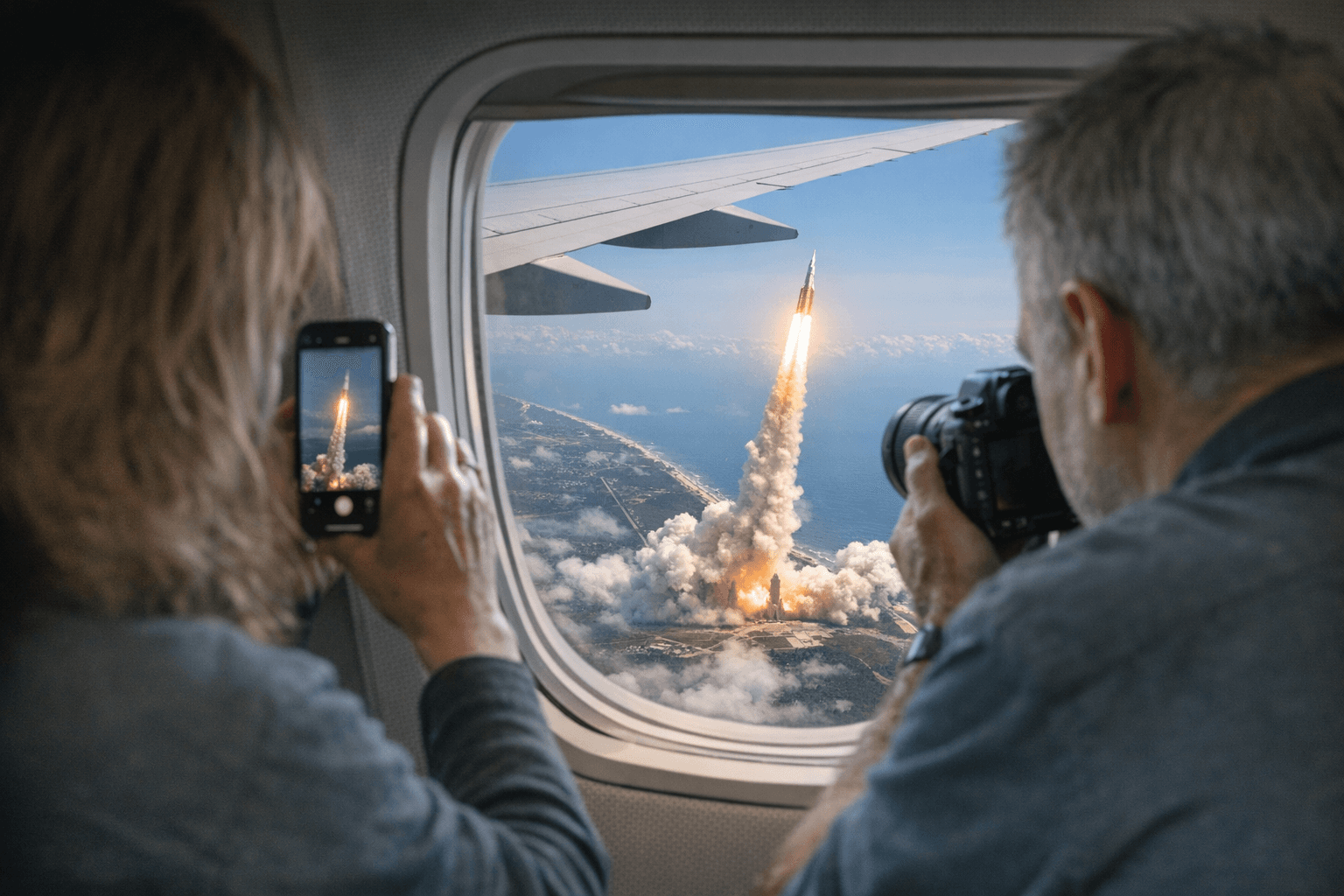
NASA's Artemis II lifted off April 1 with the first woman, first Black man, and first Canadian ever to fly around the moon, aboard the Orion spacecraft for its first crewed test flight.
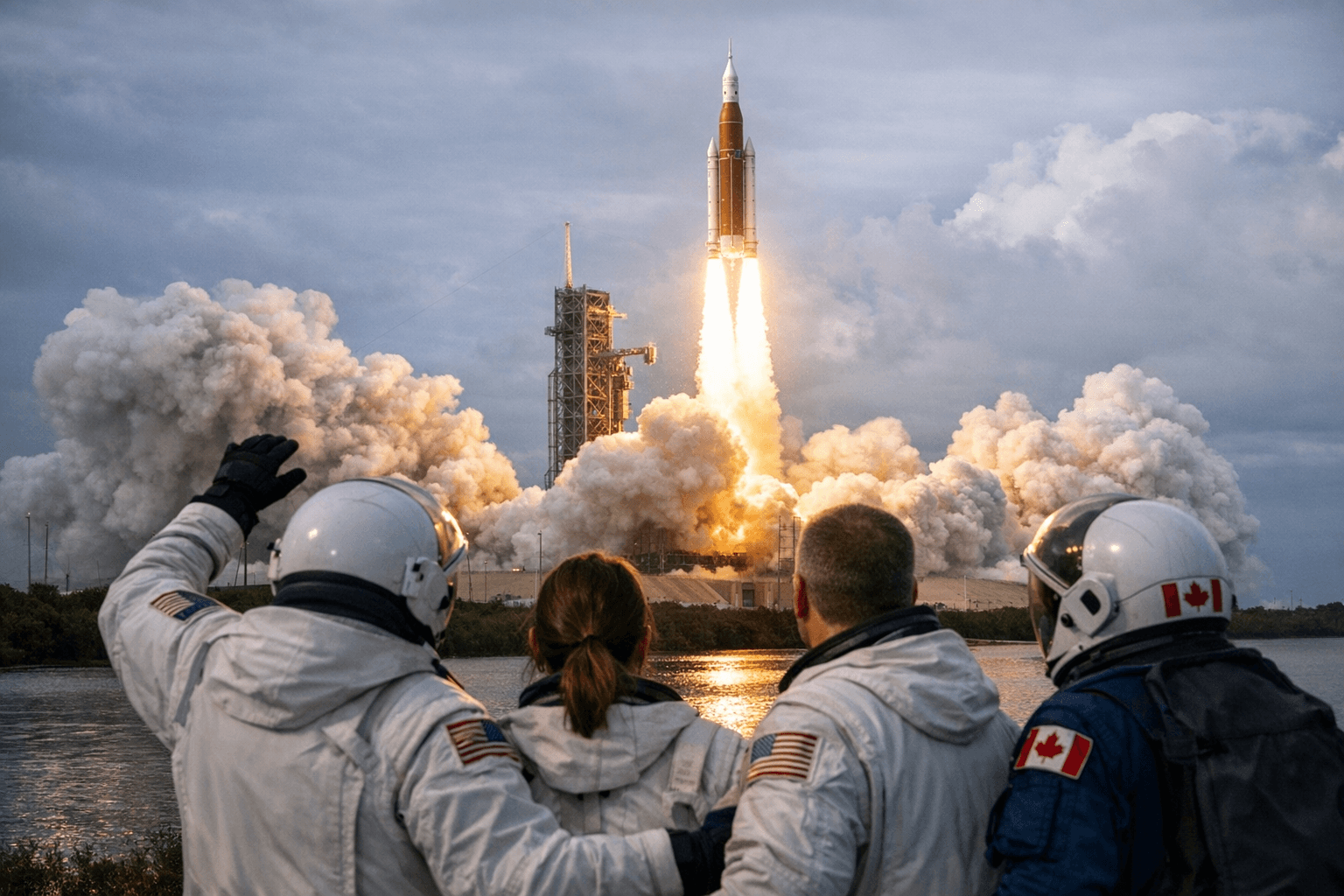
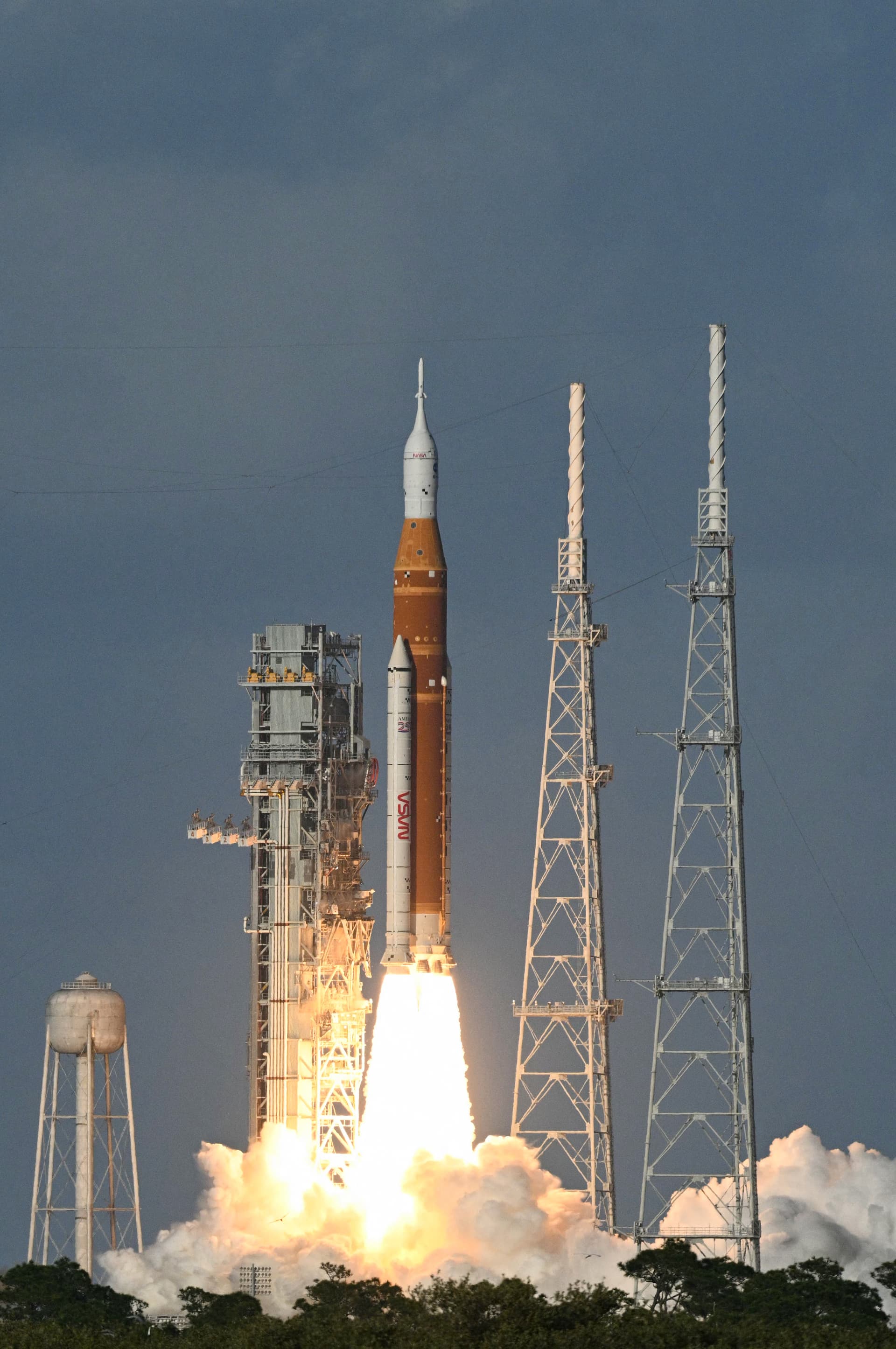
The most powerful rocket ever built roared off Launch Complex 39B at Kennedy Space Center on Wednesday evening at 6:35 p.m. ET, carrying four astronauts on humanity's first crewed journey to the lunar vicinity in more than 50 years. Artemis II, which launched April 1, 2026, is not a landing mission, but its success is the essential precondition for everything that comes next in NASA's return to the moon.
Commander Reid Wiseman leads the four-person crew, with Pilot Victor Glover responsible for flying the Orion spacecraft itself. Glover, a Navy test pilot, is the first Black man and first person of color to travel to the moon. Mission Specialist Christina Koch becomes the first woman to fly a lunar mission, and Canadian Space Agency astronaut Jeremy Hansen, also a mission specialist, is the first Canadian and first non-American ever to participate in a lunar mission. Hansen waited 14 years after joining the CSA in 2009 before being assigned to a flight, a gap that reflects how rarely Canada's less-than-3-percent share in International Space Station activities translates into a seat.
The roles themselves reveal the mission's risk calculus. Wiseman, as commander, holds overall authority for the 10-day voyage. Glover, as pilot, will execute the Trans-Lunar Injection burn that commits the spacecraft to its free-return trajectory around the far side of the moon before gravity slings the crew home. Koch and Hansen, as mission specialists, are focused on validating spacecraft systems and conducting science investigations, including the AVATAR organ-on-a-chip study examining how radiation and microgravity affect human tissue.
The first 24 hours unfold in high Earth orbit, where the crew will conduct critical checkouts of Orion's life-support and communication systems. That phase alone represents a milestone: Artemis I, the uncrewed precursor flight in 2022, could not test life support with anyone aboard. Getting those systems certified with human occupants is precisely what Artemis II is designed to accomplish. The crew will also perform a rendezvous and proximity operations demonstration using the spent Interim Cryogenic Propulsion Stage as a target, validating the navigation and docking skills that future surface missions will require. At its farthest point, the spacecraft will travel more than 248,000 miles from Earth, a record for human spaceflight distance.
Canada's inclusion runs deeper than a symbolic first. Hansen brings direct expertise in astronaut training procedures and mission operations for lunar environments, work the CSA describes as defining the architecture future crews will rely on. As NASA Administrator Jared Isaacman wrote after liftoff, "The next era of exploration begins."
What success looks like for Artemis II is specific: Orion returns intact, life support performs under real operational conditions, and the free-return trajectory executes as modeled. If it does, NASA's plan for at least one lunar landing per year beginning in 2028 and a permanent moon base by 2030 moves from blueprint to achievable. The four astronauts who flew around the moon on April 1 will not set foot on it, but the mission they are flying is the one that makes landing possible.
Sources:
Know something we missed? Have a correction or additional information?
Submit a Tip