Artist builds jet tracker to spot elite flight rush before apocalypse
Kyle McDonald’s dashboard scores private-jet surges from 1 to 5, betting the wealthy may try to vanish before the public hears bad news.
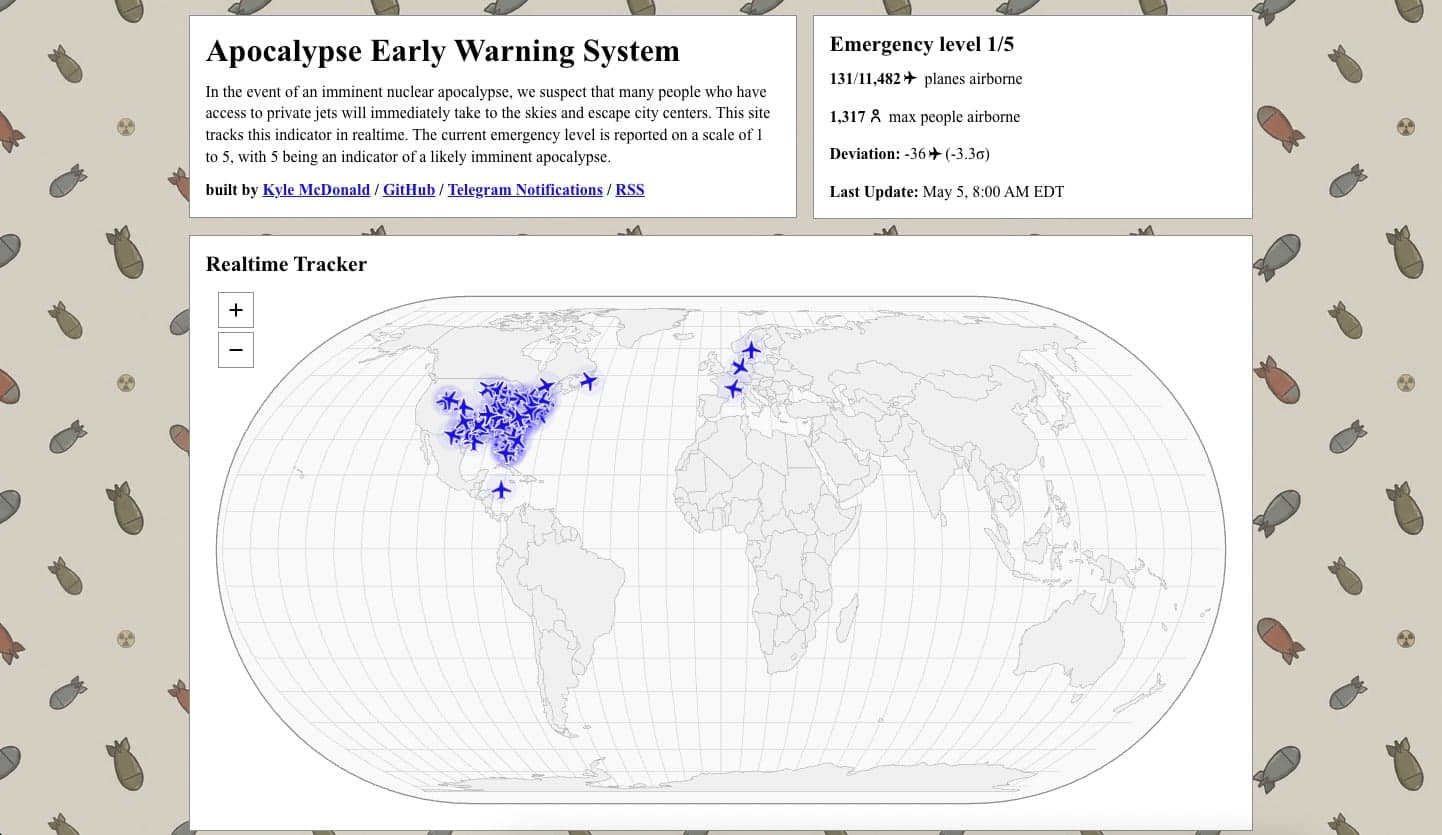
Kyle McDonald has turned a bleak social hunch into software: if an apocalyptic shock is coming, the ultra-rich may try to leave city centers first, and their private jets could betray them before anyone else knows. His Apocalypse Early Warning System is a real-time dashboard that watches tracked aircraft for unusual concurrent activity and turns those shifts into a “historic emergency level” on a 1-to-5 scale, with alerts delivered by text or email.
The system compares public ADS-B flight data against recent traffic patterns. ADS-B, short for Automatic Dependent Surveillance-Broadcast, is the broadcast system aircraft use to transmit position and flight information. McDonald’s tracker follows a fixed cohort of roughly 11,000 business jets and other aircraft, including military aircraft and planes with masked identifiers, in an effort to detect surges that look abnormal against recent movement. The logic is blunt: if insiders or the ultra-wealthy believe the worst is imminent, their travel patterns may change before the public gets a warning.
That premise lands in a climate of growing scrutiny around private aviation. Jet tracking has already become a flashpoint over emissions, celebrity privacy and billionaire power, with public attention drawn to flight-watchers tracking the movements of Elon Musk and Taylor Swift, and to the legal pushback that has followed. Jack Sweeney became a prominent figure in that debate by publishing flight-tracking accounts that put private travel under a public microscope. McDonald’s project extends that surveillance culture into a darker register, using the same habits of visibility to ask whether the first sign of social collapse might be who tries to escape.
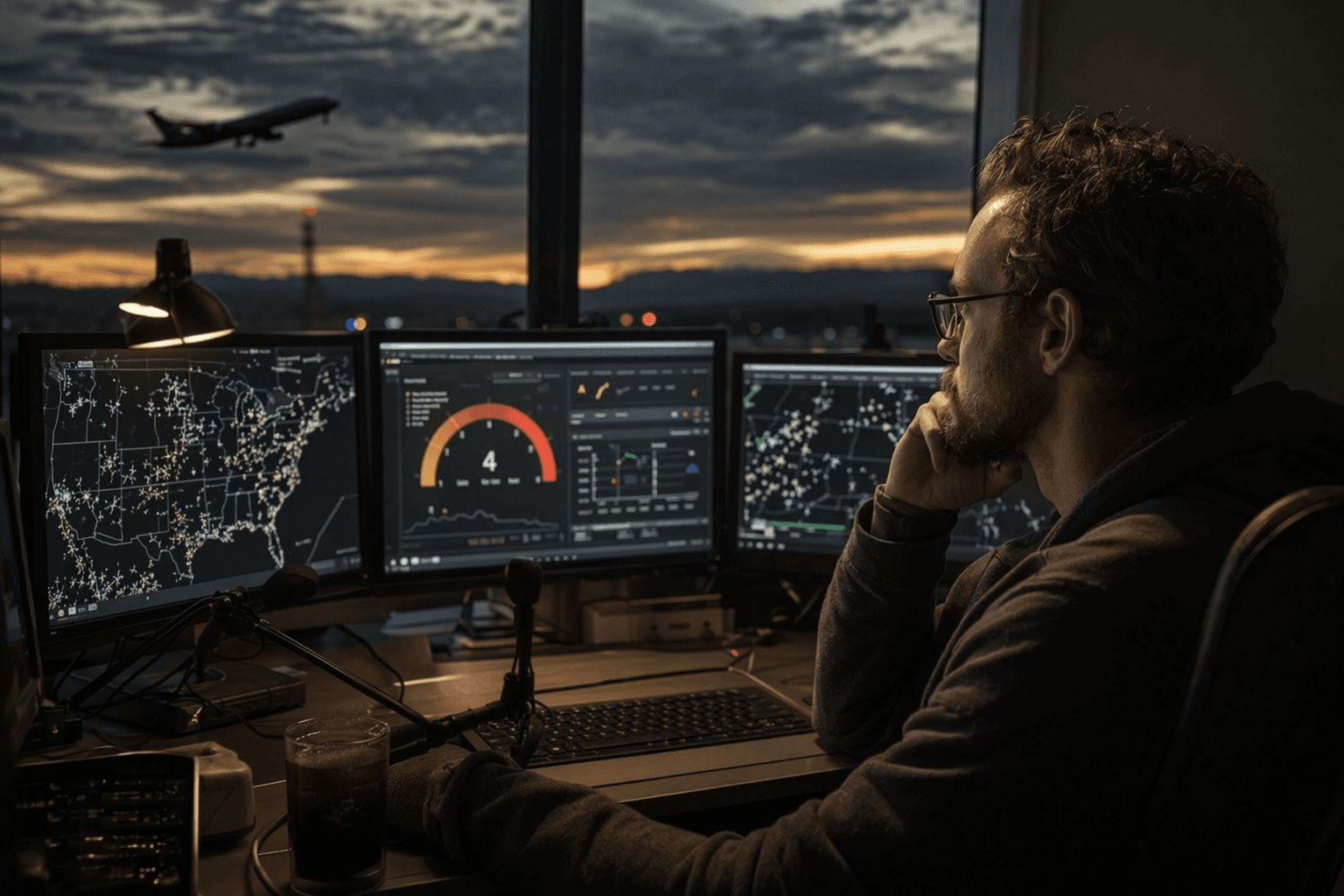
The stakes rose further when the Federal Aviation Administration announced on March 28, 2025, a process allowing private aircraft owners to request withholding certain ownership details from public view through the Civil Aviation Registry Electronic Services portal. The agency also said it was evaluating whether to default to withholding personally identifiable information of private aircraft owners and operators from the public aircraft registry, a shift welcomed by business-aviation groups and criticized by transparency advocates because it makes jet tracking harder. For McDonald’s system, the move underscores the contradiction at the center of modern power: the same wealthy class that can buy speed, privacy and evacuation options is also the one whose movements now serve as a public omen. In that sense, the tracker is not just a novelty. It is a measure of how deeply Americans have come to distrust who gets advance warning, who can flee, and who is left watching the sky.
This article was produced by Prism’s automated news system from verified source data, official records, and press releases, then run through automated quality and moderation checks before publishing. The system is built and supervised by the people who set the standards it runs under. Read our full AI policy.
Did this article answer your question?