Asia’s AI rivals race to fill Claude’s export-ban gap
A three-day Claude whiplash is opening room for Asian rivals, as Washington narrows access and U.S. firms deepen their Asia footprints.
Anthropic launched Claude Fable 5 and Claude Mythos 5 on June 9, then disabled access globally three days later after a June 12 U.S. export-control directive ordered the company to suspend both models for any foreign national, whether inside or outside the United States, including foreign-national employees. Anthropic said Fable 5 was a Mythos-class model made safe for general use, and said it had to cut off all customers to comply.
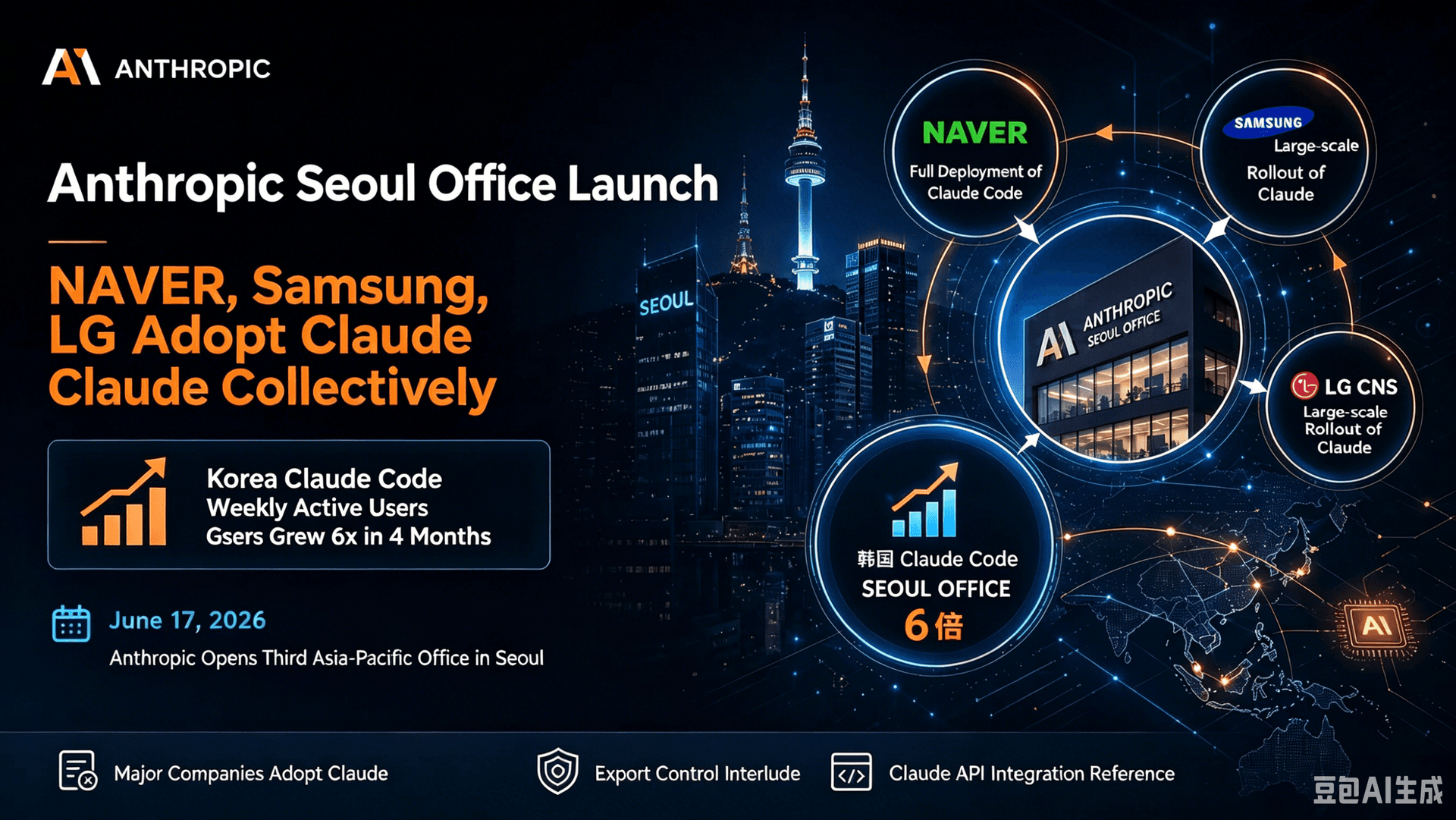
The shock lands in Asia, where Anthropic says its Asia-Pacific run-rate revenue had grown more than 10x over the prior year even as it expanded its footprint. The company opened its Seoul office on June 17, added new partnerships across the Korean AI ecosystem, and signed a memorandum with Korea’s Ministry of Science and ICT on AI safety. Seoul became Anthropic’s third office in Asia-Pacific after Tokyo and Bengaluru, with Choi Ki-young leading the Korea operation.

OpenAI moved just as aggressively. In May, it launched OpenAI for Singapore with the Ministry of Digital Development and Information, backed by more than S$300 million and built around the company’s first Applied AI Lab outside the United States. OpenAI said the lab would create more than 200 Singapore-based technical roles over the next few years, underscoring how quickly U.S. model makers are planting local operations across the region even as Washington tightens access rules at home.
The security case for those rules hardened in June, when Anthropic told U.S. senators that operators linked to Alibaba’s Qwen lab ran what it called the largest known distillation campaign it had detected. The company said the effort produced about 28.8 million unauthorized Claude exchanges through roughly 25,000 fraudulent accounts between April 22 and June 5. The scale suggests a market for frontier capabilities large enough to reward either local substitutes or aggressive imitation, rather than dependence on U.S. providers alone.
Washington softened the immediate blow on June 26, when Reuters reported that the Commerce Department allowed Anthropic to release Mythos 5 to a limited set of about 100 companies and federal agencies described as trusted partners. Even so, the model remained a controlled asset rather than a broadly available product, with access now split between vetted U.S. users and an Asian market where competitors are racing to close the gap.
This article was produced by Prism’s automated news system from verified source data, official records, and press releases, then run through automated quality and moderation checks before publishing. The system is built and supervised by the people who set the standards it runs under. Read our full AI policy.
Know something we missed? Have a correction or additional information?
Submit a Tip