ASML raises 2026 forecast as AI demand boosts earnings
ASML raised 2026 revenue guidance to 43 billion-45 billion euros after a stronger quarter, a sign AI chip spending is still feeding the lithography bottleneck.

ASML lifted its 2026 revenue forecast to 43 billion to 45 billion euros after second-quarter earnings and bookings came in above expectations, and said it would expand capacity as demand for AI-linked chip production stayed intense. The Dutch company, which supplies the extreme ultraviolet lithography machines needed to make the most advanced semiconductors, is now signaling that the spending wave is still moving through the deepest layer of the chip industry.
For the quarter ended June 30, ASML said sales reached 9.33 billion euros and net income was 2.92 billion euros, both ahead of market forecasts. Gross margin came in at 54.0 percent, and the company sold 86 new lithography systems. ASML also projected third-quarter 2026 net sales of 11.0 billion to 12.0 billion euros and gross margin of 55 percent to 57 percent, a guide that points to continued momentum into the second half of the year.
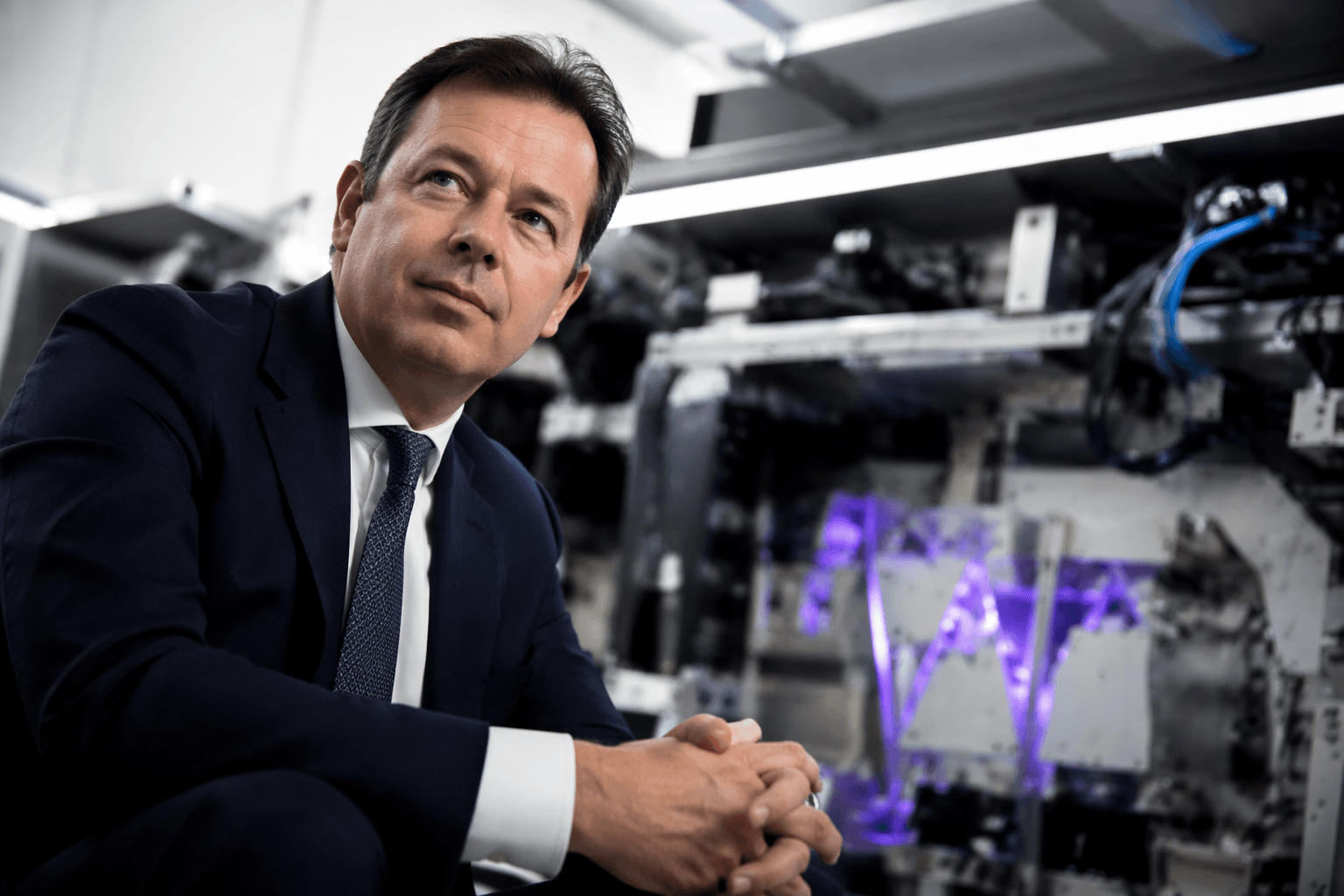
Bookings were the sharpest test of demand. Market estimates had clustered around 4.4 billion to 5.3 billion euros, and the quarter’s roughly 5.5 billion euros in orders cleared that range. Christophe Fouquet, ASML’s chief executive, said order intake was "extremely strong" as customers accelerated capacity expansion plans. Barclays analyst Simon Coles had said the quarter was a "make or break" moment for the company’s 2026 outlook, with the market watching whether ASML could sustain its growth ambitions.
The significance runs beyond one company’s earnings beat. ASML is the only maker of the most advanced EUV tools, so its order book is often read as a live indicator of where chipmakers are placing their bets. When ASML raises guidance and talks about adding capacity, it suggests foundries and device makers are still committing capital to the next generation of production lines, even as tariffs, export controls and cyclical swings continue to complicate the sector.
That makes the latest update a useful read on the AI boom itself. The spending is no longer limited to chips sold into servers and data centers; it is reaching the industrial machinery that enables those chips to exist at scale. ASML’s recent moves, including a July 14 readiness milestone for High NA EUV and a May 16 strategic partnership with Tata Electronics to support India’s semiconductor ecosystem, add to the picture of a company pushing deeper into the next phase of global chip competition.
This article was produced by Prism’s automated news system from verified source data, official records, and press releases, then run through automated quality and moderation checks before publishing. The system is built and supervised by the people who set the standards it runs under. Read our full AI policy.
Did this article answer your question?