Astronomers detect thin atmosphere on distant Kuiper Belt world beyond Pluto
A tiny Kuiper Belt world beyond Pluto showed a refractive occultation signature, hinting it can hold a 100-to-200-nanobar atmosphere.
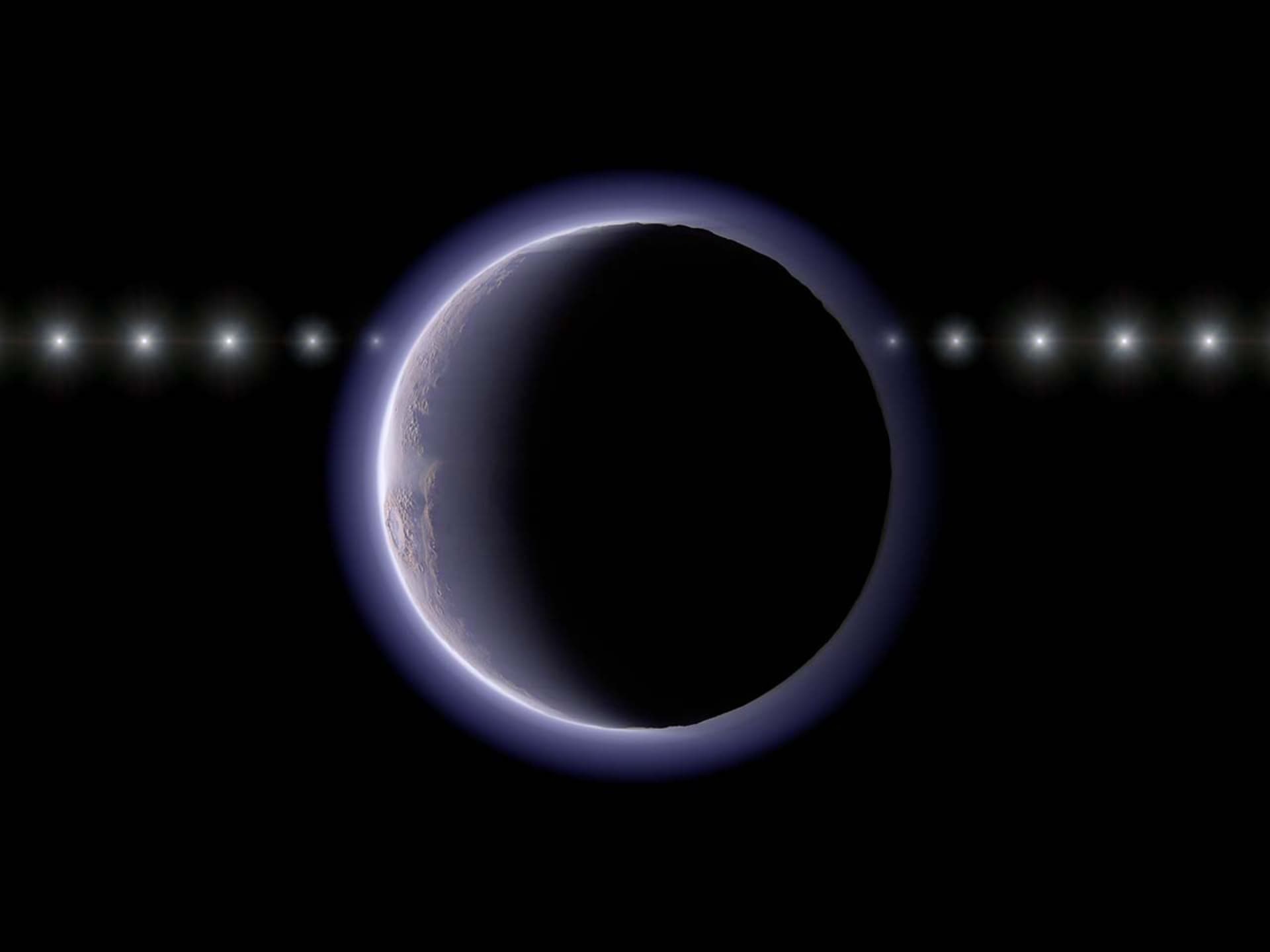
A small icy world beyond Pluto has expanded the frontier for where astronomers think atmospheres can survive. The plutino (612533) 2002 XV93, about 250 kilometers in radius and roughly 300 miles across, showed evidence of a thin atmosphere during a stellar occultation, the brief moment when it passed in front of a star and dimmed its light in a way that matched atmospheric refraction.
The key observation came from a campaign on January 10, 2024, when multiple sites in Japan watched the object cross a star’s path. Instead of a sudden wink-out, the starlight faded and recovered gradually, a pattern the researchers interpreted as the signature of a tenuous gas envelope. They estimate the surface pressure at about 100 to 200 nanobar, far below Pluto’s average surface pressure of about 10 microbar, but still enough to show that even a few-hundred-kilometer body at the solar system’s edge can, at least temporarily, hold onto an atmosphere.

That makes 2002 XV93 more than a curiosity. The study argues that the result challenges standard ideas about volatile retention around distant trans-Neptunian objects, where cold temperatures and weak gravity have long suggested that gases should be hard to keep. Previous upper limits for other large trans-Neptunian objects were only about 1 to 100 nanobar, so this detection pushes into a regime that astronomers had only probed indirectly before.
The team says the atmosphere could be sustained by cryovolcanic activity, in which subsurface materials release gas from within, or by a relatively recent impact with a small icy object. Another possibility is that the atmosphere is extremely short-lived. A separate summary of the study said it may last less than 1,000 years unless it is replenished, which would mean astronomers are seeing a fleeting state rather than a permanent one.
Not everyone is treating the result as settled. Alan Stern of the Southwest Research Institute, who was not involved in the work, called it “an amazing development” and said it needs independent verification. If confirmed, the finding would have a clear methodological impact as well as a scientific one: carefully timed occultation campaigns could become a powerful way to search for thin atmospheres on other distant Kuiper Belt bodies that are too small, dark or far away for conventional atmospheric studies.
This article was produced by Prism’s automated news system from verified source data, official records, and press releases, then run through automated quality and moderation checks before publishing. The system is built and supervised by the people who set the standards it runs under. Read our full AI policy.
Did this article answer your question?