Tesla’s Full Self-Driving faces European skepticism despite Musk’s optimism
Tesla’s driver-assistance push reached Europe, but regulators are still treating it as a Level 2 system, not the self-driving leap Elon Musk has promised.

Tesla’s European approval push has run into a harder regulatory wall than Elon Musk has suggested. Emails from European regulators showed clear skepticism about the safety claims behind Full Self-Driving, even after Dutch road regulator RDW granted Tesla type approval for FSD Supervised on April 10 following more than a year and a half of testing on its track and on public roads.
That approval matters, but not in the way Tesla’s marketing implies. RDW has said the system is not self-driving and that safety remains its top priority, a distinction that cuts directly against the company’s wider Full Self-Driving branding. Musk told analysts on an April 22 conference call, “We expect to be approved in a lot of other countries,” and said Tesla would then seek approval for driverless robotaxis in Europe. The regulatory record suggests the company may still be far from that timeline.
A key committee hearing in Brussels was scheduled for Tuesday as Tesla sought broader European Union approval. The stakes are large because the company needs a stronger product story in Europe after losing ground over the past two years. Tesla’s sales had fallen sharply across many major markets in 2025 even as electric-vehicle demand rose, and BYD gained share. BYD also surpassed Tesla in European EV sales in April 2025, according to JATO Dynamics data.
The regulatory caution is rooted in how Europe defines automated driving. A United Nations regulation on Driver Control Assistance Systems entered into force in October 2024, and UNECE says these are Level 2 systems, meaning the driver remains responsible and must continuously monitor the vehicle and surroundings. That framework leaves little room for marketing language that hints at autonomy when the system still depends on constant human supervision.
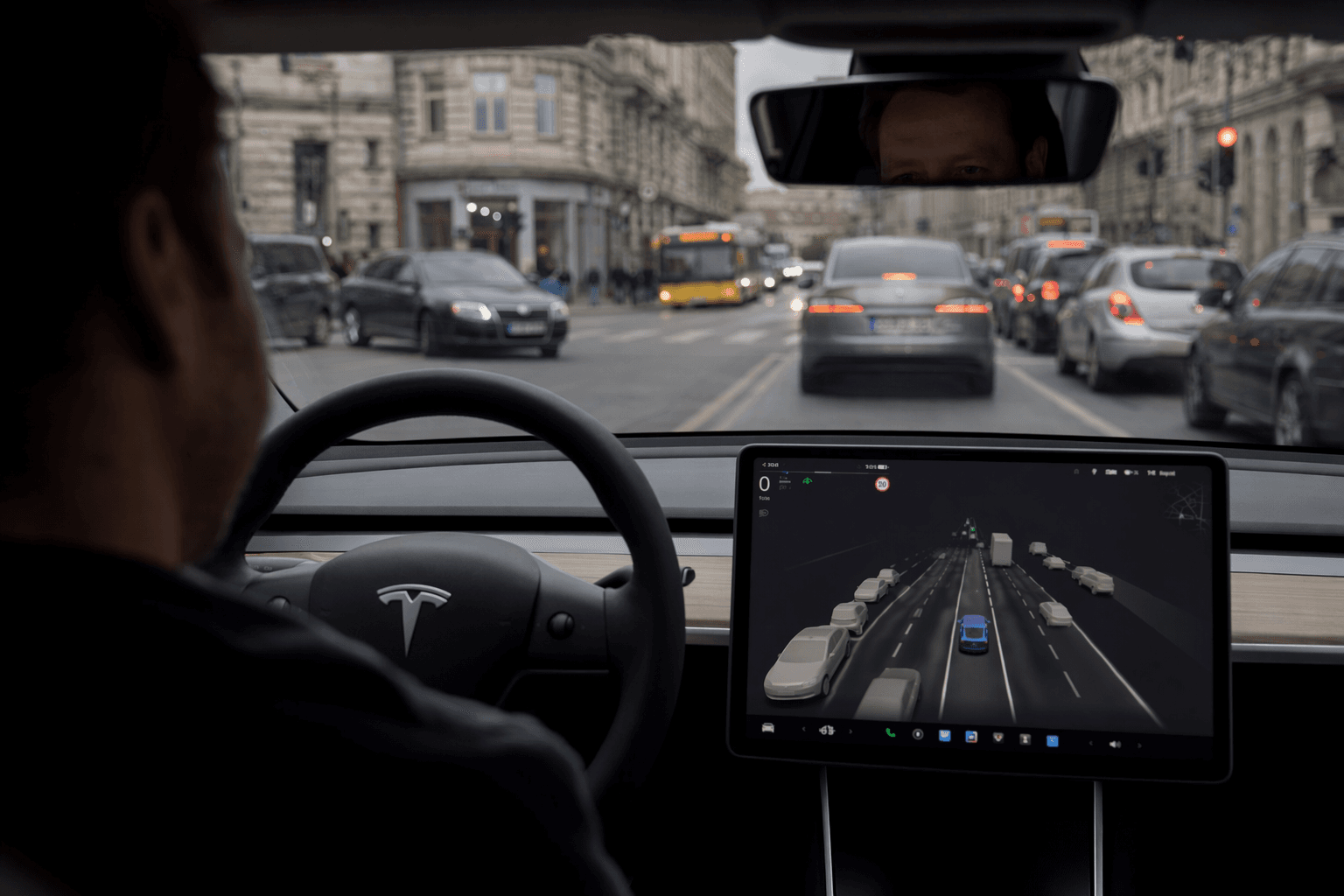
Europe’s rulebook is still changing. The European Commission’s March 3, 2026 implementing regulation updated automated-driving type-approval rules, showing that the legal standards for advanced driver-assistance systems are still being refined even as Tesla presses for faster acceptance. For regulators, the question is not only whether FSD Supervised can lane-keep, brake, and steer under controlled conditions. It is whether the company’s software path can be squared with liability, public trust, and the threshold for any future robotaxi deployment.
Tesla’s recent sales pattern shows how much is riding on the answer. Registrations rebounded in Sweden, France, Denmark and the Netherlands in April 2026, but fell sharply in Norway, Spain, Portugal and Italy. That uneven performance underscores the larger problem for Musk: Europe is not only judging Tesla’s technology, it is judging whether the company’s promises are running ahead of the evidence.
This article was produced by Prism’s automated news system from verified source data, official records, and press releases, then run through automated quality and moderation checks before publishing. The system is built and supervised by the people who set the standards it runs under. Read our full AI policy.
Did this article answer your question?


