Google DeepMind staff vote to unionize over military AI contracts
DeepMind staff voted 98 percent for union representation as pressure mounted over military AI contracts, turning an internal revolt into a formal challenge to Google.
Google DeepMind staff at its London headquarters voted to unionize, escalating a fight over whether the company’s AI systems should be tied to military customers in Israel and the United States. Employees asked Google management to recognize the Communication Workers Union and Unite the Union as joint representatives, and 98 percent of those who voted backed the move.
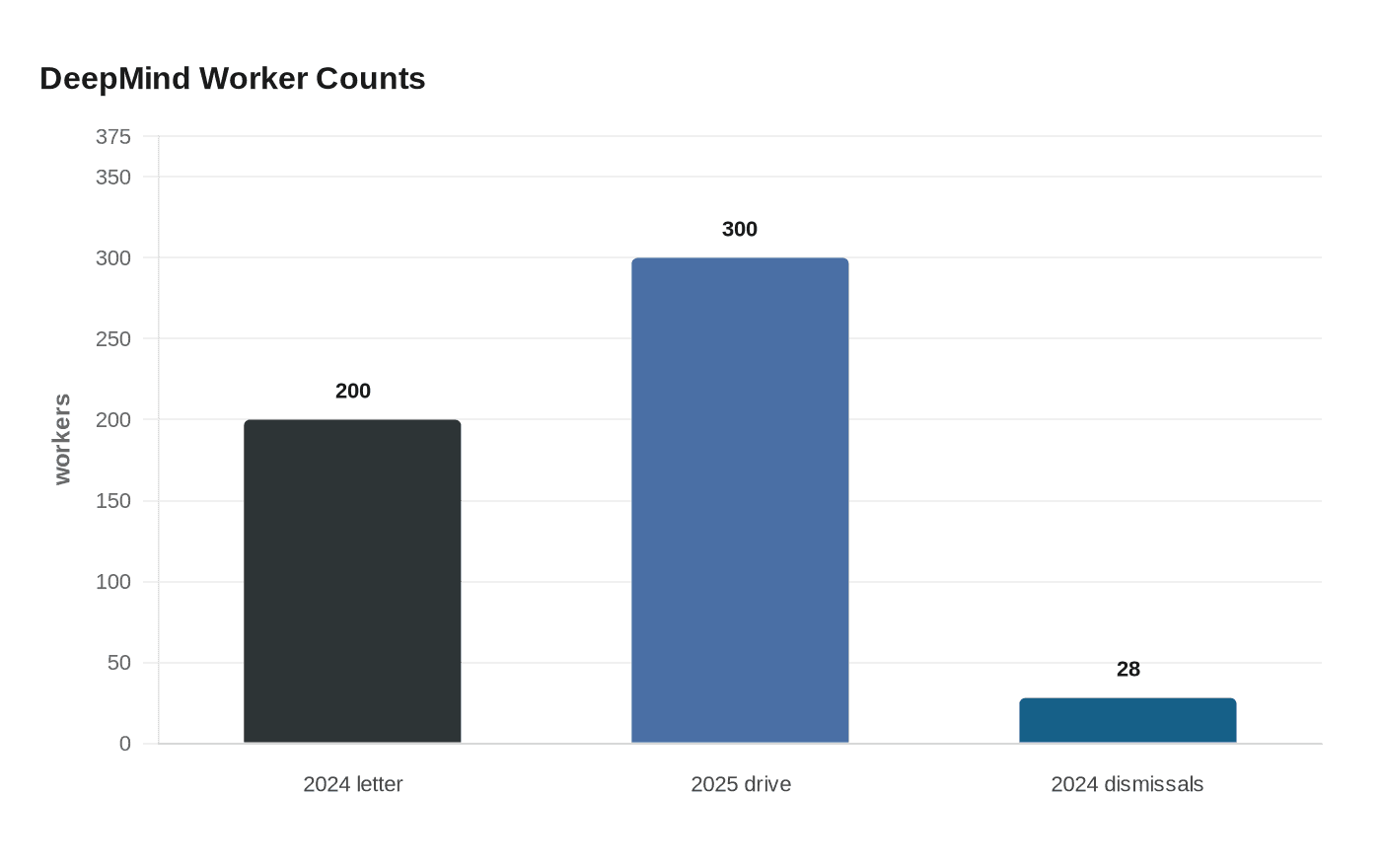
The vote was the latest step in a rebellion that has been building for more than a year. In May 2024, nearly 200 DeepMind workers signed a letter dated May 16 urging Google to drop military contracts. Those signatures represented about 5 percent of DeepMind’s overall headcount, a significant share for a business whose influence reaches into some of the most sensitive corners of artificial intelligence development.

The workers argued that military work could push Google’s systems into warfare and put the company at odds with its own AI principles. Google says it will not pursue AI applications likely to cause overall harm, contribute to weapons, or conflict with international law and human rights. For employees pushing for union recognition, that gap between public principles and commercial practice became the heart of the dispute.
The organizing drive widened in April 2025, when about 300 London-based DeepMind staff were seeking to join the Communication Workers Union. That campaign was fueled in part by reports that Google was selling cloud and AI services to the Israeli Ministry of Defense. Employee unease also sharpened after Google dismissed 28 workers in 2024 following protests over its cloud contract with the Israeli government.
Taken together, the vote and the earlier petition show how labor organizing has become one of the few internal tools available to workers who want to influence the deployment of powerful AI systems. At a company where decisions about government and defense contracts can affect global security, the union effort is not only about workplace representation. It is also a bid to insert a democratic check into decisions that have traditionally been made behind closed doors.
The result now puts pressure on Google to decide how far it is willing to accommodate organized labor inside one of its most strategically important AI divisions. If DeepMind’s staff can translate dissent into formal bargaining power, the vote could become a test case for whether employees can shape defense-related business decisions at major technology firms, or whether those decisions remain insulated from the people building the systems.
This article was produced by Prism’s automated news system from verified source data, official records, and press releases, then run through automated quality and moderation checks before publishing. The system is built and supervised by the people who set the standards it runs under. Read our full AI policy.
Did this article answer your question?


