AT&T tops wireless subscriber estimates as fiber bundling drives growth
AT&T’s bundle strategy lifted first-quarter wireless adds above forecasts, with nearly 45% of advanced home internet customers also taking wireless.
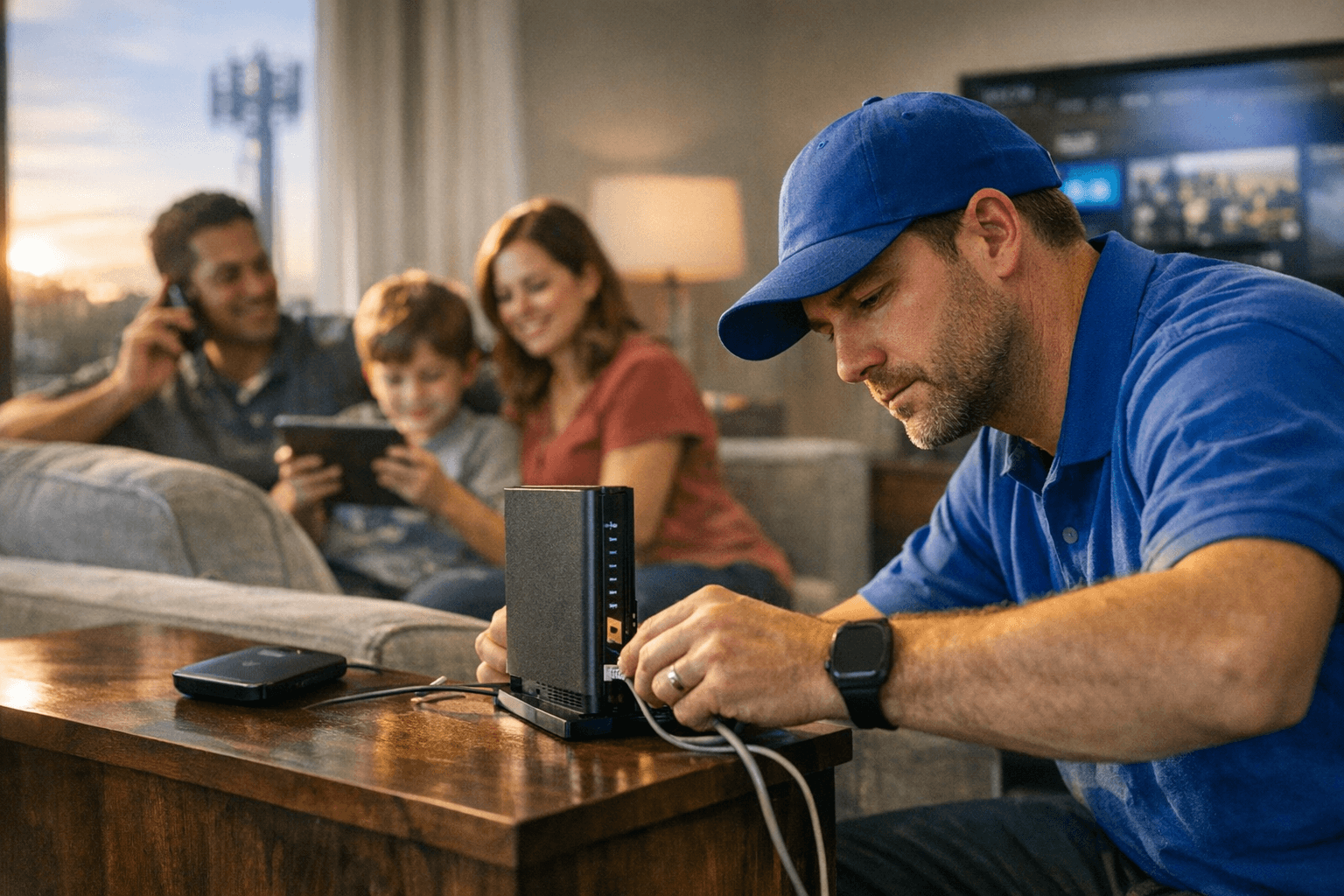
AT&T is leaning hard on the bundle. The carrier’s first-quarter results showed that pairing wireless service with home internet remains one of its sharpest tools for winning subscribers in a market where price cuts, device subsidies and network upgrades still do most of the competitive work.
The Dallas company added 294,000 net monthly bill-paying wireless phone subscribers in the quarter, topping the 272,000 analysts polled by FactSet had expected. AT&T said about 42% of households that use its home internet also chose wireless plans, and nearly 45% of advanced home internet subscribers also took AT&T wireless when customers acquired through the Lumen Mass Markets deal are excluded. AT&T described that as its fastest-ever year-over-year organic growth in convergence rate, a sign that bundling is becoming central to how it holds onto households once it wins them.
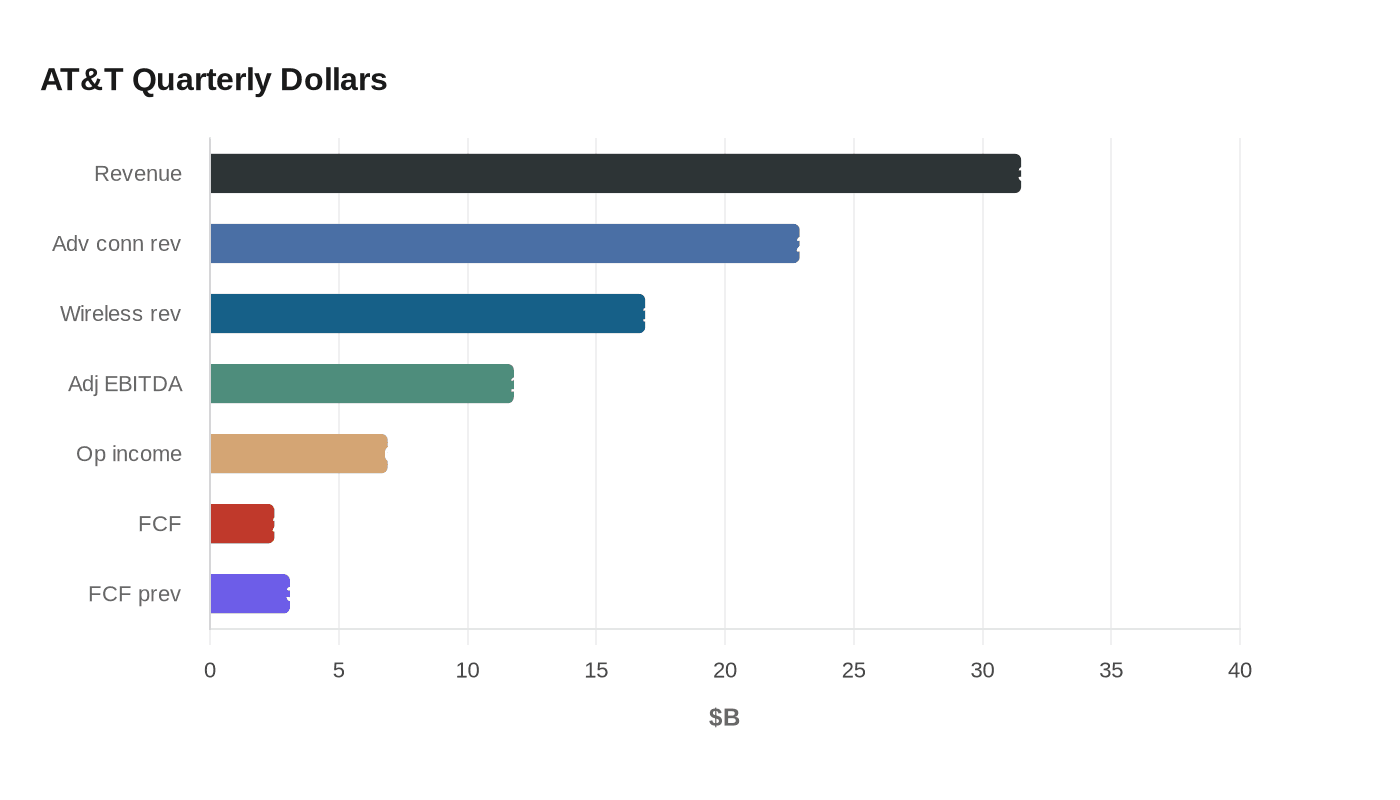
Chief executive John Stankey said AT&T is “uniquely positioned” to deliver more of what customers want, “fiber and 5G from one provider,” and said the company is improving the customer value proposition, scaling faster and accelerating growth. That pitch is now backed by the numbers. Revenue rose 2.9% to $31.5 billion, adjusted earnings were $0.57 a share, adjusted EBITDA was $11.8 billion and free cash flow was $2.5 billion, down from $3.1 billion a year earlier as fiber investment increased.
The results also showed the tradeoff behind the push. Wireless service revenue rose just 1.7% to $16.9 billion, below estimates, while average revenue per user was flat, suggesting AT&T is still fighting to turn subscriber gains into stronger pricing power. The company raised prices on its lowest and highest wireless tiers to steer customers toward midrange plans, a move meant to lift revenue without sparking a damaging price war.
AT&T’s advanced connectivity business, which includes domestic 5G and fiber, is becoming the company’s core growth engine. Revenue in the segment rose 3.6% to $22.9 billion, while operating income increased 14.8% to $6.9 billion. AT&T said it reached more than 37 million consumer and business locations with fiber after closing its purchase of substantially all of Lumen’s Mass Markets fiber business on February 2, 2026, including more than 4 million locations added through that deal. The company said it remains on track to exceed 40 million fiber locations by year-end 2026.
The bigger message for telecom rivals is clear: in a mature U.S. market, the contest is shifting from raw subscriber growth to who can lock in the most households with the deepest bundle. AT&T’s quarter showed that strategy still works, even if the industry remains heavily promotional.
This article was produced by Prism’s automated news system from verified source data, official records, and press releases, then run through automated quality and moderation checks before publishing. The system is built and supervised by the people who set the standards it runs under. Read our full AI policy.
Did this article answer your question?
%3Amax_bytes(150000)%3Astrip_icc()%2FCertificate-of-deposit-2301f2164ceb4e91b100cb92aa6f868a.jpg&w=1920&q=75)