South Korea Growth Surges as Semiconductor Demand Offsets Weak Spending
Semiconductor demand lifted South Korea’s economy to its fastest quarterly pace since 2020, but government spending barely moved and domestic demand stayed soft.
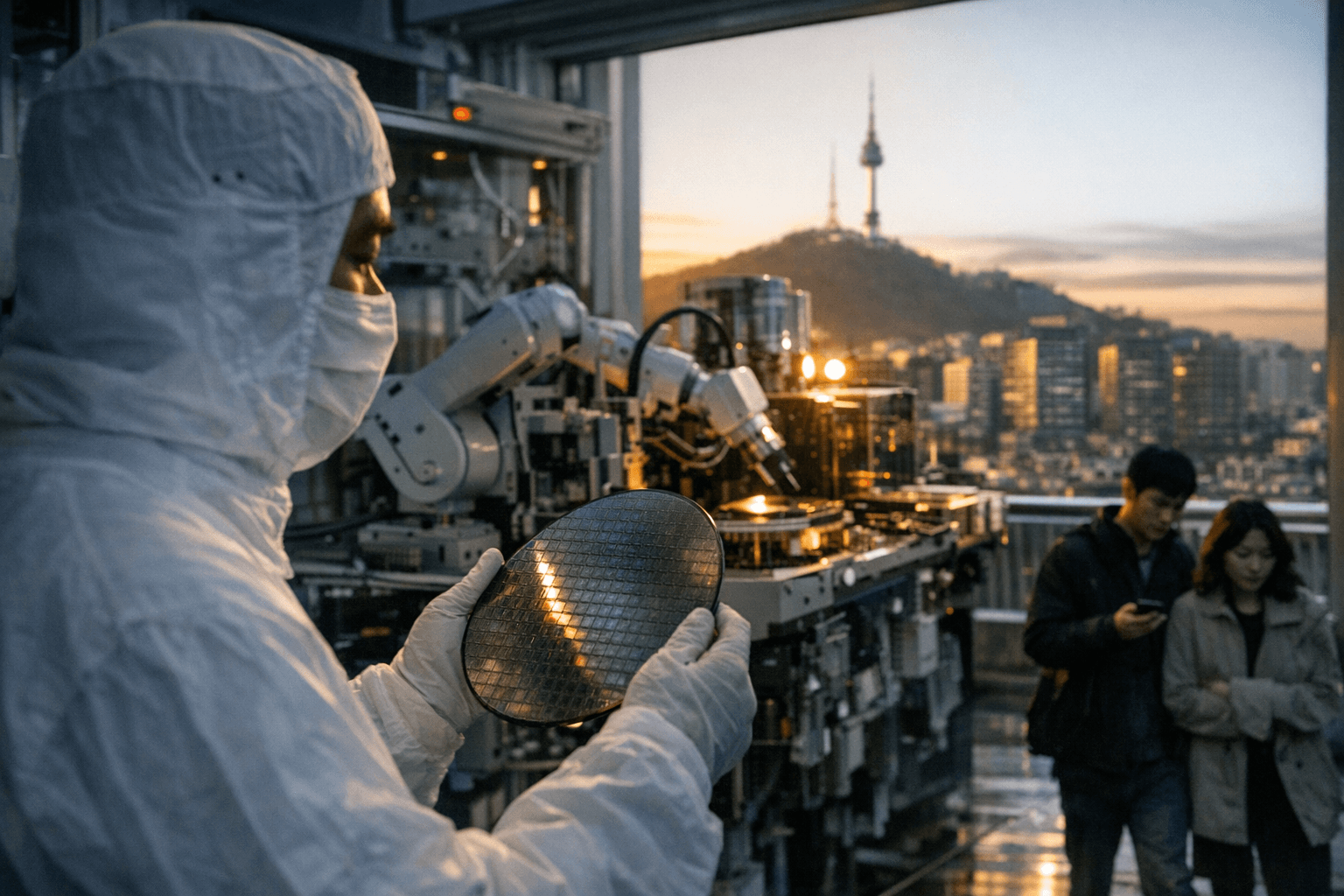
South Korea’s economy surged in the first quarter of 2026, but the rebound was narrow enough to raise fresh questions about durability. Real GDP rose 1.7% from the previous quarter, the fastest quarterly expansion since the third quarter of 2020, yet government spending increased only 0.1% and private consumption edged up just 0.5%, underscoring how much of the strength still came from chips rather than a broad domestic revival.
Exports climbed 5.1% in the quarter on strong global demand for semiconductors, reinforcing South Korea’s role as a key supplier in the AI-driven technology cycle. Facility investment rose 4.8% after shrinking in the final quarter of 2025, a sign that companies were again spending on equipment and production lines. Construction investment also increased 2.8%, while real gross domestic income jumped 7.5%, the strongest gain since the first quarter of 1988, suggesting the export rebound was feeding through to purchasing power even if the wider economy remained uneven.
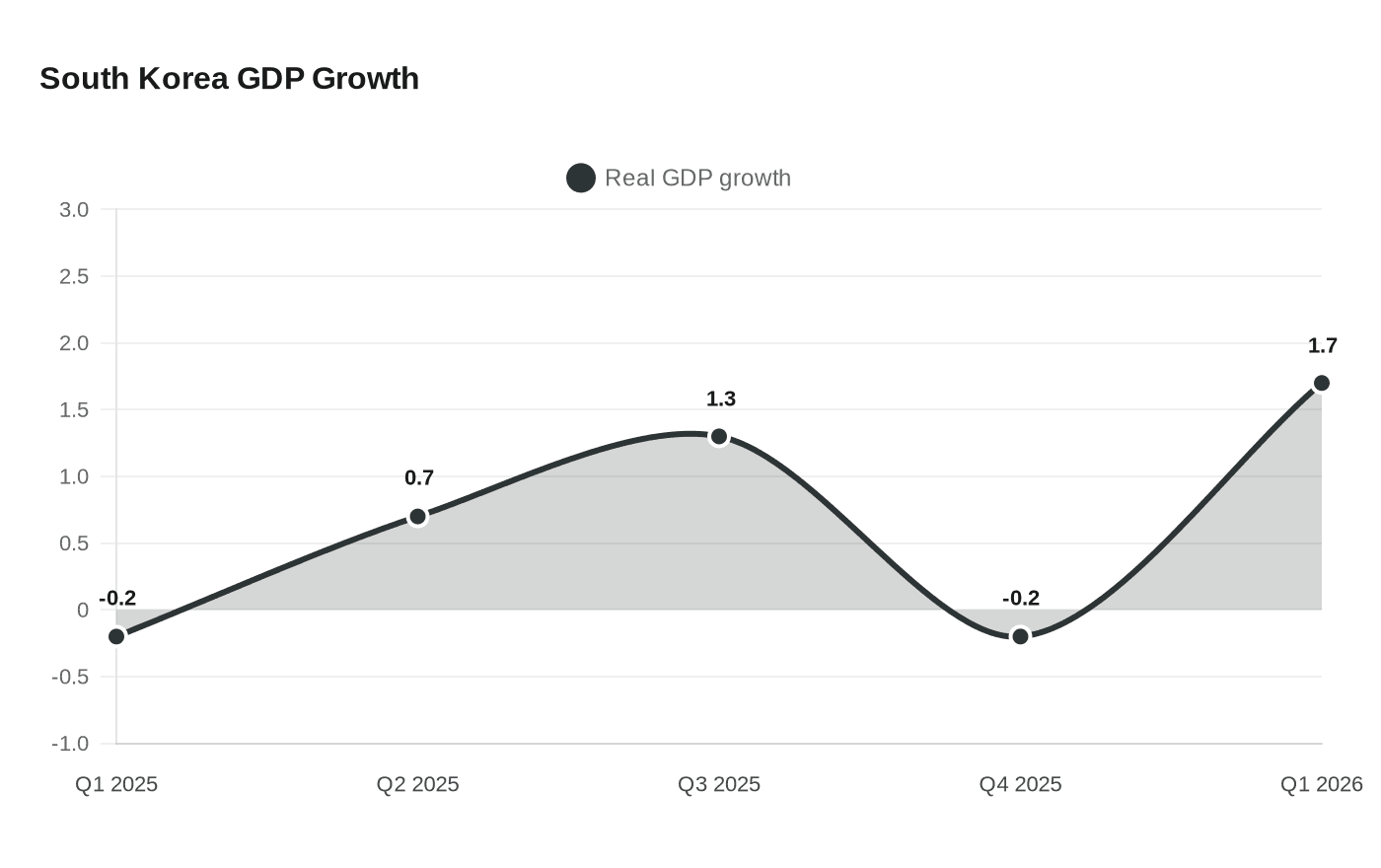
The quarter also marked a sharp beat to expectations. The 1.7% gain was nearly double the Bank of Korea’s February forecast of 0.9% and well above the Reuters median estimate of 1.0%. On a year-over-year basis, output rose 3.6%. That was a significant improvement from the country’s uneven 2025 pattern, when GDP contracted 0.2% in the first quarter, expanded 0.7% in the second, rose 1.3% in the third and then slipped 0.2% in the fourth. Full-year growth for 2025 came in at 1.0%.
For policymakers, the data offered relief but not complacency. The Bank of Korea had already lifted its 2026 growth forecast to 2.0% in February from 1.8% in November, citing the robust semiconductor cycle and a more favorable global backdrop. But in April, the central bank said growth was expected to slow because of a supply shock linked to the war in the Middle East, even as the chip cycle and supplementary budget continued to support activity. For investors, that leaves South Korea looking like a direct barometer of the global electronics and AI investment cycle, with Pyeongtaek’s factories and the country’s broader industrial base still heavily exposed to chip demand.
This article was produced by Prism’s automated news system from verified source data, official records, and press releases, then run through automated quality and moderation checks before publishing. The system is built and supervised by the people who set the standards it runs under. Read our full AI policy.
Did this article answer your question?

