Audi Q9 headlights meet U.S. glare rules, new tech arrives in 2026
Audi’s Q9 brings matrix headlights into the U.S. market, after regulators finally allowed adaptive beams that can brighten dark roads without dazzling oncoming drivers.

Audi’s new Q9 is arriving with digital matrix lights that meet U.S. glare rules, a sign that a long-stalled safety technology is finally moving from overseas showrooms into the American market. The company says the Q9 is its all-new full-size flagship SUV, and Audi highlighted the vehicle in a May 12 release showing the first look at the SUV and its interior.
The bigger story is not just the lighting hardware on one model. It is the federal rule change that made the technology legal here. On February 15, 2022, the National Highway Traffic Safety Administration issued its final rule allowing adaptive driving beam headlights, amending Federal Motor Vehicle Safety Standard No. 108 so automakers could certify headlamps that actively reshape the beam. The agency said the systems can send more light to unoccupied parts of the road while reducing glare for oncoming drivers, and that the change could improve nighttime visibility for pedestrians, bicyclists, animals and objects.
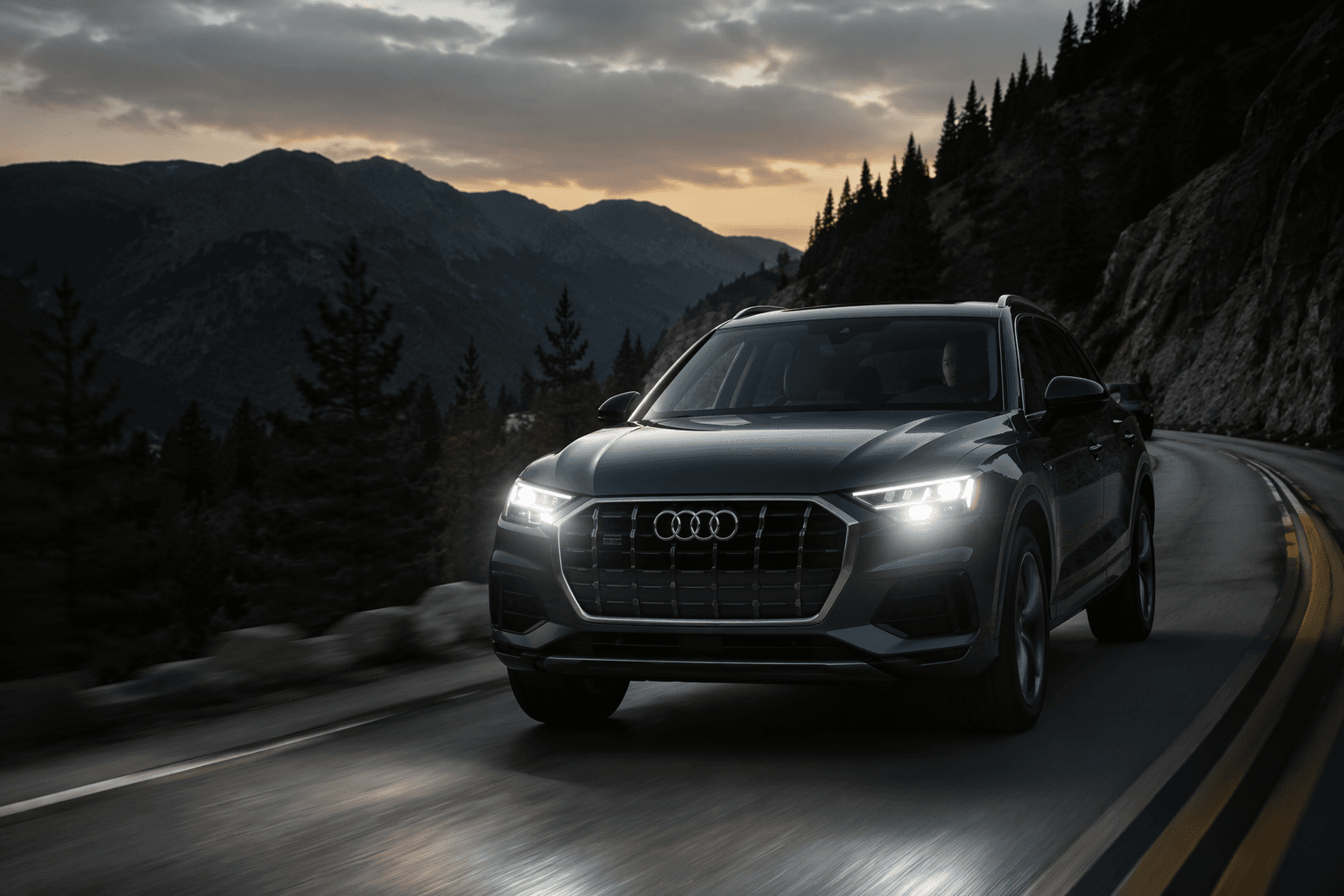
That decision came more than a year and a half ahead of the Bipartisan Infrastructure Law deadline, but it still marked a major turning point. For years, matrix-style headlights were already common in Europe and Japan, where regulators had begun allowing adaptive driving beam systems as optional equipment. NHTSA’s earlier glare assessment, completed in 2015, examined those systems and adapted European test-track procedures to develop objective performance criteria for the U.S. market.
Audi’s timeline shows how restrictive the old rules had been. In 2023, the company said active lighting technology on the Q6 E-Tron would not be offered in the United States because of outdated federal safety standards. That makes the Q9’s digital matrix lights more than a feature list item. They show that a technology long available abroad can now be brought to American buyers without running afoul of the glare limits that kept it out for years.
The practical effect could be broad if more automakers follow Audi’s lead. Drivers may see better illumination on dark roads without forcing high-beam glare onto approaching traffic. Regulators, meanwhile, have set a framework that tries to balance two goals that often collide at night: giving drivers more visibility and protecting everyone else on the road from being blinded.
Know something we missed? Have a correction or additional information?
Submit a Tip