Supreme Court leaves Alabama death row inmate spared from execution
The Supreme Court sidestepped Alabama’s bid to execute Joseph Clifton Smith, leaving in place rulings that found his IQ scores and expert evidence met the legal threshold for intellectual disability.

The Supreme Court refused to reach the merits of Alabama’s challenge to Joseph Clifton Smith’s intellectual-disability claim, leaving intact lower-court rulings that blocked his execution and prolonging the legal uncertainty around who qualifies for death-penalty protection.
In Hamm v. Smith, the justices dismissed the case as “improvidently granted,” a procedural outcome that undid the court’s decision to hear the dispute and left the federal courts’ judgment in place. Smith, an Alabama death-row inmate sentenced in 1998 for the 1997 murder of Durk Van Dam, had fought his case for years in state and federal court.
The case had centered on whether Smith fell within the constitutional shield announced in Atkins v. Virginia, the 2002 decision holding that the Eighth Amendment bars the execution of people with intellectual disabilities. Smith’s five full-scale IQ scores ranged from 72 to 78, and the lower courts found that those scores, considered alongside expert testimony and the standard error of measurement, placed him within the category of intellectual disability.

The U.S. District Court for the Southern District of Alabama vacated Smith’s death sentence, and the U.S. Court of Appeals for the Eleventh Circuit affirmed. Alabama asked the Supreme Court to reverse those rulings, arguing that Smith did not qualify for Atkins protection. The Trump administration backed Alabama’s position.
The dispute also tested the reach of two later Supreme Court rulings that narrowed the room for rigid state standards. In Hall v. Florida, decided in 2014, the court said judges must account for the standard error of measurement and cannot use a fixed IQ cutoff. In Moore v. Texas, the court said intellectual-disability findings must rest on current clinical standards rather than outdated rules. Smith’s case raised the same underlying question, but the justices avoided deciding how those precedents should control here.
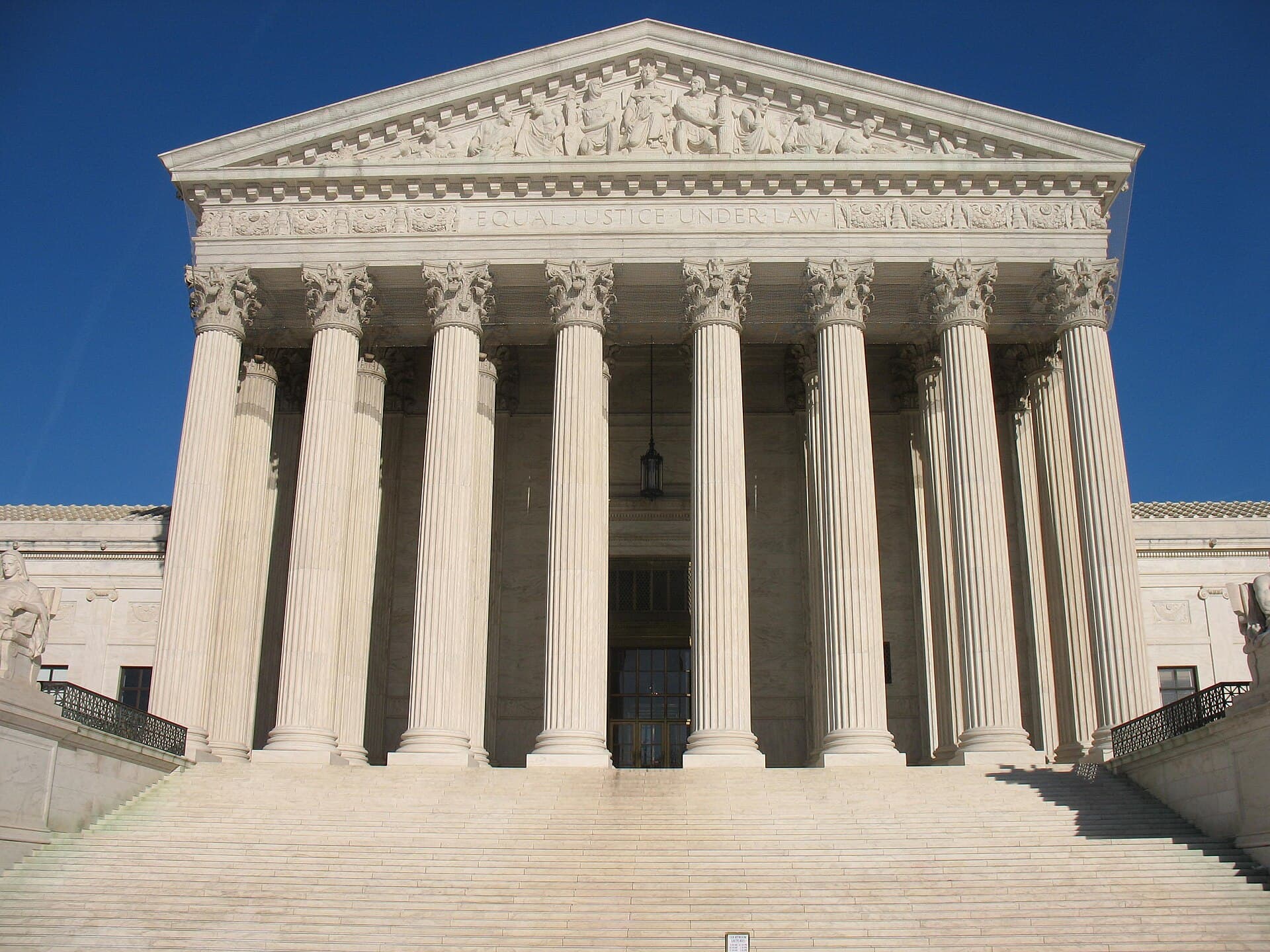
Justices Sonia Sotomayor and Ketanji Brown Jackson concurred in the dismissal. Justices Clarence Thomas and Samuel Alito dissented, underscoring the court’s continuing divide over the administration of capital punishment in cases involving intellectual disability.
For Alabama, the dismissal leaves a death sentence vacated and a prisoner spared from execution. For lower courts, it leaves the harder question unresolved: how to apply Atkins, Hall and Moore when IQ scores fall in a narrow band and the clinical evidence is contested.
Know something we missed? Have a correction or additional information?
Submit a Tip