Autnmy AI launches index to rank self-driving companies in real time
Baidu’s Apollo Go edged past Waymo in a real-time robotaxi ranking, highlighting how China’s scale is reshaping the race for autonomous mobility.

A new real-time robotaxi index put Baidu’s Apollo Go just ahead of Waymo, a signal that the fight over self-driving cars is shifting from demo rides to measurable commercial scale. For U.S. policymakers, automakers and investors, that gap matters because the companies closest to deployment are increasingly the ones building fleets, not just software.
Autnmy AI’s Road to Autonomy Index updates every 12 hours and ranks robotaxis, autonomous driving licensing companies, autonomous trucks and delivery bots. The system draws on public databases including federal and state reports, SEC documents and public exchanges, along with some licensed data. Rob Grant, the company’s co-founder, said the platform is not built on indiscriminate web scraping. “We agreed early on, we don't scrape information,” he said. “If it's publicly available or if it's available under a Creative Commons license, we will use that information. We do have some license data that we pay folks for, and under that agreement too.”
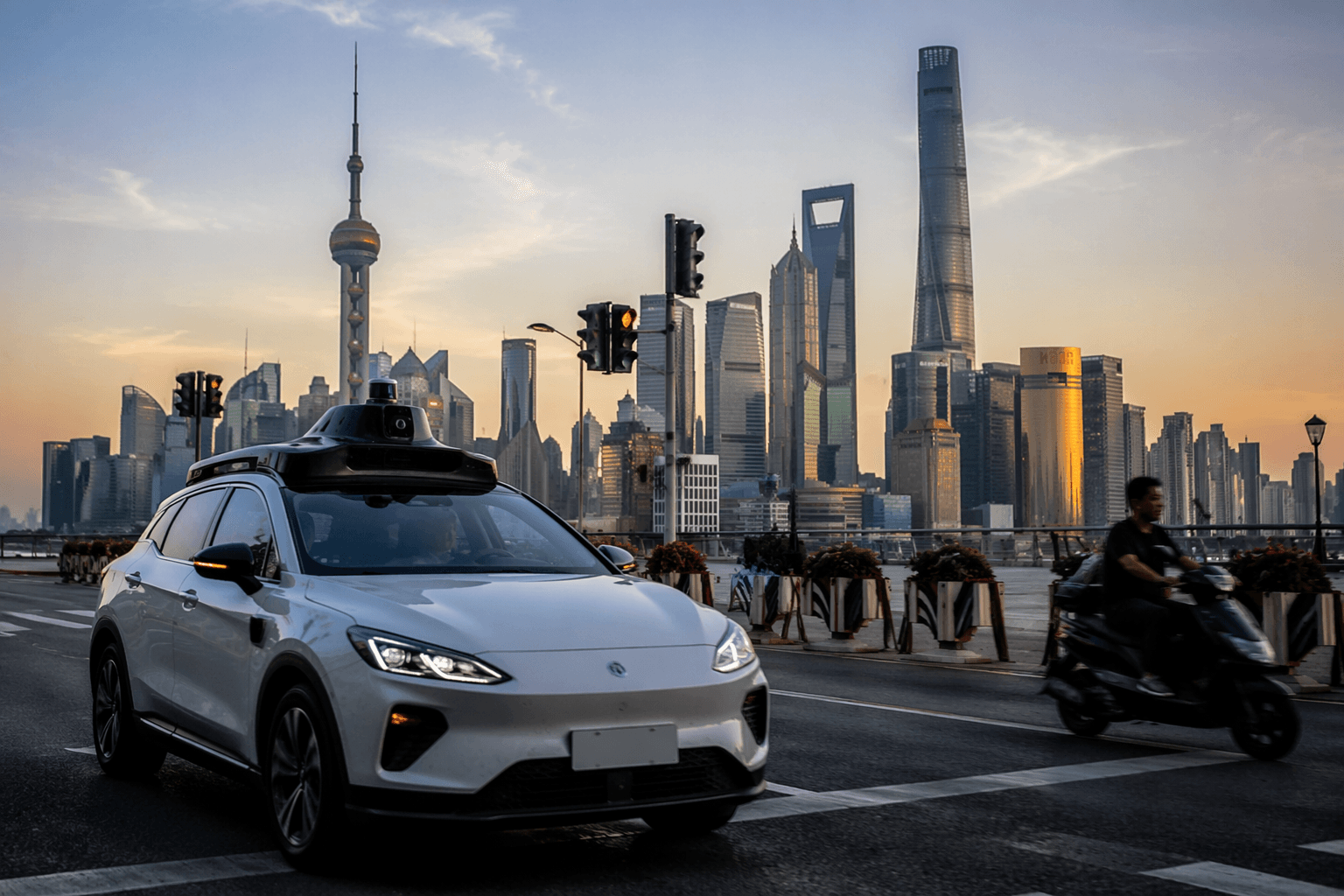
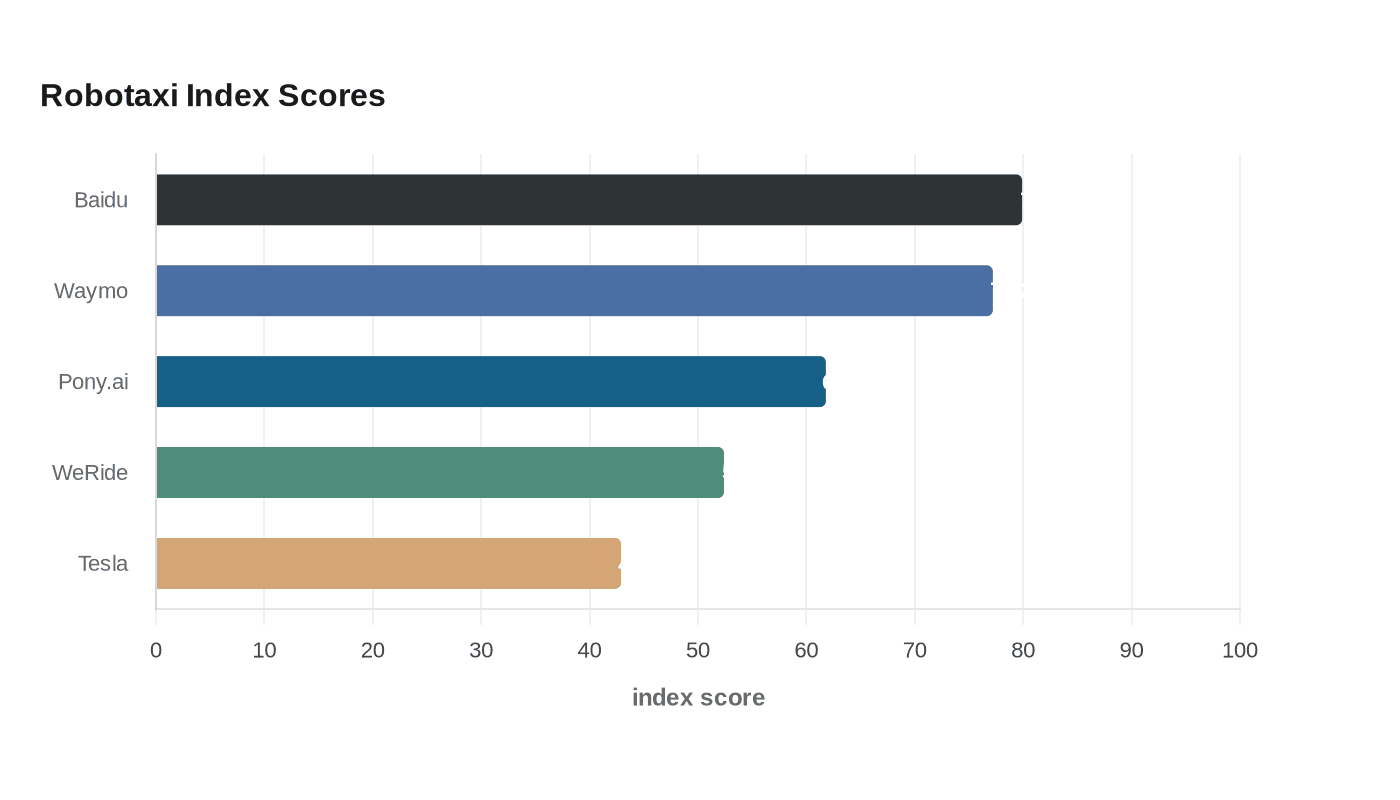
In the robotaxi category, the live listing showed Baidu Apollo Go at 79.9, Waymo at 77.2, Pony.ai at 61.8, WeRide at 52.4 and Tesla at 42.9. The narrow lead at the top underscores how close the commercial race has become, but the broader pattern is more striking: three Chinese companies sit nearest to Waymo, while Tesla trails in fifth. That framing turns autonomous driving into a U.S.-China competitiveness story, not just a transportation scorecard.
China’s advantage appears to be scale. Goldman Sachs Research projected in May 2025 that 500,000 robotaxis could be operating across more than 10 Chinese cities by 2030, saying the market is helped by consumer acceptance in Tier 1 cities, a tightening supply of human drivers and support from government and insurance markets. Those are exactly the conditions that can accelerate urban deployment, lower operating costs and draw capital toward fleets that can prove revenue, not just technical promise.

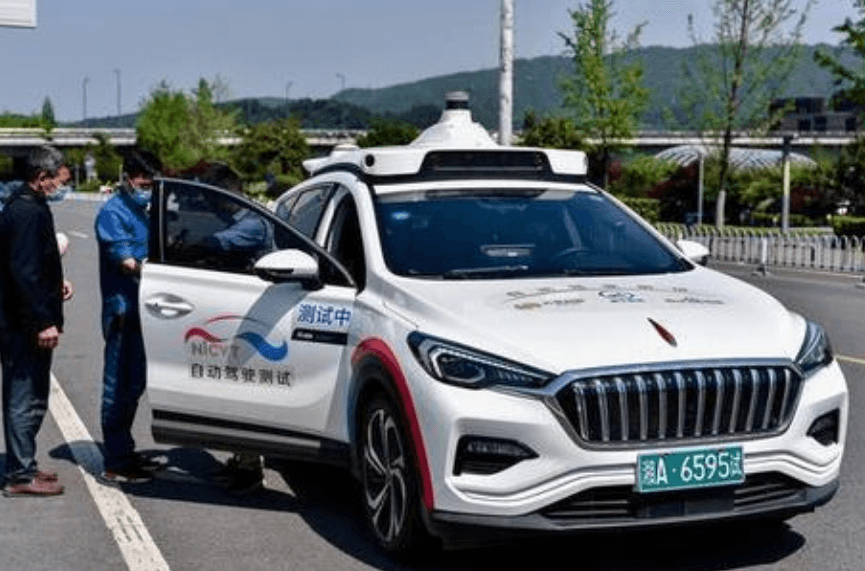
Baidu’s recent numbers show why Apollo Go rates so highly. The company said it delivered 3.2 million fully driverless rides in the first quarter of 2026, with weekly rides peaking above 350,000 in March. By April 2026, cumulative public rides had exceeded 22 million. Baidu had previously said Apollo Go had passed 11 million rides, was operating in 15 mainland China cities with more than 1,000 driverless vehicles, and was testing in Hong Kong, Dubai and Abu Dhabi.
The policy lesson for the United States is blunt: if American companies cannot match that operating tempo, the race will not be decided by who has the flashiest autonomy stack, but by who can win permits, insurance confidence and city-by-city deployment first.
This article was produced by Prism’s automated news system from verified source data, official records, and press releases, then run through automated quality and moderation checks before publishing. The system is built and supervised by the people who set the standards it runs under. Read our full AI policy.
Know something we missed? Have a correction or additional information?
Submit a Tip