Auto Industry Group Urges Feds to Scrap Gas Tax, Add Vehicle Weight Fee
America's highway fund faces insolvency by 2028, and the auto industry's top trade group wants to fix it by charging drivers based on vehicle weight, not gallons pumped.
The nation's leading auto industry trade group called on the federal government to jettison the 18.4-cent-per-gallon gasoline tax and replace it with a fee tied to vehicle weight, a shift that would fundamentally reorder who pays for America's roads and, for the first time, put electric vehicle owners on the hook alongside everyone else.
John Bozzella, CEO of the Alliance for Automotive Innovation, whose members include General Motors, Toyota, Volkswagen and Hyundai, made the proposal as the Highway Trust Fund barrels toward insolvency. "This policy would guarantee every vehicle on the road contributes something to maintaining America's transportation network," Bozzella said, calling the current distribution of the burden "not fair."
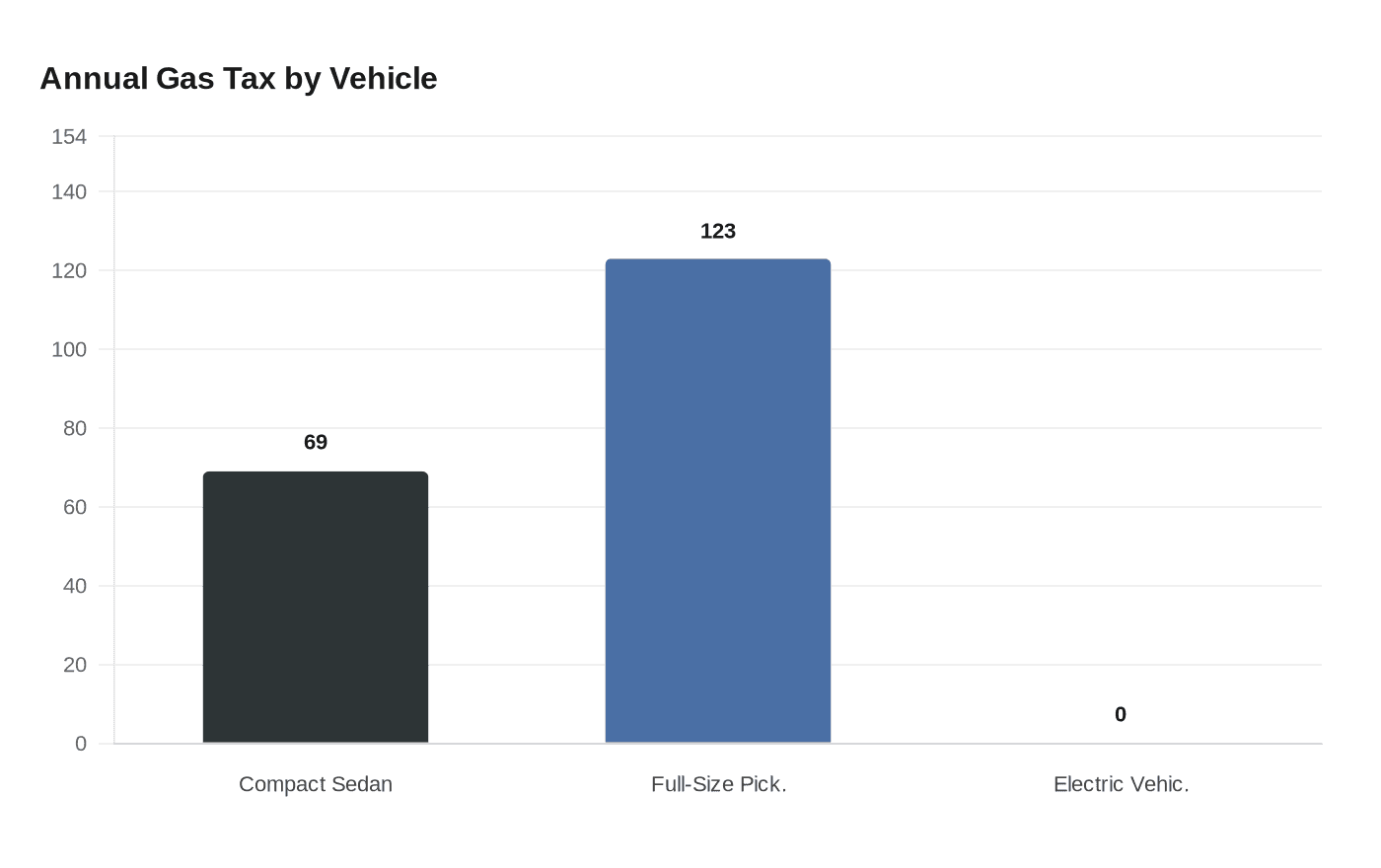
The math illustrates his point sharply. A driver logging 12,000 miles a year in a compact sedan averaging 32 miles per gallon pays roughly $69 in federal gas tax annually. That same mileage in a full-size pickup at 18 mpg runs about $123. An electric vehicle driver, in a Tesla Model 3 or a GMC Hummer EV, pays zero, despite the fact that the Hummer EV tips the scales at more than 9,000 pounds, more than three times the weight of a typical compact car. Under a weight-based fee, that equation flips entirely: the heavier the vehicle, the larger the annual contribution, regardless of what fuel it burns. The EV buyer who chose an electric truck to escape the pump winds up paying more, not less.
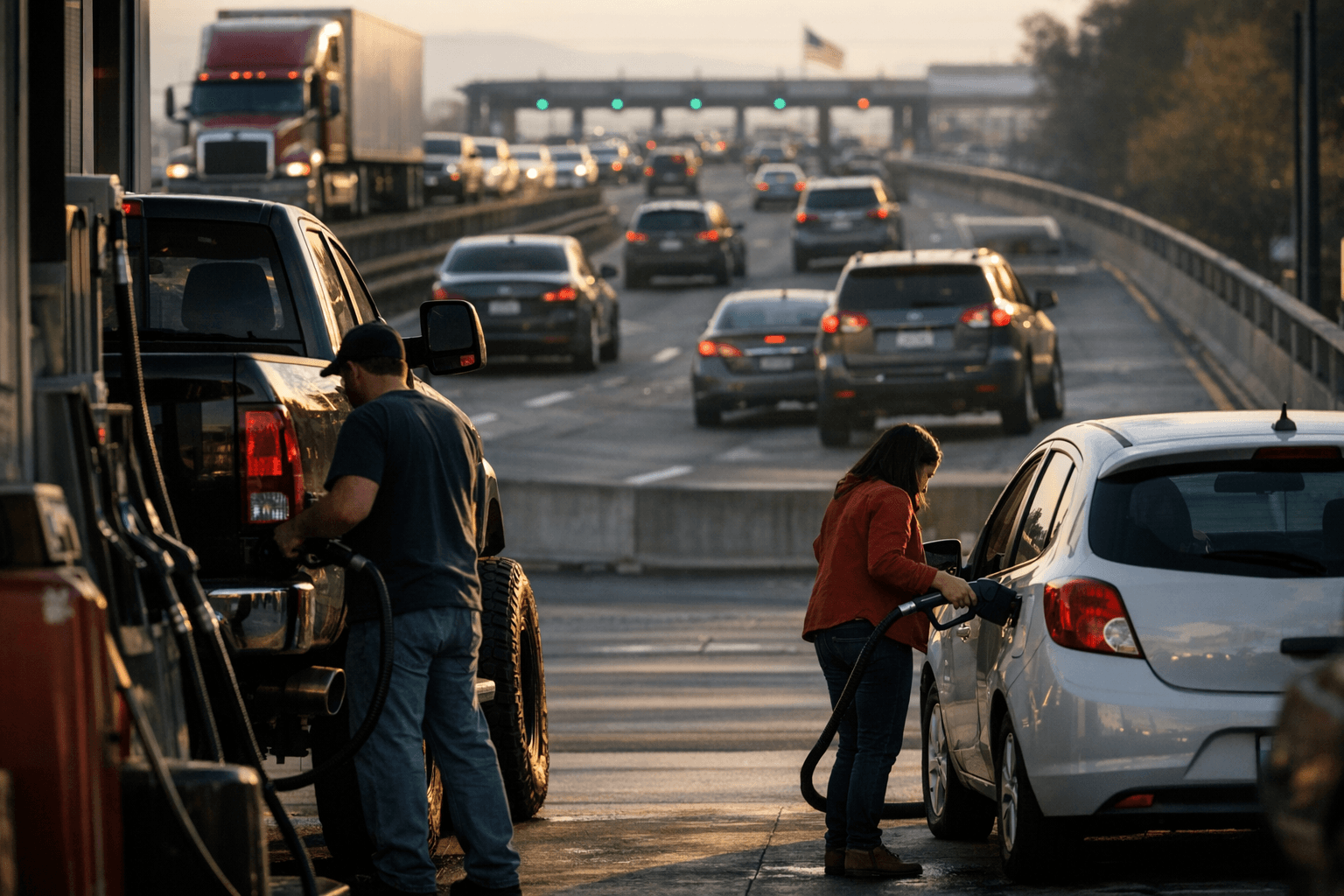
The stakes extend well beyond individual motorists. The Highway Trust Fund, which finances federal highway and transit programs, is projected to hit insolvency by 2028, at which point it would face a roughly 46 percent spending cut unless Congress acts. Congress has already transferred more than $275 billion in general fund dollars into highway accounts since 2008 to keep the system solvent. The gas tax, frozen at 18.4 cents per gallon since 1993, has lost roughly 60 percent of its real purchasing power, and the surge of fuel-efficient hybrids and battery-electric vehicles is accelerating the revenue erosion with every new registration.
A weight-based fee would also scramble costs for the freight industry, with consequences that ripple into consumer prices. A fully loaded commercial semi-truck can weigh up to 80,000 pounds; any fee scaled to weight lands hardest on heavy commercial haulers. Trucking companies typically pass those costs downstream, meaning higher road-use charges would likely add pressure to prices on groceries, manufactured goods and construction materials.
Equity remains the thorniest political challenge. Gas taxes are already regressive, consuming a larger share of income from lower-income households than from wealthier ones, and a weight-based fee risks replicating that problem. Rural drivers, who disproportionately rely on heavier pickups and log more miles than urban commuters with access to transit, could face a steeper burden than apartment dwellers parking compact cars. The Alliance has acknowledged the need for potential exemptions or credits for lower-income drivers, but no specific structure has been outlined.
The political calendar is pressing. The federal surface transportation law expires September 30, 2026, giving congressional committees a concrete deadline to either extend current law or write a new financing framework from scratch. The Alliance's proposal is the most detailed industry-backed alternative currently on the table, and it is positioned to shape early negotiations over the next transportation bill. The case for change is fiscal: the existing model has required one bailout after another for nearly two decades. The fight over what replaces it will be about who, exactly, picks up the tab.
This article was produced by Prism’s automated news system from verified source data, official records, and press releases, then run through automated quality and moderation checks before publishing. The system is built and supervised by the people who set the standards it runs under. Read our full AI policy.
Did this article answer your question?

