Spring Blooms Replace Winter's Last Grip in South-Central Pennsylvania
Pittsburgh recorded spring leaf-out 15 days ahead of schedule this year, and on Easter Sunday, south-central Pennsylvania made the case that winter was finally finished.
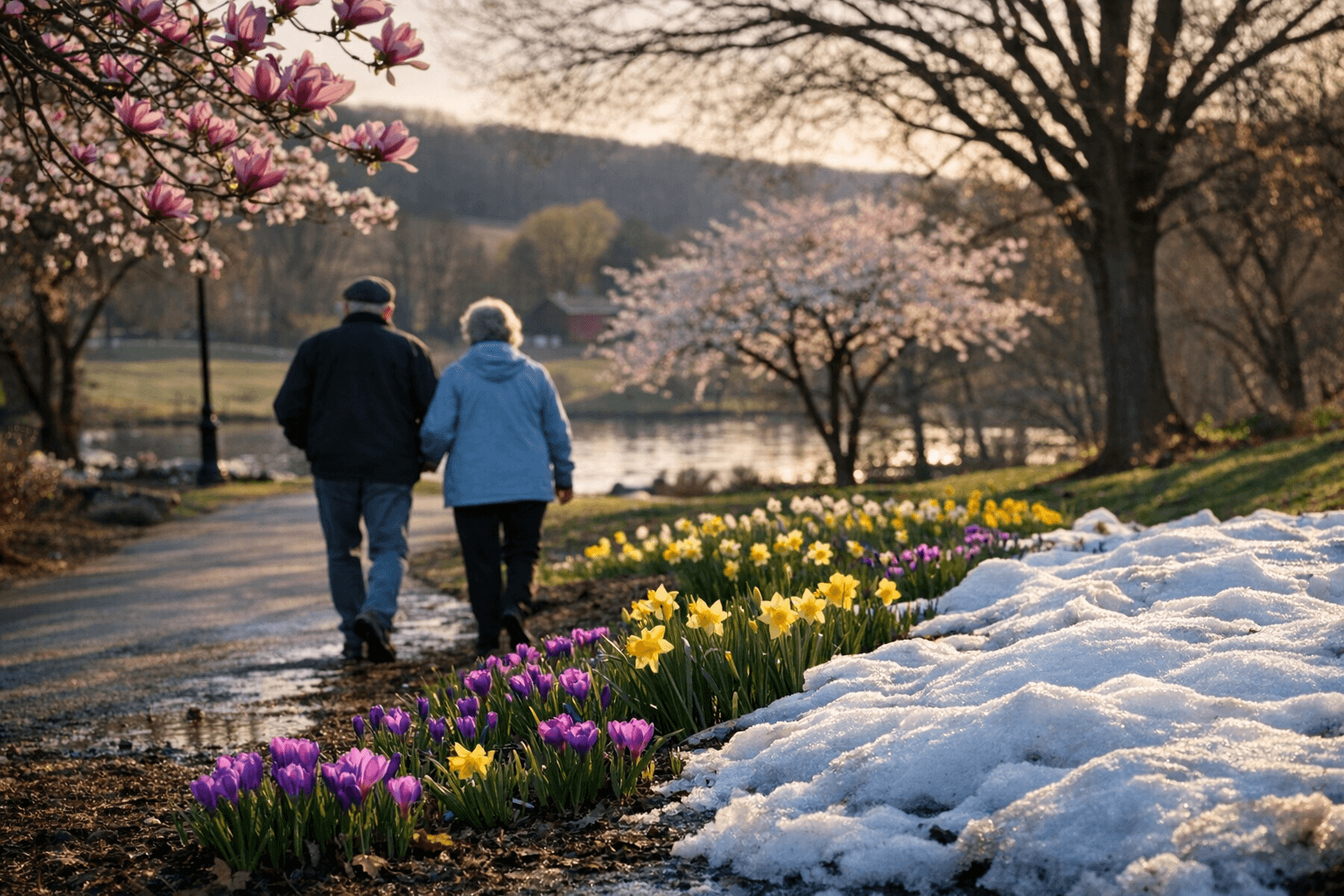
By Easter Sunday, south-central Pennsylvania had made its case. The forsythia was flaring yellow along fence lines, daffodils were nodding in churchyard gardens, and the last cold shadows of winter were retreating into the hillsides as videographer Brad Markel captured the seasonal turn across the region on April 5.
Counties south of Interstate 80 in central Pennsylvania are typically the first in the region to show signs of spring, a transition that usually arrives during the first week of April. This year, those signs came with particular force. Pittsburgh recorded spring leaf-out 15 days ahead of schedule, with first leaf arriving on March 11, while Philadelphia reached the same threshold four days early on March 13.
In south-central Pennsylvania, the early spring lineup typically includes cornelian cherry dogwood, forsythia, spicebush, star magnolia, and witch hazel in the shrub layer, alongside crocuses, daffodils, Dutch hyacinths, early tulips, and grape hyacinths pushing through the soil. On Easter weekend, many of those species were already well past bud stage, coloring roadsides and woodlands in the pale yellows and whites that define the region's seasonal reset.
Easter 2026 landing on April 5 placed the holiday comfortably in early spring, often coinciding with blooming flowers and milder weather. In south-central Pennsylvania, that alignment was visible across the landscape: in the redbud trees just beginning to flush purple along stream banks, in the bloodroot and hepatica pushing through leaf litter on shaded forest floors, and in the lengthening afternoon light that stretched well past the dinner hour.
A scientific paper published in January 2026 documented that early spring wildflowers in Pennsylvania are blooming even earlier, a trend linked to climate change, with researchers at Carnegie Museum of Natural History tracking the earlier flowering of native species across the state. That pattern played out in real time this Easter, as a winter that had been present just weeks prior gave way to a landscape that looked, by Sunday, undeniably like spring.
This article was produced by Prism’s automated news system from verified source data, official records, and press releases, then run through automated quality and moderation checks before publishing. The system is built and supervised by the people who set the standards it runs under. Read our full AI policy.
Did this article answer your question?