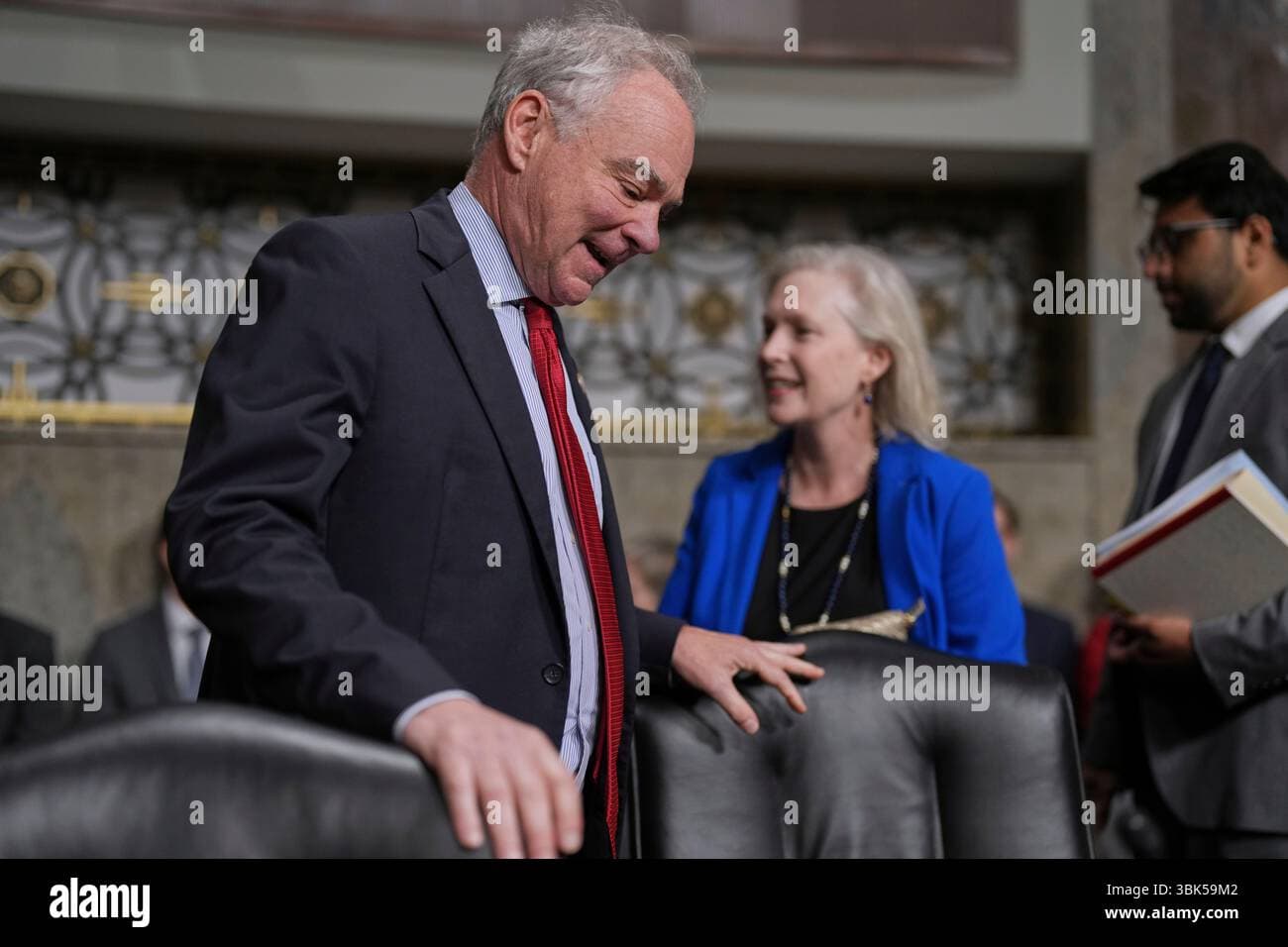
Kaine Questions Record $1.5 Trillion Defense Budget Amid U.S.-Iran War
Trump's $1.5 trillion Pentagon request, a $441 billion jump over last year, drew sharp criticism as a "war of choice" budget while Iran drives prices higher.
The Trump administration's 2027 defense budget request would push Pentagon spending to $1.5 trillion, the largest military budget in U.S. history and a roughly 42% increase over the approximately $1.06 trillion Congress approved for fiscal year 2026. The proposal, formally released Friday, landed amid a 49-day partial government shutdown, an ongoing U.S.-led war with Iran driving up gas prices nationwide, and a Congressional Budget Office projection of a $1.853 trillion federal deficit for the current fiscal year. No deficit projections accompanied the White House's 92-page budget document, prepared by Budget Director Russ Vought.
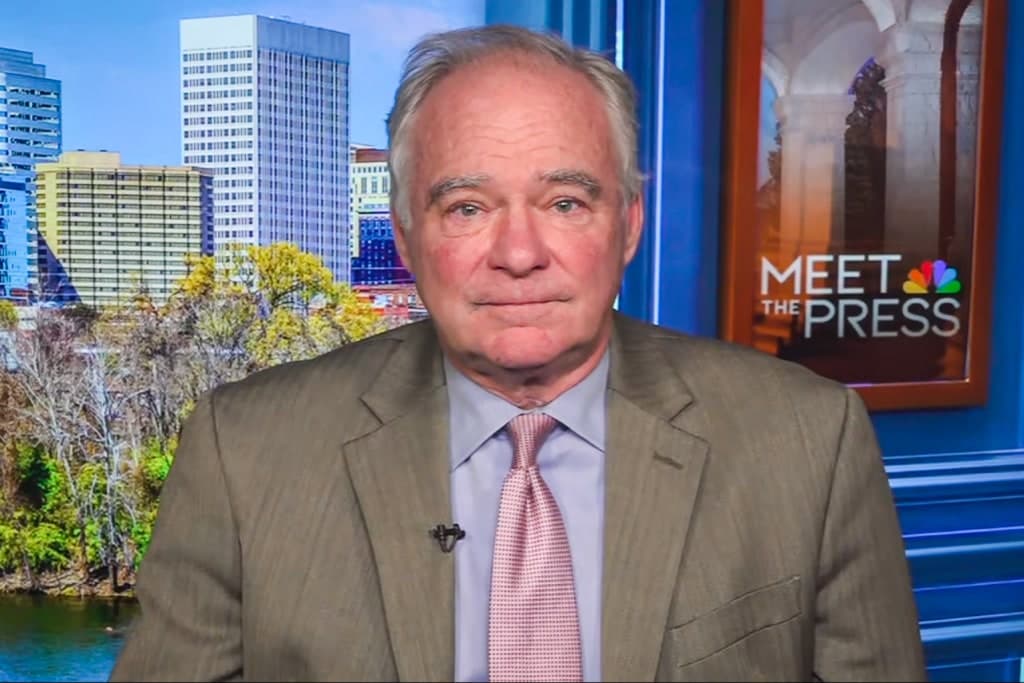
Sens. Tim Kaine and Mark R. Warner, both Virginia Democrats, responded with a joint statement framing the proposal as a political choice with direct consequences for working Americans. "Americans across the country are getting crushed by rising costs on energy, food, housing, and everything in between," the senators said. "Instead of ending his war of choice with Iran that is actively driving prices even higher, President Trump is once again revving up a chainsaw to slash important government programs that Americans rely on."
The $1.5 trillion figure is structured in two parts: $1.1 trillion through the standard appropriations process, which requires bipartisan congressional support, and an additional $350 billion the White House intends to secure through budget reconciliation, a procedure Republicans can advance without Democratic votes. If enacted as proposed, it would mark the first time the Pentagon's base budget has ever surpassed $1 trillion, with total discretionary spending across all federal agencies reaching $2.2 trillion. The White House's Office of Management and Budget is also separately reviewing a potential $200 billion emergency supplemental to cover current-year Iran war costs, an additional charge on top of Friday's request.
To partially offset the military increase, the administration proposed a 10% reduction in non-defense discretionary spending, totaling roughly $73 billion in cuts. Targeted programs include health and biomedical research, K-12 and higher education, renewable energy and climate grants, the Low Income Home Energy Assistance Program, and community development block grants. NASA faces a cut of approximately $5.6 billion. The Department of Justice, by contrast, would receive a 13% budget increase, in line with Trump's law enforcement priorities.
The pushback reached across party lines. Senate Appropriations Committee ranking member Patty Murray of Washington called the budget "bleak and unacceptable," accusing Trump of wanting to "slash medical research to fund costly foreign wars." Beyond Democrats, both parties have expressed frustration with the administration's limited disclosure about Iran war costs and operational details, complicating congressional willingness to fund the buildup on the scale requested.

Trump had telegraphed the $1.5 trillion figure as far back as January 2026, describing it as "for the good of the country" and pledging it would allow the U.S. to "build the Dream Military." Defense Secretary Pete Hegseth called it "a message to the world." At a private White House event, Trump offered a more direct rationale: "We're fighting wars. We can't take care of day care."
Vought framed the request as fulfilling Trump's commitment to "reinvest in America's national security infrastructure, to make sure our nation is safe in a dangerous world," with investments in expanding the defense industrial base, munitions production, and a modern missile defense system.
The budget is constitutionally non-binding; Congress uses executive proposals as a starting point and drafts its own appropriations. Given that the House and Senate remain deadlocked over 2026 spending and lawmakers rejected a similar domestic-cutting package earlier this year, the 2027 request faces a turbulent path even within a Republican-controlled Congress.
Sources:
Know something we missed? Have a correction or additional information?
Submit a Tip