Automakers and Suppliers Grow Open‑Source Auto Pact to 32 Firms
A VDA and Eclipse Foundation initiative to build a shared software foundation for software‑defined vehicles expanded from 11 to 32 signatories at CES in Las Vegas, promising large cuts in development cost and time. The move could reshape supply chains and chipmaker strategies, but key governance, IP and certification details remain outstanding.

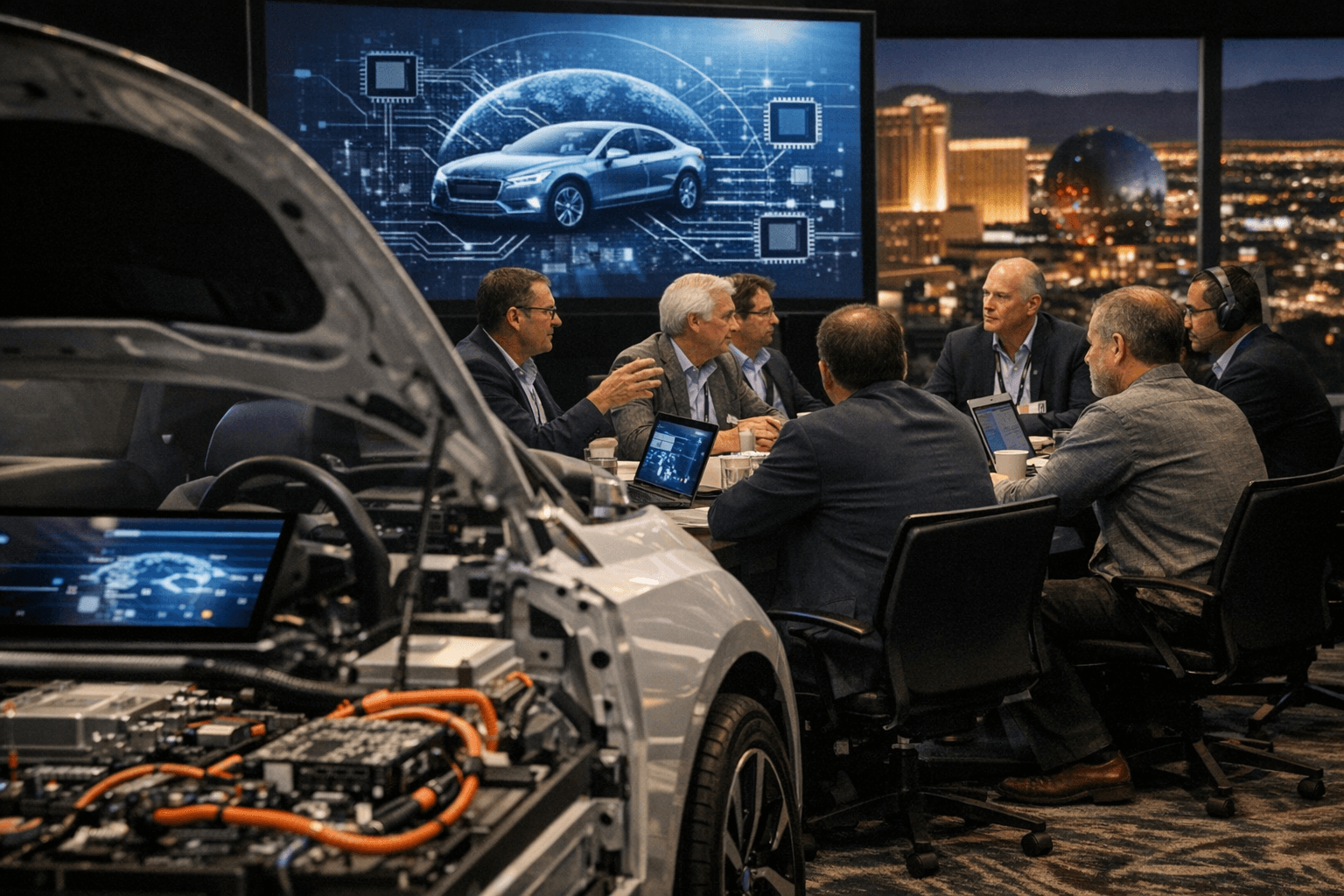
At the CES trade show in Las Vegas on January 7, 2026, the German Association of the Automotive Industry (VDA) and the Eclipse Foundation announced a major expansion of a Memorandum of Understanding for an Automotive‑Grade Open Source Software Ecosystem. The collaboration, launched in June 2025 with 11 founding participants, now counts 32 companies as signatories, extending the effort from a small group of OEMs and suppliers to a broad cross section of the automotive technology chain.
The original cohort named at launch included BMW, Bosch, Continental, ETAS, Forvia, Mercedes‑Benz, Qorix, Valeo, Vector Informatik, Volkswagen and ZF. The expanded list adds a wide range of system integrators, suppliers and chipmakers, among them 42dot, Accenture, AVL, Capgemini, Coretura, Cummins, ECARX, Elektrobit, Infineon, LEAR, LG Electronics, Michelin, MOBIS, QNX, Qualcomm, Red Hat, Schaeffler, Traton, Stellantis, T‑Systems and Useblocks. The Eclipse Foundation said the work is being carried out within its Software‑Defined Vehicle (SDV) Working Group.
Organizers framed the pact as pre‑competitive cooperation aimed at developing an open, interoperable and certifiable software foundation for next‑generation vehicles. The VDA supplied quantitative targets to illustrate the potential payoff, estimating development and maintenance effort could fall by up to 40% and time to market could shorten by up to 30%. Those figures are central to the pitch: shared, code‑first building blocks would reduce duplicated engineering across OEMs and suppliers and accelerate product rollouts as vehicles become increasingly software‑driven.
Mike Milinkovich, executive director of the Eclipse Foundation, said the expansion “reflects a clear global shift toward open innovation in the automotive industry.” His comment underscores a broader industry turn toward open‑source models familiar from cloud computing and mobile, where shared foundations have lowered costs and fostered rapid iteration.
The market implications are significant. For OEMs, a common software substrate could blunt repeated integration costs and speed feature parity across brands. For suppliers and chipmakers, participation offers influence over standards and early access to reference implementations, but it also heightens competitive pressure to contribute valuable IP rather than merely implement others’ work. Investors will watch how the initiative affects margins in software‑heavy segments and whether consolidation of platforms accelerates supplier specialization.
Yet substantial questions remain. The announced MoU does not provide detailed governance rules, exact contribution or intellectual property terms, or binding financial commitments. Certification pathways, cybersecurity responsibilities and liability frameworks for open components are not documented in the materials released at CES. Those gaps will determine whether the pact yields real economies of scale or devolves into a catalog of incompatible modules.
Regulators and certification bodies will likely take an interest as well. Open foundations can speed innovation, but they also complicate assurances needed for safety‑critical systems. Policymakers may need to clarify standards for auditability, provenance and secure update mechanisms to align public safety goals with industry efficiency.
The expansion to 32 signatories marks a clear inflection in the industry’s approach to software‑defined vehicles. Turning ambition into durable cost savings will depend on the MoU’s next steps: publishing governance details, defining IP and contribution rules, and mapping concrete deliverables and timelines within the Eclipse SDV Working Group. Without those, the headline growth risks remaining a statement of intent rather than a structural transformation.
Know something we missed? Have a correction or additional information?
Submit a Tip