Avataar AI launches low-cost video model tailored for India
Avataar’s Varya costs 0.48 a second and is tuned to Indian festivals, food and clothing, a test of whether cheaper local AI can scale beyond Silicon Valley assumptions.

Avataar AI has launched Varya, a distilled video model priced at 0.48, or $0.005, for every second of generation, and built to understand Indian context such as festivals, food, clothing and architecture. The bet is straightforward: if AI video is made cheaper, faster and more culturally specific, India could push beyond imported assumptions and build products suited to its own market.
The Bengaluru startup said Varya was not trained from scratch. It began with Alibaba’s publicly available Wan 2.2 model and used distillation to compress the system into a leaner version for Avataar’s use cases. The company said Varya runs in four steps instead of Wan 2.2’s 50, making it roughly 10 times faster and far less expensive to serve. On an NVIDIA H200 GPU, Avataar said the model can generate a 5-second 720p clip in 45 seconds, compared with 1,230 seconds for Wan 2.2.

That pricing matters because Avataar and its backers see cost as the main barrier to AI adoption in India. Peak XV, one of the company’s backers, argues that current AI video tools are still too expensive for population-scale use across students, teachers, MSMEs, creators, enterprises and public services. In a market where video is central to commerce and communication, lower inference costs could determine whether AI video remains a premium novelty or becomes a practical business tool.
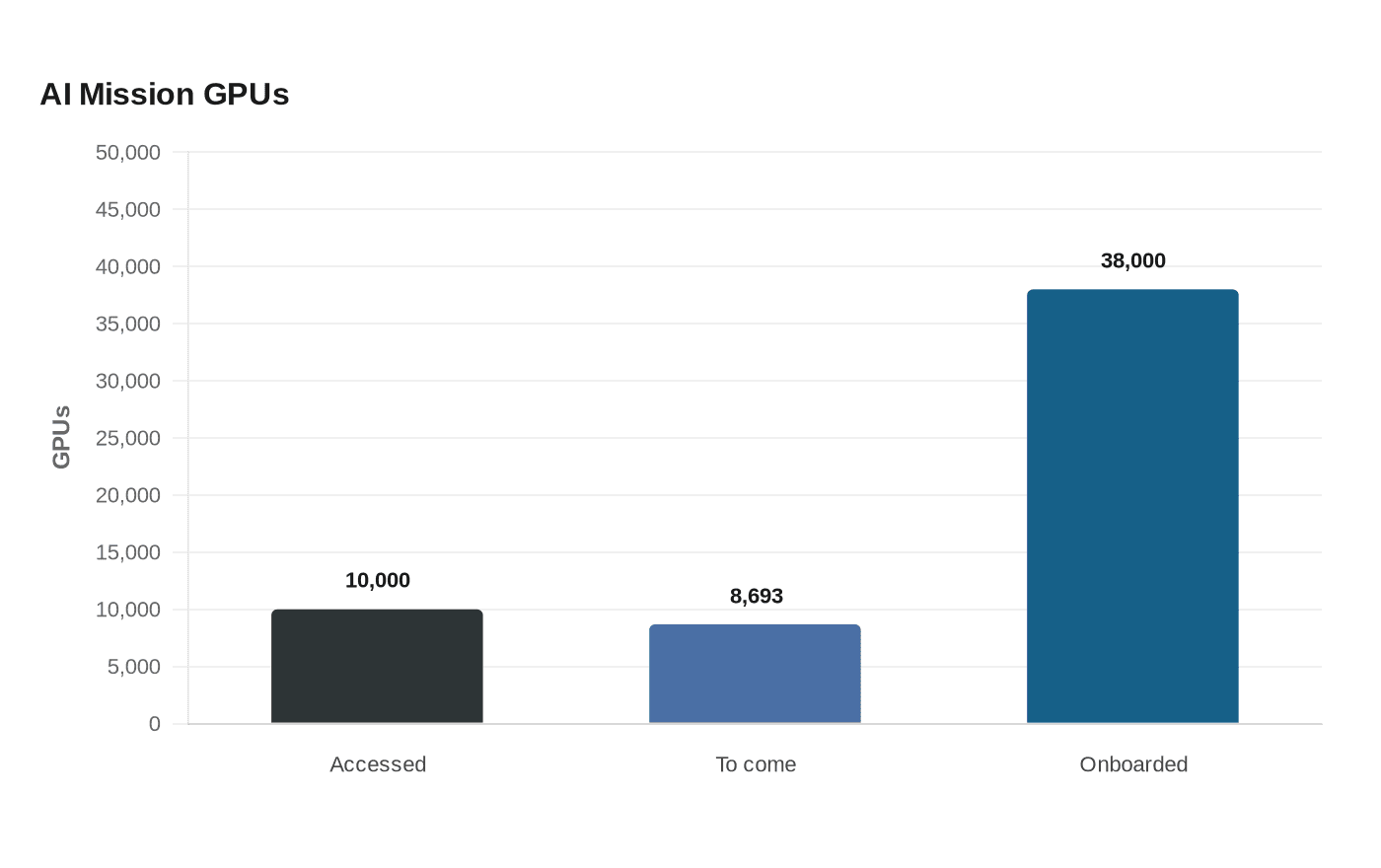
Avataar plans to release Varya as an open-weight model on India’s AI Kosh portal, along with its training data, so developers can self-host or modify it. That fits the larger policy push around the India AI Mission, a roughly $1.2 billion program that selected 12 startups to receive subsidized GPU compute in exchange for public model releases. The government has also scaled its compute stack aggressively, first outlining access to 10,000 GPUs with another 8,693 to come, then later saying more than 38,000 GPUs had been onboarded under the mission.
The launch also extends a broader shift in Avataar’s own strategy. Founded in 2014, the company raised $45 million in Series B funding in January 2022 from Tiger Global and Sequoia Capital India, bringing its total funding at the time to about $55.5 million. By 2023, it had about 180 specialists across Silicon Valley and Bengaluru and counted customers including Sleep Number, Pepperfry and Bajaj Auto. Earlier company claims said its platform could drive more than 3.5x sales conversion uplift for e-commerce customers.
For Avataar, Varya is more than a cheaper video model. It is a test of whether India can build AI infrastructure and products that are locally legible, commercially viable and open enough to spread. If the pricing holds and the model performs as promised, India’s next AI advantage may come not from matching Silicon Valley feature for feature, but from designing for its own scale, language and culture first.
This article was produced by Prism’s automated news system from verified source data, official records, and press releases, then run through automated quality and moderation checks before publishing. The system is built and supervised by the people who set the standards it runs under. Read our full AI policy.
Did this article answer your question?