AWS Bahrain Region Hit by Second Disruption This Month After Drone Activity
AWS Bahrain was "disrupted" by drone activity for the second time this month, with Amazon moving customer workloads to alternate regions and citing the ongoing Middle East war.
Amazon confirmed Monday night that drone activity near its facilities had disrupted its Amazon Web Services region in Bahrain for the second time in the same month, adding a new chapter to what is already an unprecedented stretch of conflict-driven outages for a major U.S. tech company.
An Amazon spokesperson confirmed the disruption was due to drone activity in the area, following an inquiry by Reuters, which first reported the incident on March 23. The confirmation marked the second time in a month that the company's operations were affected by the war. Amazon said it was helping to migrate customers to alternate AWS regions while it recovers, though it did not provide additional details on the extent of the damage or how long it anticipated the disruption to last.
An AWS representative told The National: "The AWS Bahrain region has been disrupted as a result of the ongoing conflict. We are working closely with local authorities and prioritising the safety of our personnel throughout our recovery efforts."
Earlier this month, AWS reported that facilities in Bahrain and the UAE had lost power and that it was working to transfer computing workloads to other regions. Amazon said at the time the Bahrain region was affected by a drone attack in proximity to one of its facilities. AWS described the physical consequences of those earlier strikes on its status page: three AWS data centre facilities were struck in the UAE and Bahrain on March 1, disrupting services for customers for at least 48 hours. The company's earlier status-page language was explicit about the toll: "These strikes have caused structural damage, disrupted power delivery to our infrastructure, and in some cases required fire suppression activities that resulted in additional water damage." Amazon said it anticipated a "prolonged" recovery due to structural damage.
The attack on the UAE facility was the first time military action had disrupted a major U.S. tech company's data centre. Bahrain has intercepted and destroyed 147 ballistic missiles and 282 drones since the start of the conflict, the Bahrain Defence Force reported on Monday.
These attacks came after Iran's Islamic Revolutionary Guard Corps threatened on March 11 to attack "economic centres and banks" related to U.S. and Israeli entities in the region. Iran has claimed it is targeting U.S. assets across the Gulf Arab states in retaliation for the joint attack on Iran by the U.S. and Israel that began on February 28. Amazon did not immediately comment on whether its Bahrain facility was directly struck or whether the disruption resulted from nearby activity.
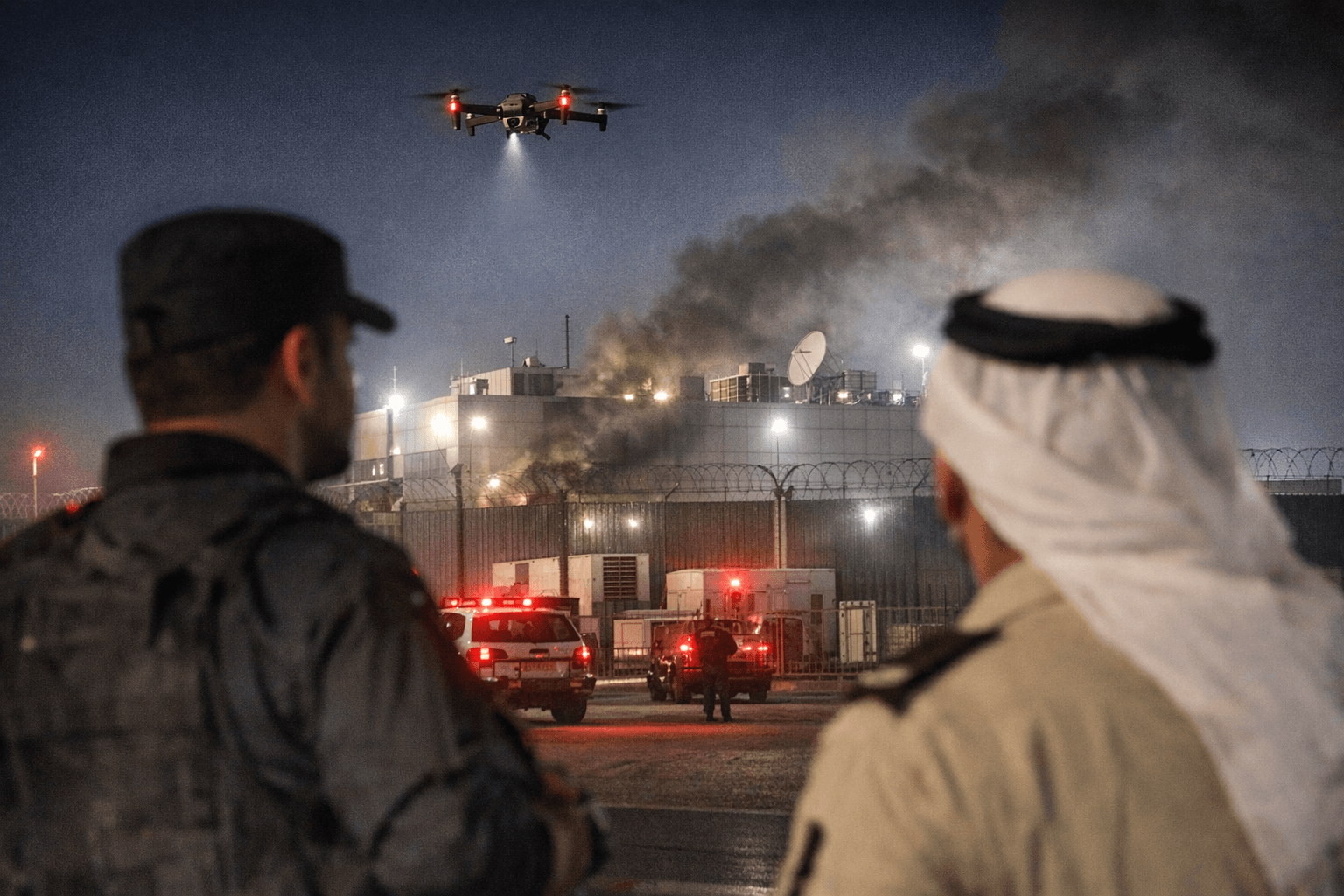
As of Monday night, AWS had not updated its public status page to reflect the impact of the latest incident. Amazon said it was assisting customers to migrate workloads to alternate regions, with many now operating from other parts of the world. The company told customers: "As this situation evolves and, as we have advised before, we request those with workloads in the affected regions continue to migrate to other locations."
The scale of potential downstream harm is substantial. AWS is Amazon's cloud computing unit and critical for the operation of many well-known websites and government operations. Amazon's cloud computing unit is crucial for the operation of several websites and government operations and operates more than 900 data centres worldwide.
Vibin Shaju, Europe, Middle East and Africa vice president at cybersecurity firm Trellix, warned of concentration risk despite the redundancy built into hyperscale cloud platforms. The AWS incident this month mainly disrupted APIs and service availability, not core systems, but showed how reliance on shared infrastructure can create a "single point of impact" during conflict, Shaju said. "When applications rely heavily on a single cloud environment, slowness or service interruption can quickly ripple across banking apps, airline booking systems and consumer-facing services."
Gulf states have said Iran's claims of self-defence cannot justify missile attacks on neighbouring states and accuse Tehran of targeting civilian infrastructure such as airports and energy facilities. An Iranian attack knocked out 17 percent of Qatar's LNG export capacity last week, further disrupting the energy market. With no timeline offered for recovery and the public status page still dark on the latest incident, AWS customers in the Gulf face an extended period of uncertainty with no clear end in sight.
Know something we missed? Have a correction or additional information?
Submit a Tip