Baby boomer wealth transfer will mostly enrich already rich Americans
Almost three quarters of expected boomer heirs are already in the top 10% by net worth, so the biggest inheritance wave in U.S. history looks likely to widen wealth gaps.
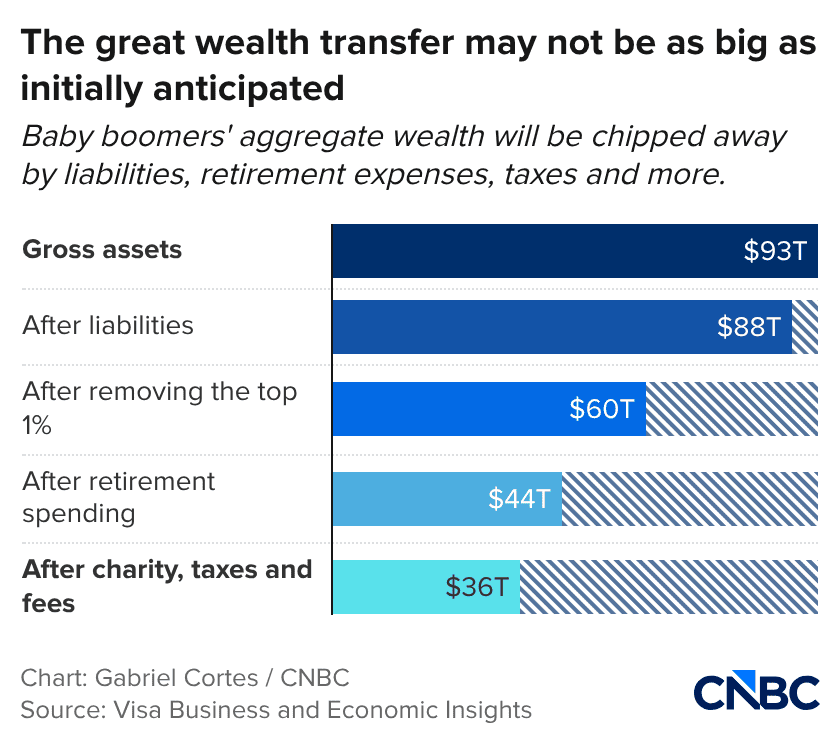
Almost three quarters of Americans expected to inherit from baby boomers are already in the top 10% by household net worth. That concentration means the Great Wealth Transfer is likely to reinforce existing advantage, not create a broad new class of first-time wealth holders.
Cerulli Associates has put the scale of the transfer at $84 trillion over the next two decades in one estimate, then raised that figure to $124 trillion through 2048 in a later release. In its white paper, Cerulli said Millennials will inherit about $46 trillion over 2024-2048, but Generation X is set to receive the largest share over the next 10 years, at $14 trillion compared with Millennials’ $8 trillion.

That split matters because the windfall is not flowing evenly across the income ladder. The heirs most likely to receive it are already sitting on family homes, brokerage accounts and retirement assets, while many younger households will get little or nothing at all. The result is a transfer that can deepen the divide between people who already have investable wealth and those who do not, especially in markets where home prices and asset values have far outpaced wages.
Citizens Bank says the oldest baby boomers are approaching their 80s, which is helping drive the transfer closer. The money moving through estates will not all go to children and grandchildren either. Some estimates include charitable gifts and other beneficiaries, broadening the flow beyond direct family inheritance.

The timing has clear market implications. A transfer that can run from $68 trillion over 25 years in some estimates to $124 trillion through 2048 in Cerulli’s latest forecast is already shaping demand for estate planning, trust work, investment advice and philanthropy strategies. For families with homes, taxable brokerage accounts and tax-advantaged retirement savings, the shift can preserve or expand already substantial balance sheets. For families without those assets, the next decade will bring the same inheritance wave with far less relief, and class mobility will stay tied to whether wealth was owned before it was passed down.
This article was produced by Prism’s automated news system from verified source data, official records, and press releases, then run through automated quality and moderation checks before publishing. The system is built and supervised by the people who set the standards it runs under. Read our full AI policy.
Did this article answer your question?