Baby Shower Invite Platforms Collect More Guest Data Than Hosts Realize
Free RSVP platforms routinely collect guest emails, device IDs, and behavioral signals that feed ad tech networks — and pregnancy-adjacent data is drawing fresh regulatory scrutiny.
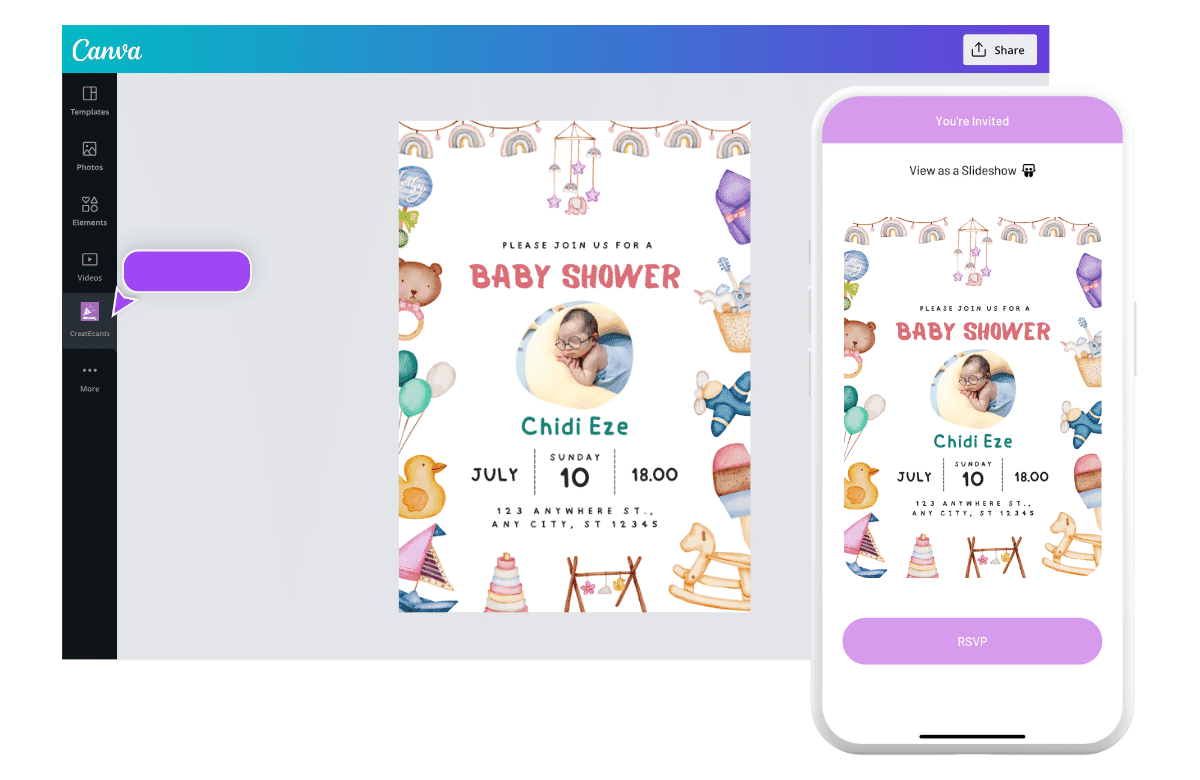
When you send a digital baby shower invitation through a free platform, you're not just sharing a date and a venue. You're handing a third-party company a list of your guests' email addresses, their device identifiers, their IP addresses, and in some cases behavioral signals: who opened the invite, who clicked the registry link, how long they lingered on the page. Most hosts never read the terms that authorize all of it.
The tradeoff is real and specific. Paperless Post shares cookies, pixel tags, and similar technologies connected to a user's browser or device, as well as information associated with email addresses, with partners including Google and Facebook for targeted advertising purposes. Evite collects information from mobile devices including GPS, location information, and advertising identifiers, and uses cookies to track online activity, web pages visited, links clicked, and searches made on their platform. Free tiers on both platforms are essentially funded by this data. That's the business model, and it applies to your guests whether they agreed to it or not.
What These Platforms Actually Collect
The data exposure starts the moment a host imports a contact list. Evite's privacy policy explicitly states the platform may collect and store information about other people that hosts provide, including photographs, email addresses, phone numbers, and physical addresses — information entered on behalf of guests who may never have interacted with the platform at all. From there, the data can be used to deliver targeted advertisements, perform behavioral analysis, and communicate with those guests directly.
Paperless Post's cookie policy notes it uses Google Analytics and offers a Google Analytics Opt-out Browser Add-on for users who want to prevent their data from being collected. That opt-out, however, requires the guest to know it exists and to take action on their own browser. Most won't. Paperless Post also states that users can opt out of sharing for targeted advertising by enabling the Global Privacy Control setting within their browser, another technical step the average RSVP respondent is unlikely to take.
Why Pregnancy Data Is a Specific Risk
This isn't abstract. Health-adjacent topics including pregnancy and fertility are drawing serious legal and regulatory attention. A California court addressed a pixel wiretapping suit against Clearblue, a company that offers home pregnancy and fertility test kits, after a plaintiff alleged her website visit to research fertility products triggered improper data collection via tracking pixels. The suit was eventually dismissed on procedural grounds, but the litigation pattern it represents is accelerating.
The California Privacy Protection Agency brought enforcement actions in 2025 against major companies including Honda, Healthline Media, and Sling TV, with the $1.35 million Tractor Supply settlement underscoring the agency's willingness to pursue data-sharing violations aggressively. California's CCPA and CPRA, Colorado's Consumer Protection Act, and Virginia's Consumer Data Protection Act all impose limits on personal data processing, and health-adjacent data is treated with heightened sensitivity under each framework.
Privacy advocates are direct about how this applies to informal events: "Treat pregnancy and infant-related data as sensitive, even when it's being shared for an informal event," and recommend minimizing unnecessary collection at every step.
Six Controls Hosts Should Use Before Sending
Getting this right doesn't require switching to a printed envelope. It requires a few deliberate choices before you hit send.
1. Minimize data fields. Collect only name, RSVP status, and dietary restrictions.
Birthdates, home addresses, and any health details should stay off the invite form entirely. If you need a mailing address for favors, request it through a private follow-up message after the event, not on the shared invitation page where platform servers log and store the response.

2. Use private share links. Most platforms offer link-only invitations that don't require guests to create a platform account to RSVP.
Use this option for smaller gatherings and turn off any public event searchability setting. A guest responding through a link is exposed to far less data collection than one who creates an account.
3. Read the privacy policy before uploading contacts. Look specifically for language about data retention periods and third-party sharing.
If the platform runs Google or Meta tracking pixels on its RSVP pages, and many free platforms do, those pixels are reading your guests' sessions whether or not your guests consented. Paid tiers on both Paperless Post and Evite frequently remove ad targeting and provide more granular privacy controls; in cases where the guest list is sensitive, that upgrade cost is worth considering.
4. Don't bulk-upload contacts on unfamiliar platforms. If you must import a contact list, use a platform whose data practices you've verified.
Alternatively, email a private link to a secure or encrypted form from a personal email account. Group BCC emails with a private RSVP form are a low-tech but genuinely private alternative when the guest list is small.
5. Vet registry links for tracking. When you embed a registry link in a digital invite, guests who click it may have that behavior logged as an event-level signal.
Some registries use tracking pixels that connect a click back to an identifiable profile. Where possible, use a redirect URL to break the referral chain, or manually paste the registry URL in the invite body rather than using a platform's auto-embed tool.
6. Add a short privacy note. A single line stating that the guest list won't be shared and that no contact details will be sold or distributed builds trust and reduces the risk of downstream complaints.
It also signals to guests that they can RSVP without worrying their information is being fed into a marketing pipeline.
Platform-Specific Notes
RSVPify positions itself explicitly as privacy-focused, stating it won't sell host or guest data and won't send spam to either party, which makes it worth evaluating against the major free platforms for privacy-conscious events. Canva is popular for invite templates, but hosts should confirm whether shared designs or printed invite orders store guest emails on Canva's servers. For maximum privacy, a simple event page on a private website, or a group email with all recipients in BCC, remains the option with the smallest data footprint.
What This Means for Professional Planners
Boutique planners offering digital invite services have an opportunity to differentiate here. Listing privacy controls explicitly in service descriptions, specifying which platforms you use and why, and offering a data-minimization workflow signals professionalism to clients who are increasingly aware of these risks. For corporate hosts coordinating workplace baby showers or group gifts, the stakes are higher still: using an employer's secure forms or an HR-approved platform avoids the kind of data leakage that can create both regulatory and HR exposure.
The broader point is straightforward. Free invitation platforms are not neutral infrastructure. They're advertising technology businesses, and your baby shower guest list is, to them, an audience segment. Small, deliberate choices on data minimization and platform selection are what keep a celebration from becoming an ad-targeting event.
Sources:
Know something we missed? Have a correction or additional information?
Submit a Tip