Bank of America lifts global growth outlook on AI investment boom
Bank of America raised its 2026 and 2027 global growth forecasts as AI spending swelled into a macro force, but households still face inflation and energy shocks.
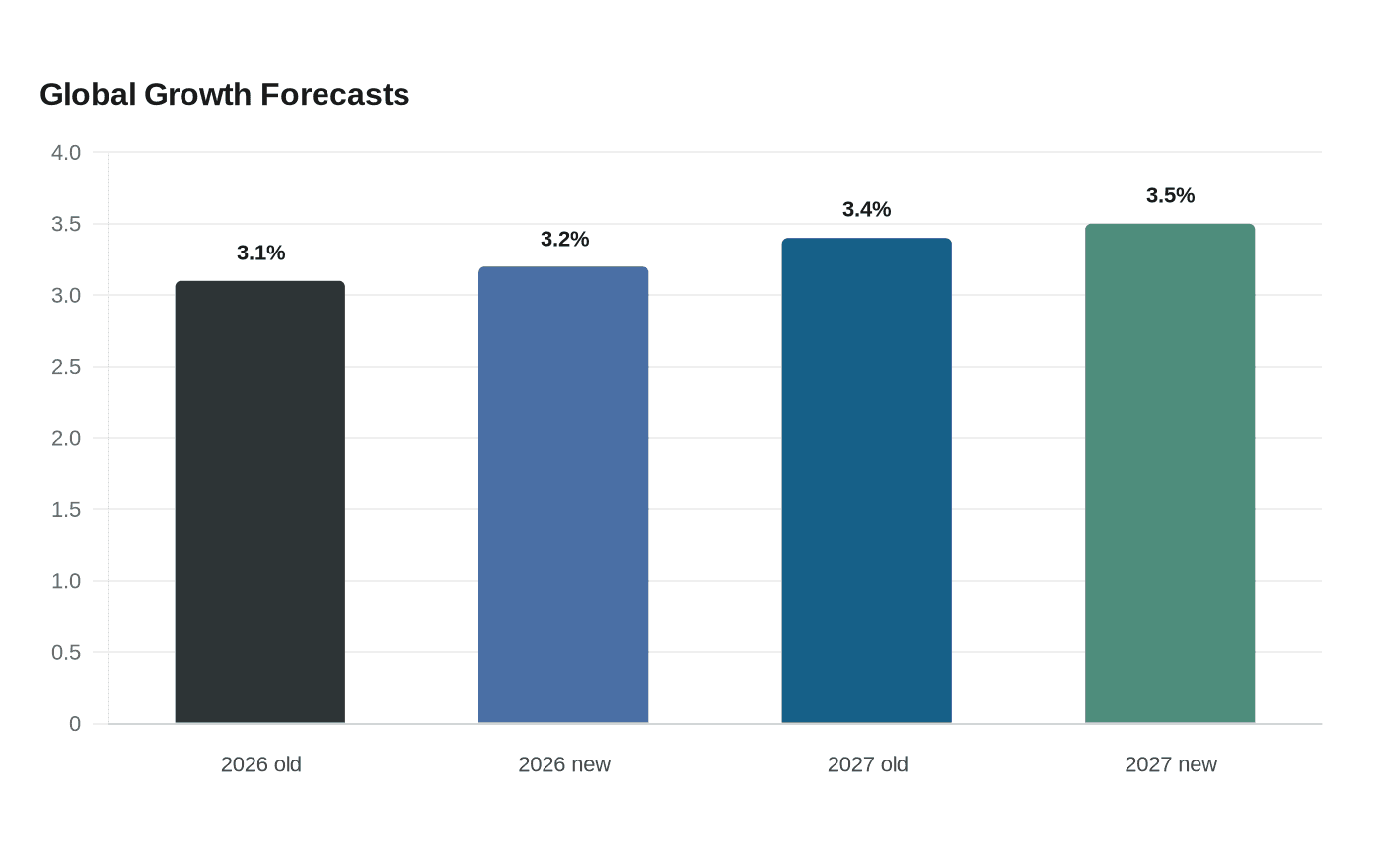
Bank of America lifted its global growth outlook after concluding that the AI investment boom is now large enough to move the macro numbers. The bank raised its 2026 forecast to 3.2% from 3.1% and its 2027 estimate to 3.5% from 3.4%, with economists Claudio Irigoyen and Antonio Gabriel saying AI-linked export cycles in Asia and heavy spending in the United States were doing much of the work.
That shift reflects a real-economy spending wave that reaches far beyond software. Bank of America has said the buildout around data centers, chips, servers, networking gear and related software is now influencing broader growth forecasts, while its 2026 midyear themes flagged massive investment in data centers and the power grid as one of the year’s main drivers. In a separate June note, the bank said rising power demand from AI was already changing the energy investment landscape, pulling utilities and grid infrastructure into the same cycle that has driven semiconductor shares.
The scale of the money helps explain why. Stanford HAI’s 2026 AI Index found global corporate AI investment hit $581.7 billion in 2025, up 130% from the prior year. Private AI investment reached $344.7 billion, up 127.5% from 2024, while U.S. private AI investment climbed to $285.9 billion, more than 23 times China’s $12.4 billion. That gap suggests the benefits are still concentrated in the United States, even as the spillovers reach China and emerging-market Asia through exports and supply chains.

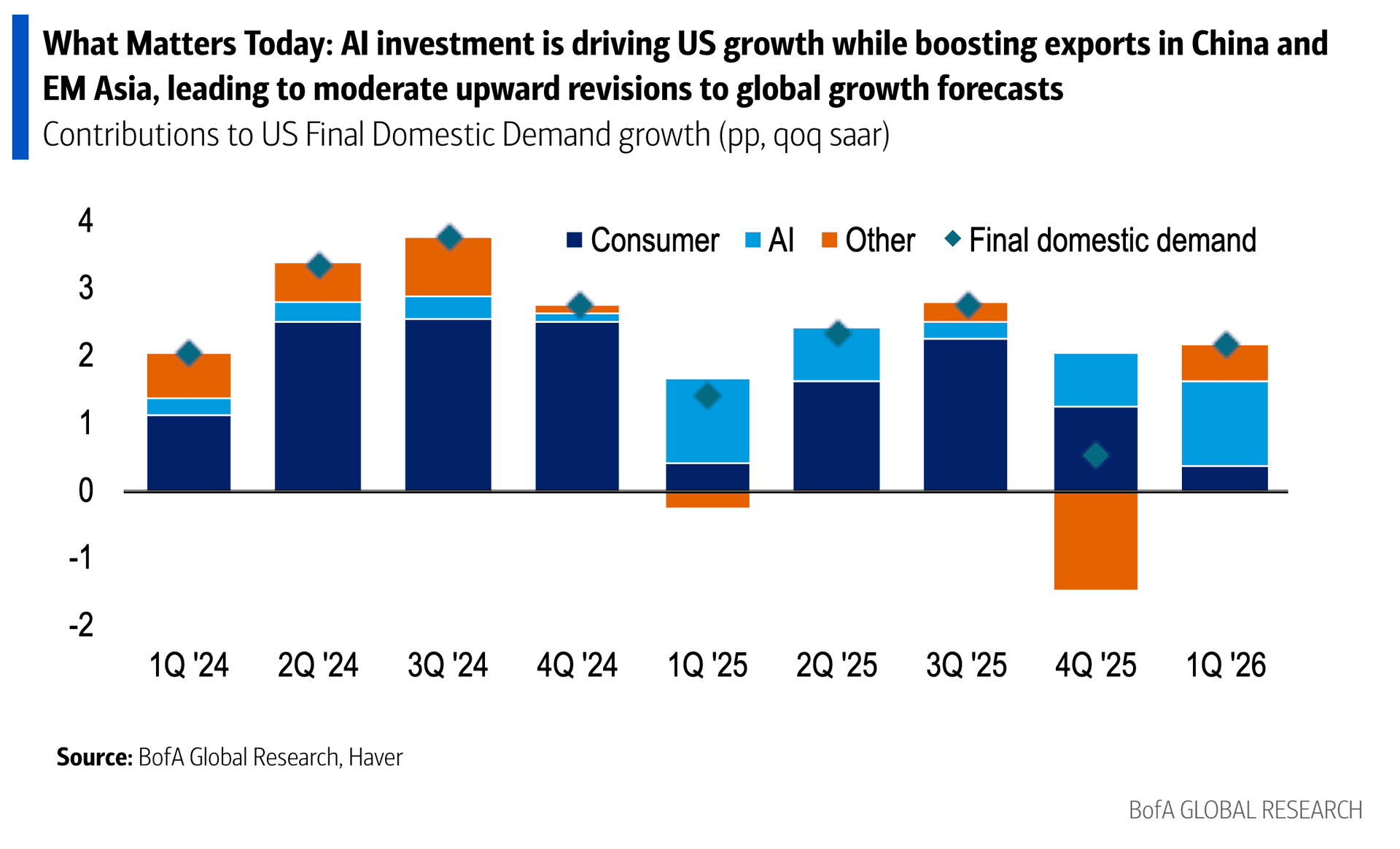
The Bank of America note also marks a change in the balance of demand inside the U.S. economy. AI has increasingly displaced consumer spending as the main driver of final domestic demand growth, briefly giving way in late 2025 before regaining the lead in the first quarter of 2026. That makes the current upswing look less like a narrow technology trade and more like a broad capital-expenditure cycle that can shape GDP, jobs in construction and power infrastructure, and demand for imported equipment.
The rest of the policy backdrop still looks fragile. The International Monetary Fund projected global growth of 3.3% for 2026 in its January outlook, then trimmed that to 3.1% in April, with 2027 at 3.2% in both updates and the April figure below the 2000-19 average of 3.7%. The OECD said in 2026 that solid AI-related activity was supporting the world economy even as Middle East conflict pushed up energy prices and inflation.
Bank of America’s earlier December 2025 outlook had already described the AI-driven equity boom as a defining feature of a K-shaped economy. The latest upgrade suggests that divide is widening: chipmakers, cloud builders, grid operators and export-heavy Asian manufacturers are getting the lift, while consumers still face war-driven energy shocks and stubborn inflation.
This article was produced by Prism’s automated news system from verified source data, official records, and press releases, then run through automated quality and moderation checks before publishing. The system is built and supervised by the people who set the standards it runs under. Read our full AI policy.
Did this article answer your question?