BEA revision could nudge U.S. core inflation lower, Reuters says
A BEA methodology reset could trim May core PCE inflation to 3.2% from 3.4%, shifting the Fed’s favorite gauge without changing what households paid.
A technical recalibration of prices for legal services, software and investment advice could push the Federal Reserve’s preferred inflation gauge a little lower when the government revises its accounts on Sept. 30. The change would not reflect new price relief at the checkout counter; it would change the statistical lens used to measure inflation, and that can move expectations for interest rates and borrowing costs nationwide.
The Bureau of Economic Analysis plans to update how it measures prices for portfolio management and investment advice services, legal services, and computer software and accessories as part of its 2026 annual revisions. For the first time, the annual updates to national, industry, state and county statistics will begin on the same day, Sept. 30, 2026. The open revision window for the national economic accounts runs from the first quarter of 2021 through the first quarter of 2026, meaning the agency will reach back five years when it folds the changes into the annual GDP update.

That matters because core PCE, the price index the Fed watches most closely, is released each month in the Personal Income and Outlays report. The broader PCE price index is also part of the GDP release. In May’s Personal Income and Outlays report, released June 25, the core PCE reading was 3.4% year over year, a figure that drew intense market attention because it sits well above the Fed’s 2% target.
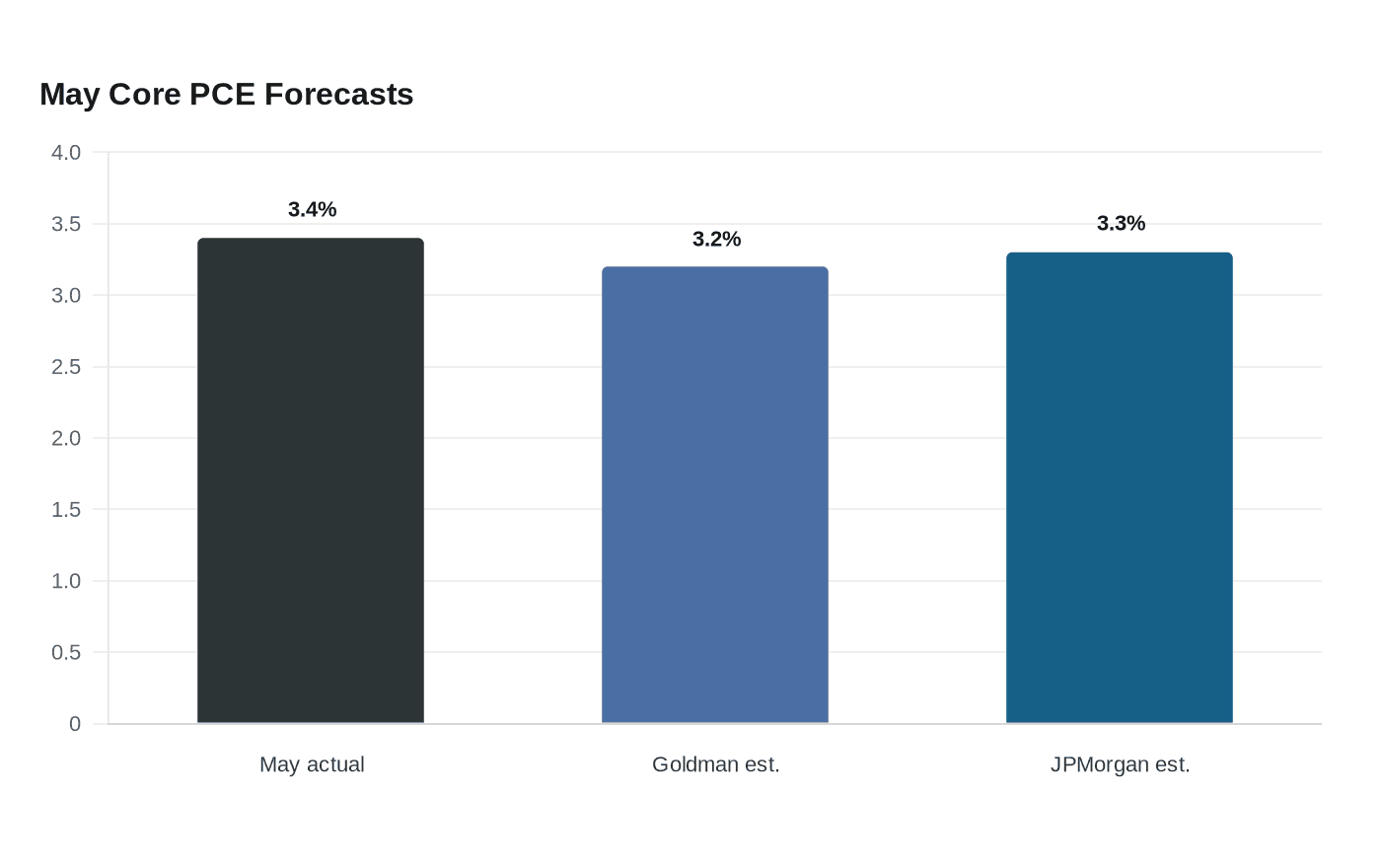
Economists at Goldman Sachs estimate the revision could bring May core PCE down to 3.2%. Economists at JPMorgan expect a smaller move, to 3.3% after rounding. Either way, the shift would mostly affect the historical record and the baseline used to judge whether inflation is easing fast enough, rather than the reality of current household expenses. For policymakers in Washington, that distinction is central: a lower revised reading could slightly ease pressure on the Fed, but it would not mean prices themselves suddenly cooled.
The PCE series has deep history behind those comparisons. FRED shows core PCE data back to January 1959, and the chained-type PCE price index back to 1947. That long record is part of why even a narrow methodological change can matter, because it can alter how today’s inflation is measured against decades of past data.
This article was produced by Prism’s automated news system from verified source data, official records, and press releases, then run through automated quality and moderation checks before publishing. The system is built and supervised by the people who set the standards it runs under. Read our full AI policy.
Did this article answer your question?