Bastl Kalimba blends acoustic play with synth engine, touch sensors, and accelerometer
A kalimba-like desktop synth with microphones, touch points and an accelerometer, Bastl’s new hybrid bets tactile hardware still has a market.
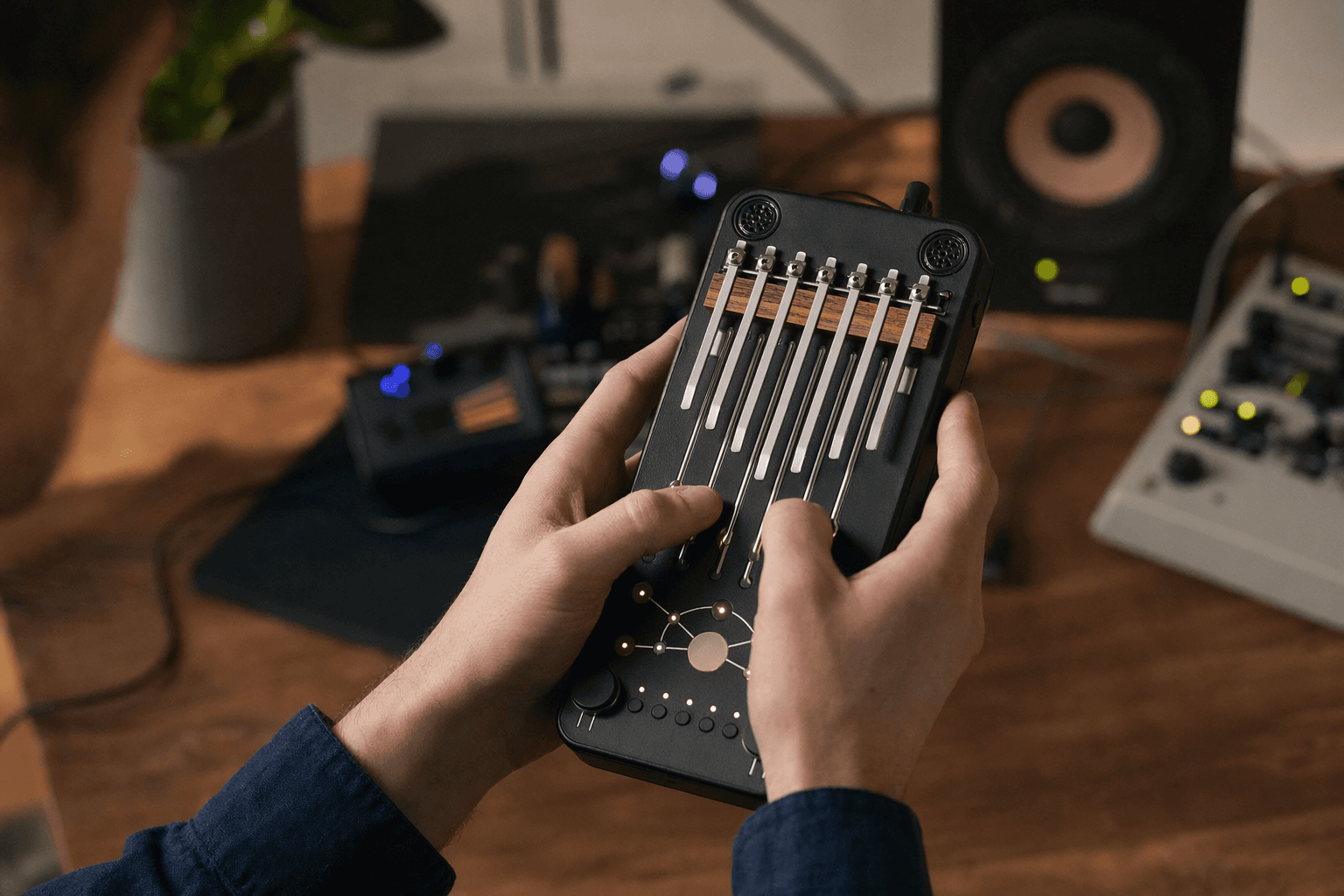
Bastl’s Kalimba turned a familiar acoustic silhouette into a hybrid instrument built for the stage, the studio, and the desk. The desktop synth borrowed the hand feel of a kalimba, but its tines did not carry the sound on their own. Instead, Bastl routed plucks and touch input into a physical modelling engine and an FM engine, then let an internal microphone add a little acoustic color. That design landed at a moment when music tech is crowded with software instruments and nostalgia-driven hardware, yet Kalimba pointed in a different direction: toward an instrument that asked to be played, moved, and shaped in real time.
Bastl said the instrument used microphones, touch sensors, and an accelerometer to excite the sound engines. In some settings, knocking or strumming the casing or the tines could also trigger the synthesis core. The front panel carried function-based touch points for pads, pitch slides, and timbral modulation, while two more assignable touch points sat on the back. Bastl also packed in custom scales, octave shifting, an arpeggiator, presets, an internal layering looper, tempo and metronome functions, and built-in effects including reverb, delay, bit-crush, overdrive, filtering, and modulation. The company said the microphones were tuned to avoid feedback on loud stages, a practical choice for performers who want novelty without fighting the PA.
The instrument took more than three years to develop, with multiple iterations of the casing, tine lengths, materials, internal layouts, and ergonomics. Artists including Oliver Torr and Never Sol helped test it, suggesting Bastl was aiming well beyond a curiosity for the shelf. Kalimba also included a rechargeable USB-C battery, a built-in speaker, and a bundled carry case, reinforcing the idea that this was meant to travel, not just sit next to a controller. Bastl launched the project on Kickstarter from May 7 to June 6, 2026, with super early bird pricing starting at €389 and rising to €500 before tax and shipping.
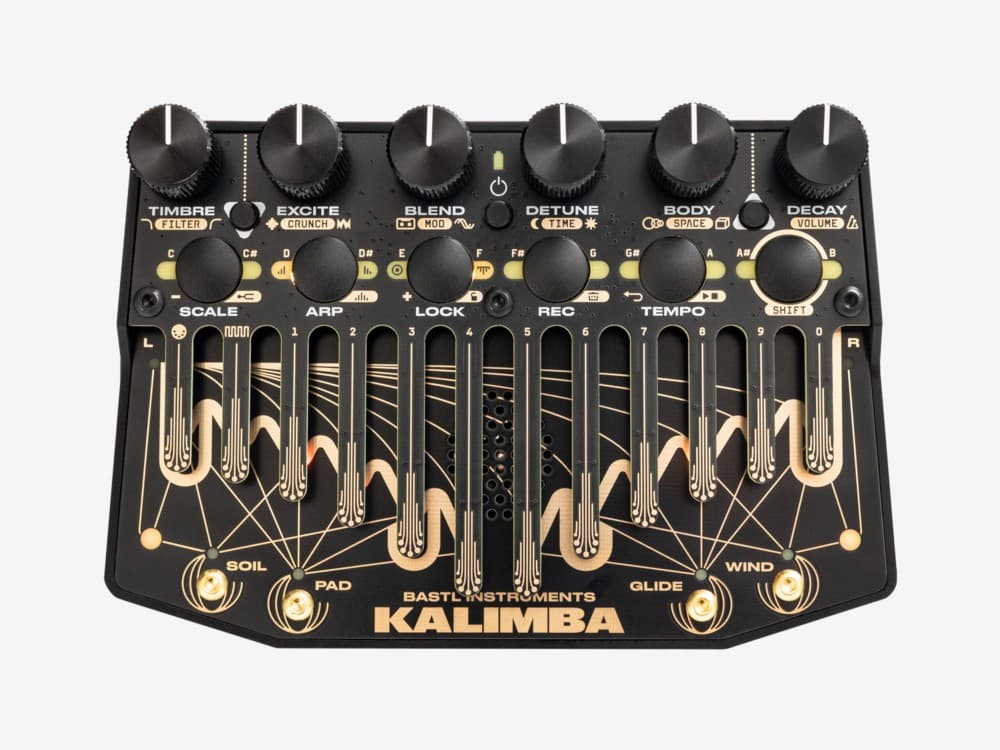
The product fit Bastl Instruments’ wider identity as a community-driven maker of electronic musical instruments based in Brno, Czech Republic, since 2013. It also arrived at Superbooth 2026 as part of a broader wave of tine-based and acoustic-style electronic designs, with Korg’s phase8 circulating as a related comparison point. In market terms, Kalimba seemed aimed at a narrow but real audience: performers who want an expressive oddball, producers looking for a tactile source of melodic material, and hobbyists drawn to gear that makes physical interaction feel like part of the composition itself.
This article was produced by Prism’s automated news system from verified source data, official records, and press releases, then run through automated quality and moderation checks before publishing. The system is built and supervised by the people who set the standards it runs under. Read our full AI policy.
Did this article answer your question?