BBC alleges Greece used migrants as masked enforcers in pushbacks
Greek police were accused of using masked migrants to drive others back across the Evros, deepening questions over who ordered the pushbacks.
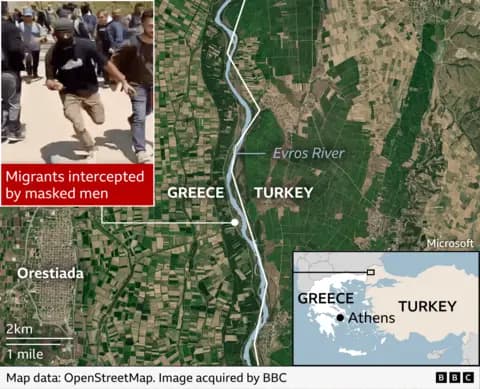
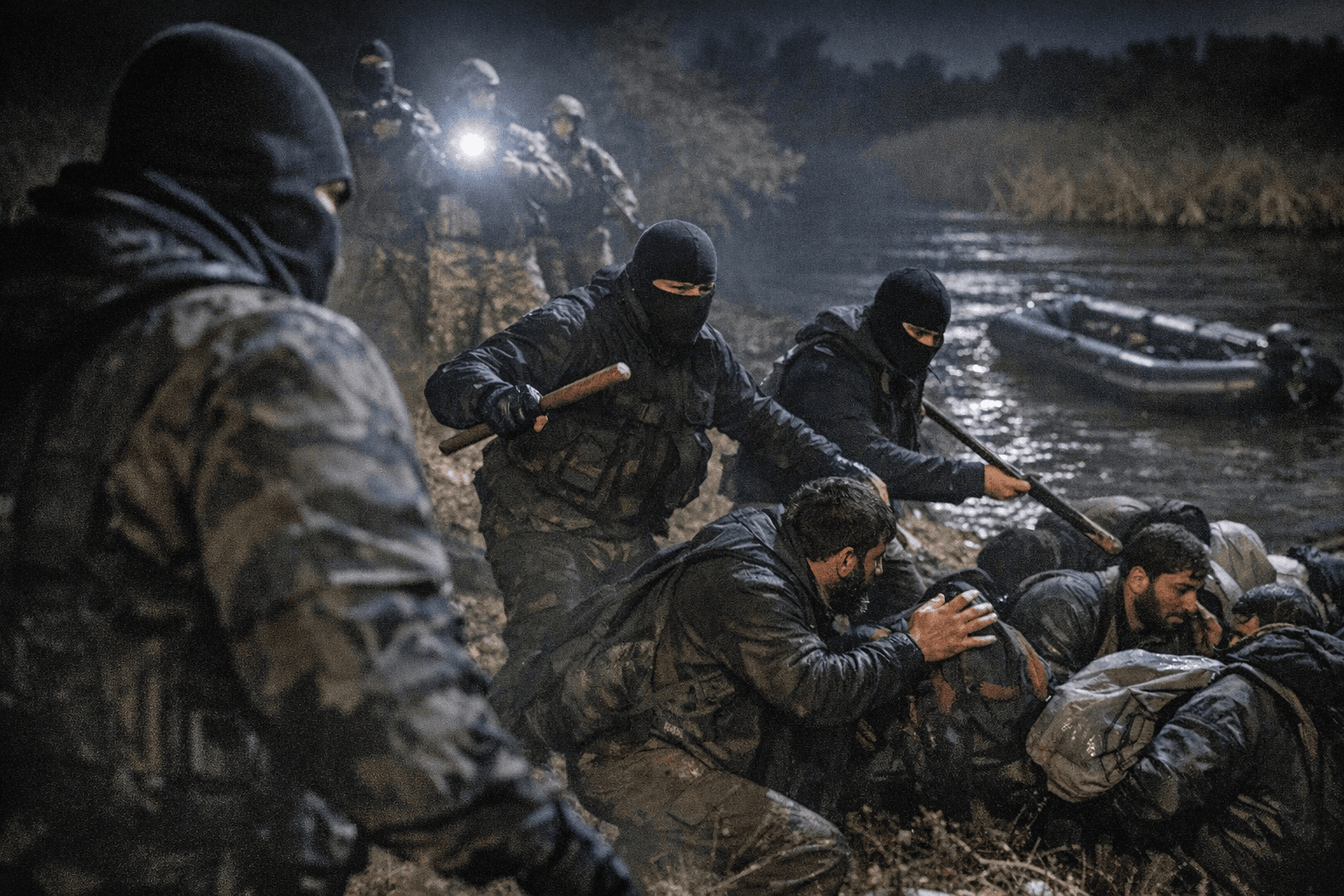
The alleged use of masked migrants to force people back across the Evros River cut to the heart of Greece’s border accountability problem. The BBC said Greek police recruited migrants as masked “mercenaries” to push other migrants back across the Turkey-Greece frontier, a practice it said had been in place since at least 2020.
The accusation mattered because it suggested more than abuse at the border. If migrants were being used as proxies, the arrangement could help obscure who gave the orders, who carried them out and whether the returns were part of an organized state practice rather than isolated misconduct. That question sits at the center of longstanding claims that Greece has carried out pushbacks on both land and sea, denying people access to asylum procedures and sending them back without individual assessment.
The legal and human-rights backdrop was already severe. In January 2025, the European Court of Human Rights unanimously found in A.R.E. v. Greece and G.R.J. v. Greece that Greece had a systematic pushback practice. In November 2024, the United Nations Human Rights Committee said pushbacks at Greece’s sea and land borders violated the principle of non-refoulement, the rule that bars states from returning people to places where they face persecution or other serious harm.
Rights groups said the abuses did not stop there. Amnesty International said abuses against migrants and refugees continued at Greece’s borders in 2024, including pushbacks and unlawful detention on Samos. Human Rights Watch said violations of migrants’ and asylum seekers’ rights persisted, pointing to pushbacks, poor detention conditions and mistreatment across the Evros River. The organization also said the European court had confirmed Greece’s pushback practice.
The issue remained politically and operationally charged because Greece kept seeing arrivals. UNHCR said 30,157 refugees and asylum-seekers arrived by sea in 2025, with Afghans, Egyptians, Sudanese, Bangladeshis and Syrians among the main nationalities. That flow kept pressure on Greece’s reception and border systems, but it did not change the legal duty to screen each person individually and respect asylum protections.
The allegations against Greek police, combined with the broader record documented by international courts and rights bodies, raised a larger policy question for Europe: when border enforcement relies on deniability, accountability becomes the first casualty.
This article was produced by Prism’s automated news system from verified source data, official records, and press releases, then run through automated quality and moderation checks before publishing. The system is built and supervised by the people who set the standards it runs under. Read our full AI policy.
Did this article answer your question?


