Beirut still scarred - 300,000 displaced as Israel-Hezbollah clashes resume
Christina Goldbaum reports renewed Israel-Hezbollah fighting as Beirut struggles with lasting damage from the August 4, 2020 blast that displaced over 300,000.
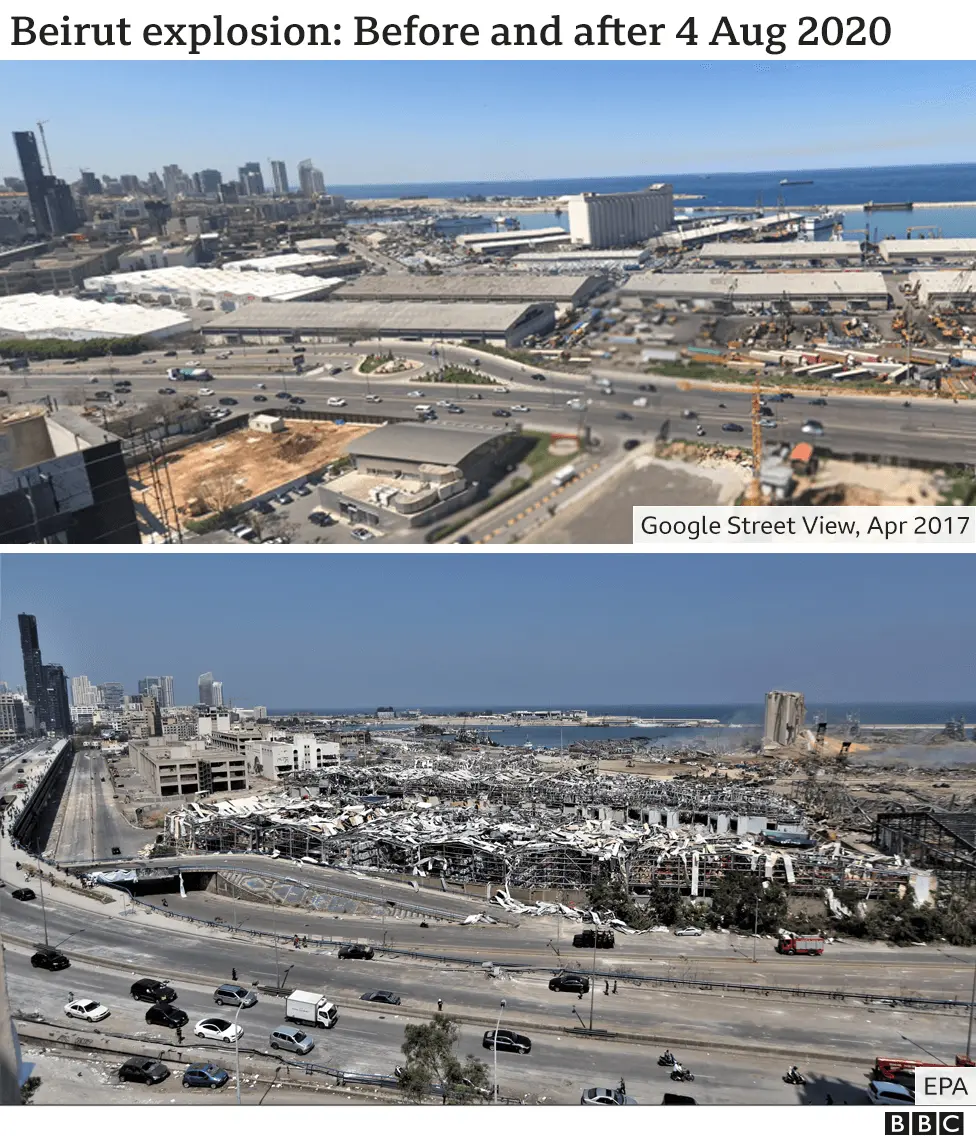
Christina Goldbaum, our Beirut bureau chief, reports an escalating conflict between Israel and the Iran-backed armed group Hezbollah, saying Israel’s military has seized areas of southern Lebanon and carries out bombings. The renewed fighting is unfolding against a city still marked by the August 4, 2020 port explosion that ripped through downtown Beirut and left a long trail of human and infrastructural damage.
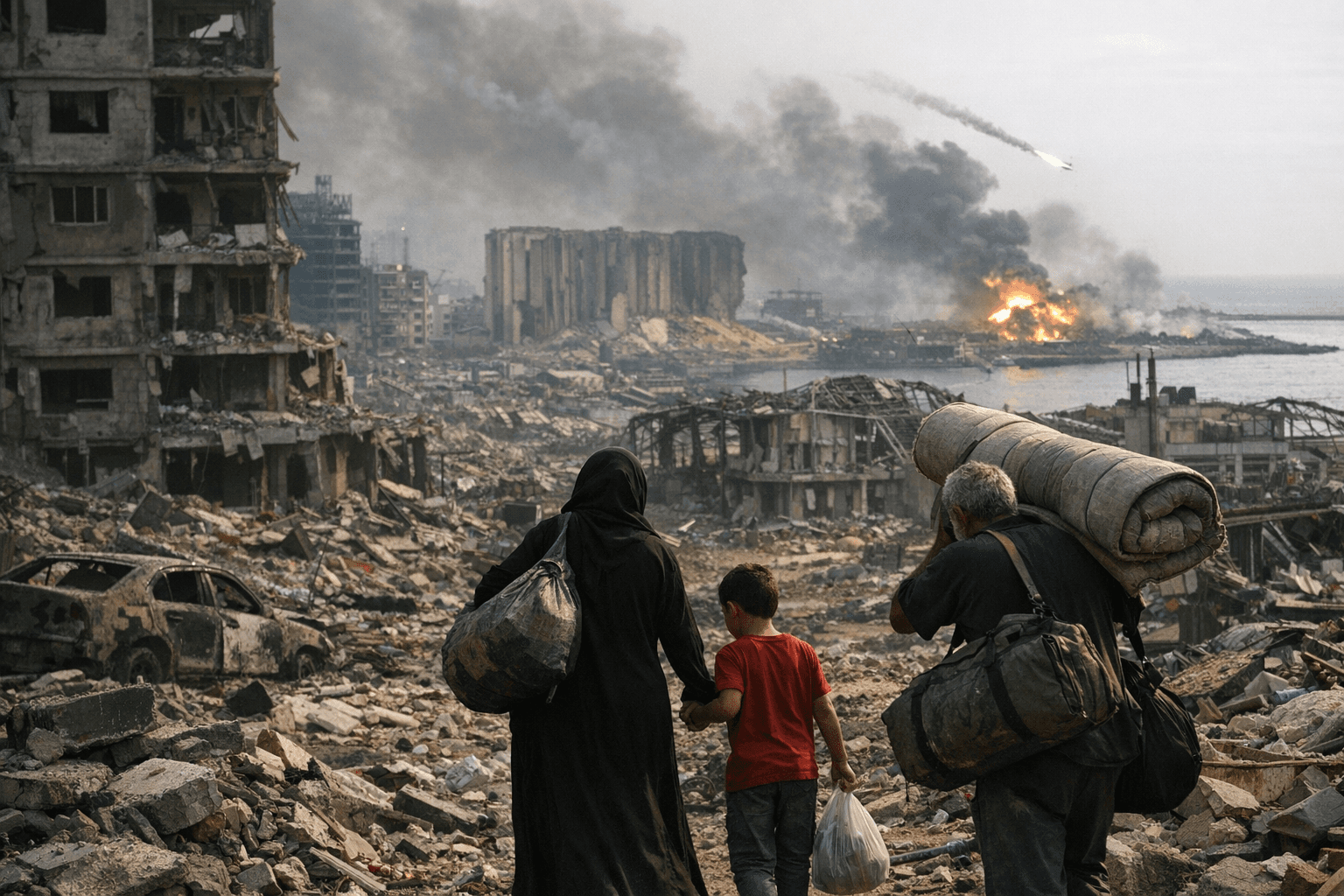
The blast’s physical aftermath remains visible across neighborhoods that once thrummed with life. “A traffic barrier was covered in the bloody handprints of those who had somehow survived the cataclysmic blast and had staggered into the apocalyptic aftermath,” one account of the day reads. The twisted heap of steel that used to be Beirut’s port stretched to both horizons; huge piles of broken windows and doors stood at roadsides and pebble-sized shards covered pavements “like snow.” In Gemmayze, a district once “lined with bars and restaurants” and described as a liberal social hub, the streets were “disturbingly quiet” one month after the blast, with only a handful of people repairing houses, occasional Internal Security Forces members patrolling and a lone television crew filming the collapsed building where the search for a possible survivor had been abandoned.
The human toll of displacement has been large and lingering. Aid assessments and local reporting put the number of people forced from damaged neighbourhoods at over 300,000, and many buildings remain uninhabitable. That insecurity feeds broader protection concerns: a Syrian refugee woman said, “People whose homes are damaged do not feel like they are living securely because literally anyone can just come in.” Community teams and civic workers with shovels and buckets have been clearing rubble and distributing essentials, and water was being handed out to anyone who wanted it in Gemmayze and nearby Mar Mikhaël.
Mental health and gender-based violence rose to the top of humanitarian priorities in the blast’s aftermath. NGOs in Beirut reported that older people and LGBTIQ+ individuals increasingly phoned hotlines with suicidal thoughts, and men have begun seeking help despite cultural barriers. A psychologist observed, “Men want to ask for help, but they don’t know how. They are supposed to handle it better because ‘they are men’.” Agencies warned of growing risks of domestic violence and sexual harassment as empty streets and unsafe buildings create new opportunities for abuse.
Political and civic relief work followed immediately after the explosion. On 6 August 2020 Samir Geagea, executive chairman of the Lebanese Forces Party, launched a relief committee called Ground-0 under the leadership of former minister Dr. May Chidiac. In December 2020 the committee reported repairing 709 houses, assisting 5,300 individuals and 2,300 families, distributing 14,000 food rations, making 2,540 medical consultations, providing medicine to 2,030 individuals and awarding more than 150 scholarships for Beirut school students. Ground-0 also launched a petition for an international investigation signed by relatives of victims, the injured and those whose homes or businesses were damaged; the petition was sent to UN Secretary-General Antonio Guterres through his special coordinator for Lebanon, Ján Kubiš.
Technical analyses underscored the blast’s scale. The United States Geological Survey measured a 3.3 local magnitude, the Jordan Seismological Observatory reported an equivalent of 4.5 ML, and Germany’s Federal Institute for Geosciences and Natural Resources estimated a yield between 0.5 and 1.1 kilotons of TNT. Experts at the University of Sheffield’s Blast and Impact Research Group called it “one of the largest artificial non-nuclear explosions ever recorded.”
As new cross-border violence returns to Lebanon’s periphery, Beirut’s damaged housing stock, strained mental-health services and unresolved calls for international inquiry mean the city remains vulnerable, physically, socially and politically, to secondary shocks that could widen the crisis.
Know something we missed? Have a correction or additional information?
Submit a Tip