Benin opposition candidate concedes, finance minister Wadagni wins landslide election
Benin's only opposition candidate conceded, clearing the way for Romuald Wadagni's reported 94% landslide and raising questions about how open the race really was.
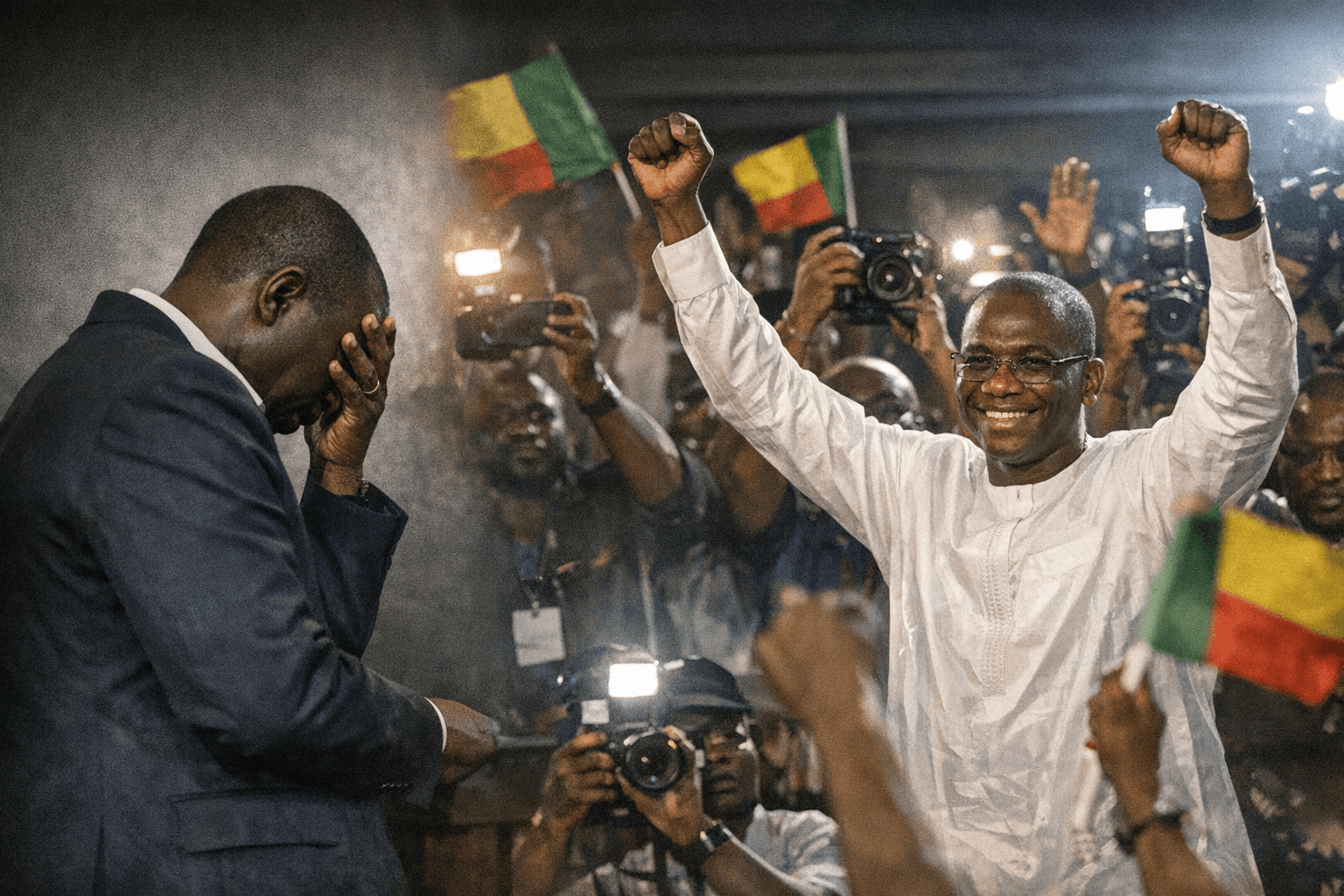
Paul Hounkpe’s concession has pushed Benin’s presidential race toward a smooth transfer of power, but the scale of Romuald Wadagni’s victory and the narrow field behind it suggest stability may be coming through management more than open competition.
Hounkpe, Benin’s sole opposition candidate, conceded defeat on April 13, a day after voters cast ballots. State television carried the concession as provisional results circulated showing Wadagni, the finance minister, with about 94% of the vote and Hounkpe with about 6%. Turnout was reported at about 59% of registered voters.
The final result still must be confirmed by Benin’s constitutional court, but the political outcome is already clear. Wadagni is 49 and a former Deloitte executive who has been a central figure in Patrice Talon’s economic team. Talon is stepping down after two five-year terms and endorsed Wadagni as his successor, linking the next administration closely to the outgoing governing camp.
That continuity may help preserve Benin’s recent economic model, but the election also laid bare the limits of the contest. Hounkpe entered the race as the only opposition candidate, and opposition forces struggled to clear ballot-access requirements before the April 12 vote. A concession under those conditions removes the immediate risk of a post-election standoff, yet it does not prove that the country’s democratic competition is healthy or fully open.
The calm finish matters in a region where elections can quickly turn violent or trigger prolonged disputes. No violence or legal challenge was reported around the vote, and ECOWAS deployed an observation mission with former Ghanaian president Nana Akufo-Addo as its head. Those facts point to an orderly process, but they also describe a system that managed the transition without necessarily broadening the field of political choice.
Benin has long been watched as a democratic reference point in West Africa. This election suggests the institutions are capable of delivering a predictable handoff, but the harder test is whether future contests will feature real opposition competition, stronger independence from the governing bloc and a ballot that offers voters more than a foregone conclusion.
This article was produced by Prism’s automated news system from verified source data, official records, and press releases, then run through automated quality and moderation checks before publishing. The system is built and supervised by the people who set the standards it runs under. Read our full AI policy.
Did this article answer your question?