Benn condemns Belfast unrest as racist thuggery after second night of riots
Water cannon, torched homes and a hotel target turned Belfast’s unrest into a second night of violence, as Hilary Benn called it racist thuggery.
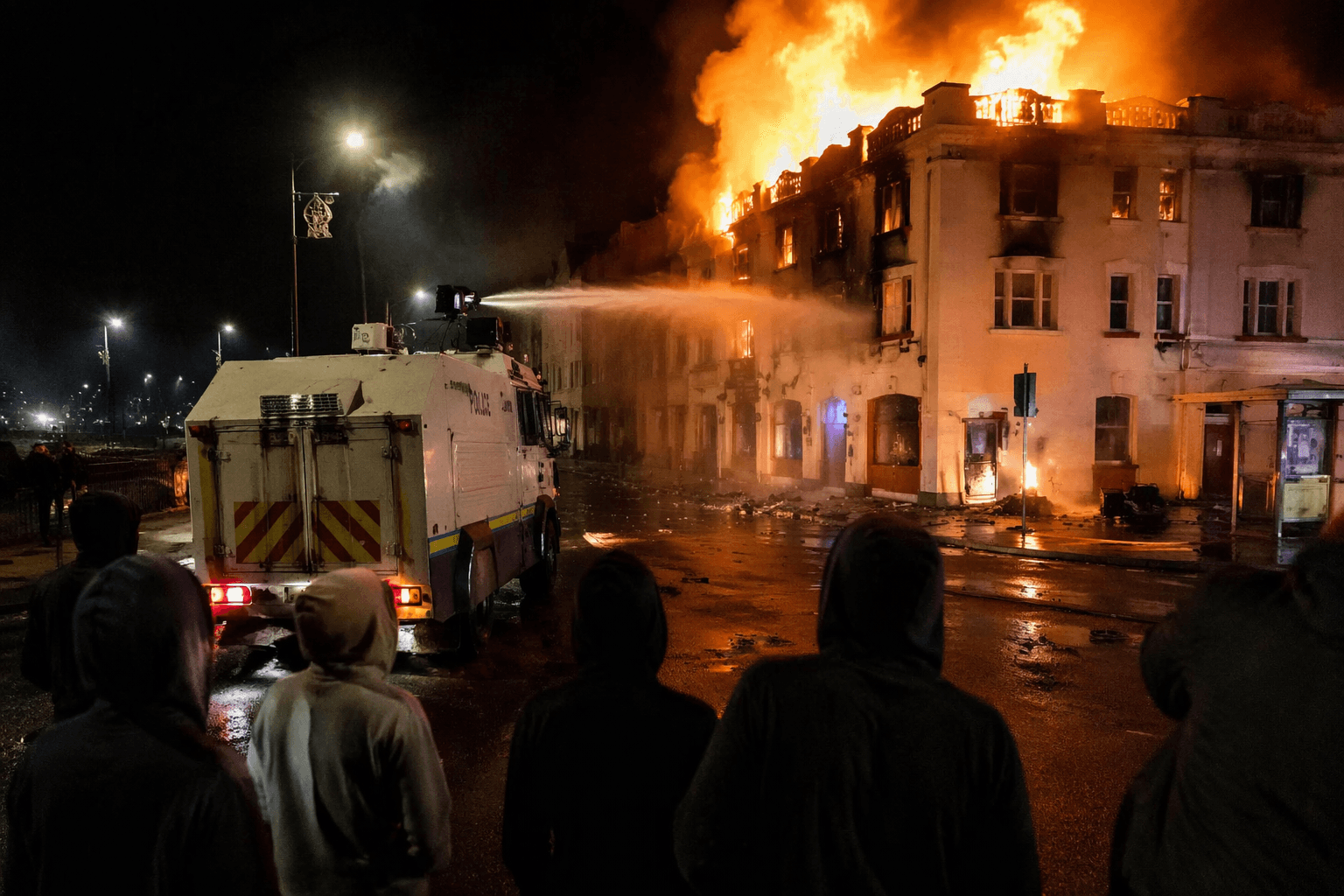
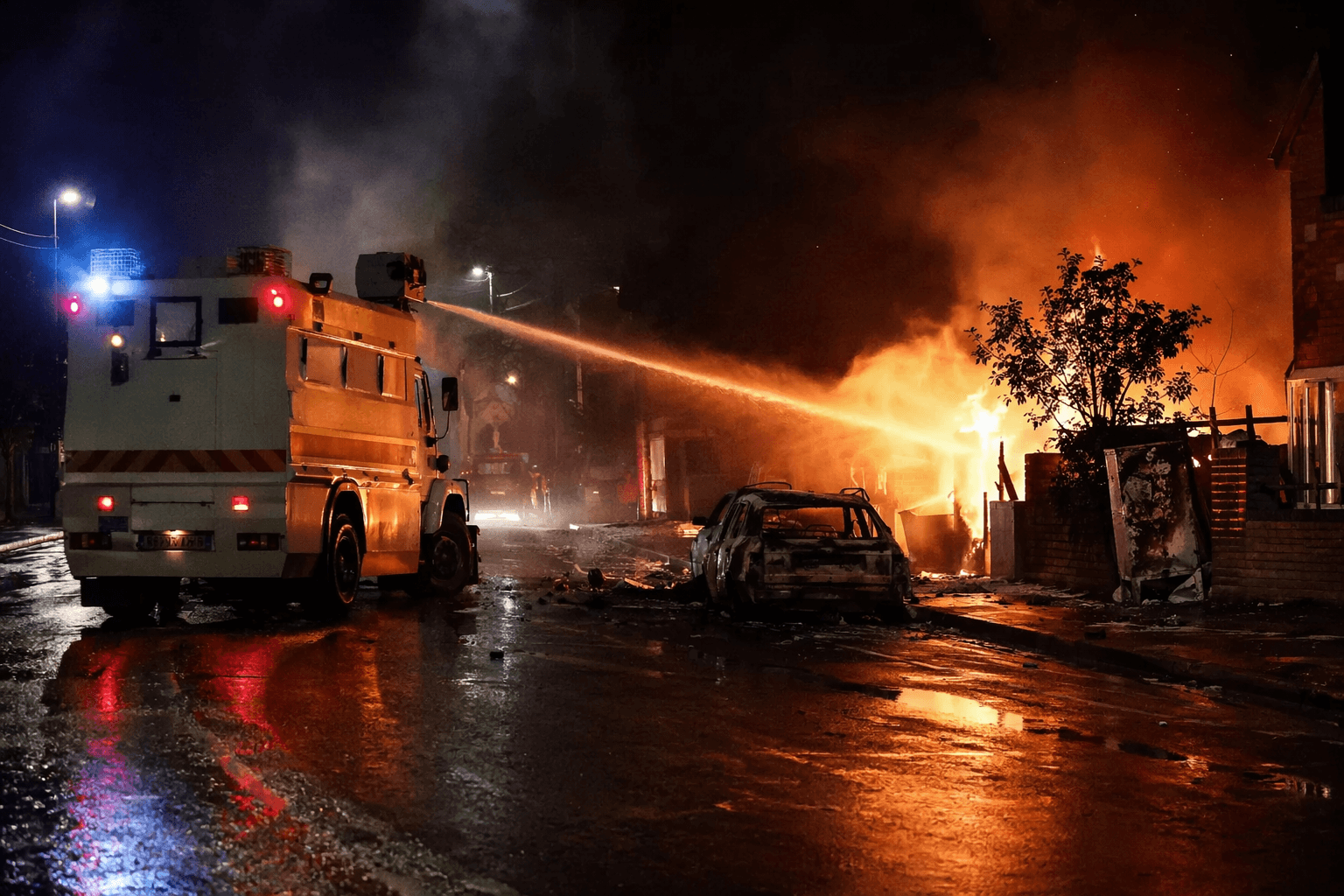
Water cannon and a thick police line were needed to hold back rioters in Belfast for a second night, after homes and vehicles were set alight and crowds tried to reach a hotel on the city’s northern edge that had already become a focus for anti-immigration anger. Britain’s minister for Northern Ireland, Hilary Benn, said the disorder had crossed a clear line, arguing that attacks aimed at people because of the color of their skin could only be described as racist thuggery.
The unrest grew out of the June 8 attempted murder in north Belfast that left Stephen Ogilvie seriously injured and triggered a critical incident declaration by police. The suspect, identified as Hadi Alodid, has been charged with attempted murder, and some reporting has also linked the court appearance to threats-to-kill and knife-possession allegations. Ogilvie’s family said on June 10 that he was in a stable condition, thanked the local people whose intervention “saved his life,” and appealed for privacy while saying peaceful protest was the only way forward.
The family’s statement cut sharply against the scenes on the streets. The family said they were “disgusted” by the violence, while the Northern Ireland Executive said the disorder spread fear and risked innocent lives. The Executive’s language, like the family’s plea, reflected a wider effort by officials to draw a line between legitimate concern and attacks that were terrifying ethnic minority communities.
Police said they had already issued images of people they wanted to speak to in connection with the serious public disorder on June 9, and by the following night two hundred extra officers were on the streets. Reporting from the scene described masked young men hurling bricks at police as officers pushed them back from the Chimney Corner Hotel in Newtonabbey, where rioters appeared determined to reach a site long associated in local debate with asylum accommodation.
Benn’s remarks pointed to the deeper political danger. He said reports had emerged of people being stopped in their cars and asked what their nationality was, and of nurses on their way to work feeling threatened. He also argued that the fast-track asylum process used in 2023 no longer operated, placing the riots inside a broader argument about migration policy, policing and the handling of asylum claims.
For Northern Ireland, the immediate test is public order. The larger one is whether Belfast’s unrest remains a one-off eruption after a stabbing, or hardens into a more durable anti-immigrant mobilization fed by fear, misinformation and race-based intimidation.
This article was produced by Prism’s automated news system from verified source data, official records, and press releases, then run through automated quality and moderation checks before publishing. The system is built and supervised by the people who set the standards it runs under. Read our full AI policy.
Know something we missed? Have a correction or additional information?
Submit a Tip