Berlin election fight heats up over congestion and car access
Berlin's car fight has become an election proxy, as a court-cleared referendum and stalled bike lanes put the S-Bahn ring at the center of a broader urban identity battle.
Berlin’s election-season transport fight has turned into something larger than congestion. What began as a dispute over Friedrichstrasse, bike lanes and parking fees has become a contest over class, climate policy, convenience and who gets to define city life in Germany’s capital.
The conservative-led Senate under Governing Mayor Kai Wegner has moved to revise Berlin’s mobility law from 2018, and Transport Senator Manja Schreiner said in 2023 that the government would drop a planned chapter on new mobility and instead prioritize commercial transport. That shift hardened the debate after the CDU promised during the 2023 election campaign to keep Friedrichstrasse open to cars, following a court ruling that reversed a short-lived pedestrianization there.
The city’s own transport department says a modern transport policy should rest on facts about infrastructure, demand, costs, financing and environmental impacts, and its latest mobility survey found that more trips are being made on foot. Critics say the current government has slowed bike-lane expansion, held back bus and tram projects, and ruled out higher SUV parking fees. In 2023, the Berlin transport ministry reached only about 23 kilometers of a 60-kilometer bicycle-lane target.
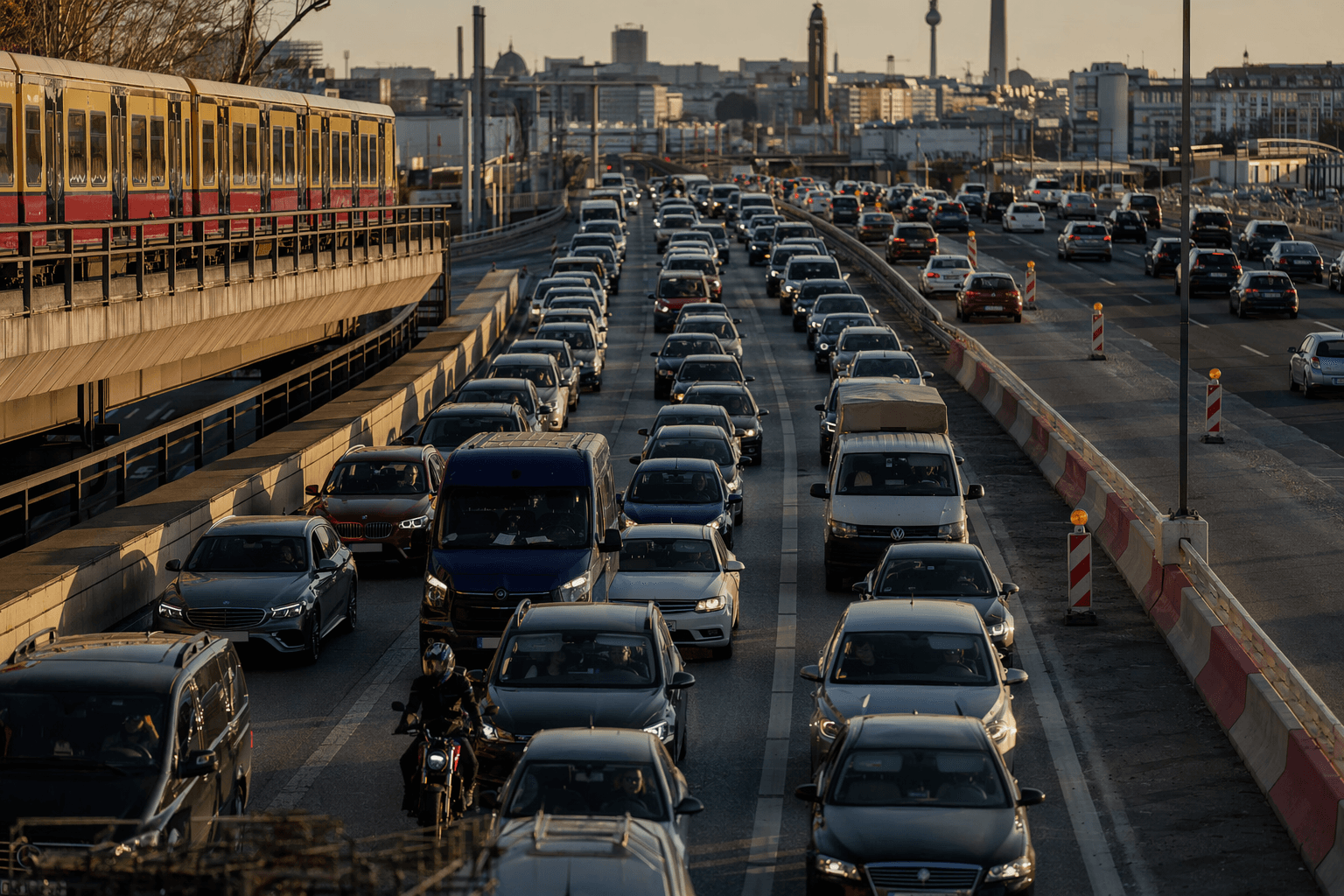
Berlin’s traffic arguments also sit on top of unusual institutional history. The city has carried out traffic counts since 1951 in the western districts and since 1993 across the whole city. Its latest traffic-volume report was based on roughly 3,000 counts from 2020 to 2023 covering 1,318 kilometers of streets, a reminder that the dispute is being fought in a city that measures its roads as closely as it argues over them.
At the center of the latest clash is Volksentscheid Berlin Autofrei, the citizens’ initiative pushing for a referendum since 2020. The Berlin Constitutional Court ruled on June 25 and 26, 2025, that the effort was admissible, clearing it to keep gathering signatures. The proposal would reclassify most streets inside the S-Bahn ring as car-reduced after a four-year transition, with exceptions for people with disabilities, police, emergency services, firefighters, refuse collectors, taxis and commercial and delivery vehicles.
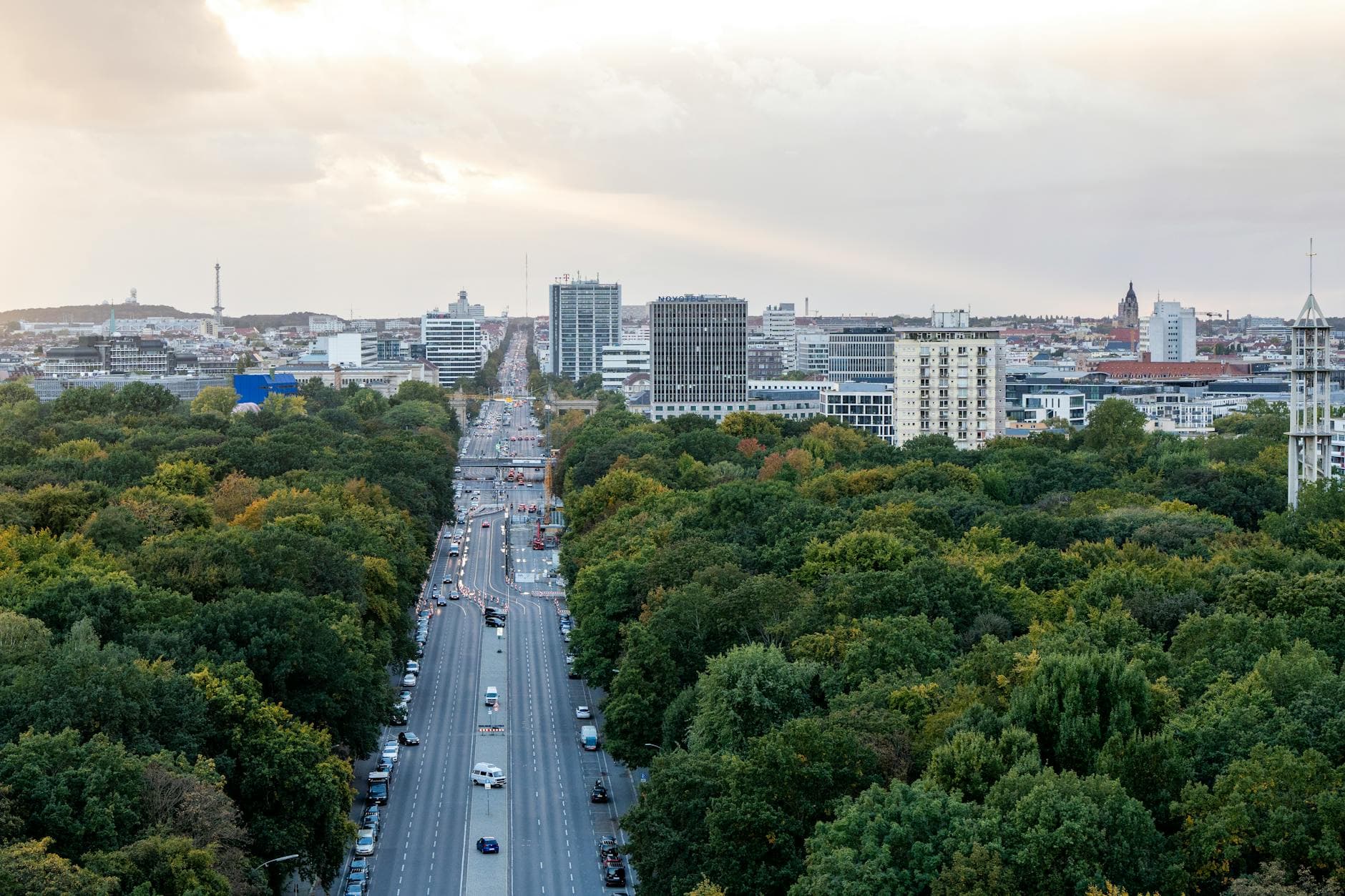
Campaigners say Berliners lost 60 hours to traffic congestion last year and argue that private cars take up about 75% to 80% of the street space in the city center. The Berlin-Brandenburg Business Associations warn that a sweeping ban would hurt the capital-region economy, while some judges raised concerns about possible bottlenecks for public transport. With Berlin’s next regular state election scheduled for September 20, 2026, the battle over cars and curb space is set to remain one of the city’s defining political tests.
Know something we missed? Have a correction or additional information?
Submit a Tip