Bessent pushes IMF quota revamp, urges World Bank focus on critical minerals
Bessent tied IMF quota reform and World Bank lending to a harder U.S. industrial strategy, aiming to keep Washington central in the fight over minerals, money and influence.
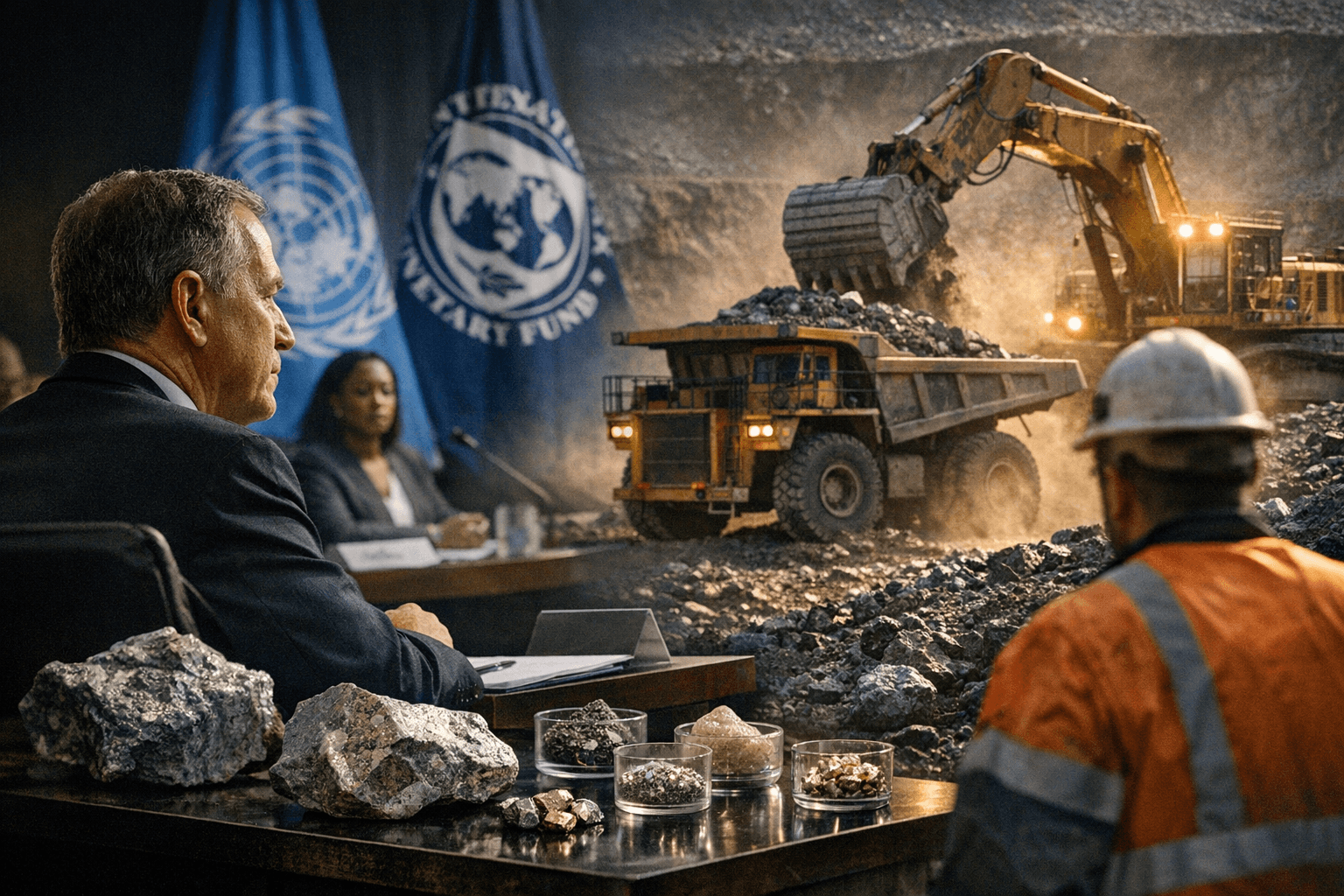
Scott Bessent used the spring meetings in Washington to press for two changes that could reshape American leverage inside the postwar financial order: a long-delayed IMF quota revamp and a sharper World Bank push into critical minerals.
The Treasury secretary said the Trump administration wanted a “strong, quota-based, and adequately resourced IMF,” while also pushing the World Bank to finance mining, processing and the infrastructure needed to diversify supply chains away from China. That message turned the Bretton Woods institutions into instruments of geopolitical competition, not just crisis management, with Washington seeking to steer how development capital is deployed in the next phase of global power rivalry.
At the IMF, the stakes are structural. The 16th General Review of Quotas approved a 50% increase, equal to SDR 238.6 billion, or about $320 billion, lifting total quotas to SDR 715.7 billion, or about $960 billion. Quotas are the Fund’s primary permanent resources and a key determinant of voting power and borrowing access, which means the reform would shift influence among member nations as well as funding capacity. Member consents for the review were due by November 15, 2024, but the package still has not been implemented, and Bessent said Congress must approve it.
Bessent also used his April 16-17 statement to the International Monetary and Financial Committee to sharpen his critique of the Fund’s direction. He said the IMF had suffered from “mission creep,” arguing that it had drifted into climate, gender and social issues that are “disconnected from the institution’s core mandate.” He said the Fund should refocus on surveillance, balance-of-payments problems and conditionality, a sign that quota reform is being paired with an effort to narrow the IMF’s remit even as the administration seeks to preserve its influence.
The World Bank message was more explicit about industrial policy. Bessent said critical minerals were “central to economic growth, technological leadership, and countries’ economic security,” and urged the Bank to move away from what he called a narrow climate focus toward “high-quality, durable projects” that lift people out of poverty. The bank already says its metals-and-minerals work is meant to help countries turn mineral wealth into jobs, growth and resilient supply chains by improving infrastructure, regulations and capital mobilization, but Washington wants the agenda intensified.
The timing is no accident. China supplies more than 90% of rare earths and other critical minerals, and the International Energy Agency says China is the leading refiner for 19 of 20 strategic minerals, with an average market share of 70%. For rare earths used in magnets, China accounts for about 91% of separation and refining output and 94% of sintered permanent magnet production. The IEA also said lithium demand rose nearly 30% in 2024, while demand for nickel, cobalt, graphite and rare earths rose 6% to 8%, with the energy sector accounting for 85% of total demand growth for battery metals.
Those numbers help explain why multilateral lending is moving closer to supply-chain politics. With lithium prices down more than 80% from 2023 peaks and other key minerals also under pressure, the United States is trying to use the IMF and World Bank to shape where capital flows, who sets the terms, and how much room China has to turn resource concentration into leverage.
This article was produced by Prism’s automated news system from verified source data, official records, and press releases, then run through automated quality and moderation checks before publishing. The system is built and supervised by the people who set the standards it runs under. Read our full AI policy.
Did this article answer your question?