Black-crowned night herons face possible vanishing from the city
A bird that once ruled the harbor’s islands has dropped 55% since 2000, and scientists warn New York City could lose it within a decade.

Black-crowned night herons, long the most abundant nesting heron in New York Harbor, have fallen 55% since 2000 and could disappear from the harbor as soon as 2035, with one estimate putting local loss by 2037 if the slide continues. The bird has become an ecological warning light: a species that survived in one of America’s toughest cities is now signaling trouble in the marshes and islands that ring New York.
The latest harbor survey counted 1,423 pairs of eight wading bird species on six islands across three of the four island groups, and black-crowned night herons remained the most common, with 577 pairs. New York-New Jersey Harbor contains the largest population of colonial nesting wading birds in the northeastern United States, and the monitoring program behind these counts has run for 40 years, beginning in 1985 after an initial survey in 1982. Many of the harbor’s islands are reachable only by water, a geographic buffer that has long shielded nests from people and mammalian predators.
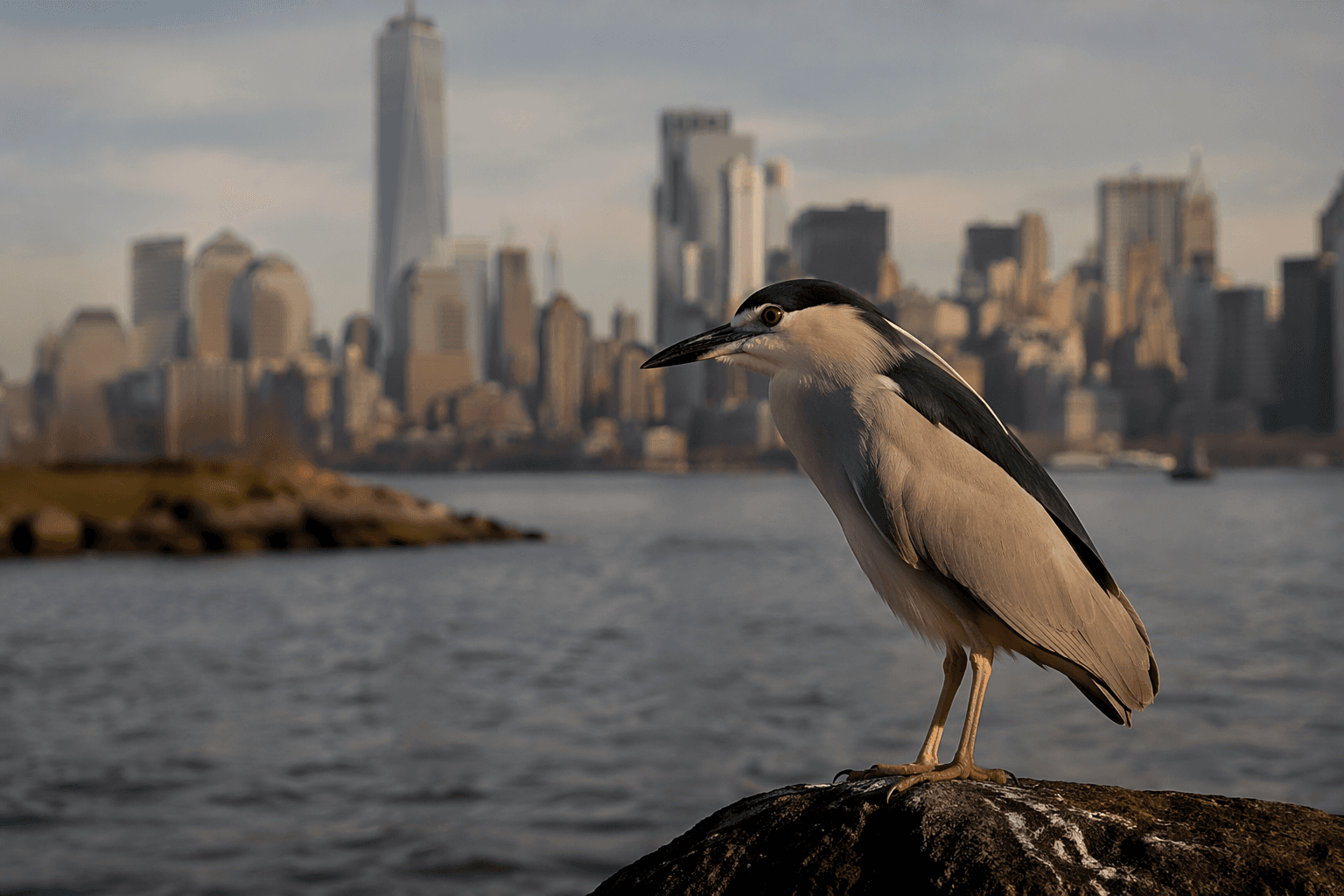
What scientists do know is that the decline is not shared evenly by all waders. Great egrets and snowy egrets increased over the same period, while the black-crowned night heron dropped sharply, which makes the collapse harder to explain as a simple harbor-wide trend. What they do not know is the exact cause. The Harbor Herons report says the decline may reflect chemical pollution, predation, competition with other bird species, declines in prey species, habitat loss and climate change, but no single factor has been isolated as the main driver. Dustin Partridge, of the NYC Bird Alliance, called the bird a “canary in the coal mine” for the estuary and said, “Conservation action works.”

The policy question now is bigger than one bird. New York State’s October 2025 status assessment called the black-crowned night heron a high-priority species of greatest conservation need, even though it is not listed federally or by New York. The city’s harbor islands once helped wading birds rebound after they were nearly wiped out by plume hunting, and the current decline suggests that recovery can be reversed when water quality, habitat protection and coastal management lag behind the pressures of a dense urban shoreline. If the night heron vanishes, the loss will mark more than a failed bird count; it will expose a weakening city ecosystem.
This article was produced by Prism’s automated news system from verified source data, official records, and press releases, then run through automated quality and moderation checks before publishing. The system is built and supervised by the people who set the standards it runs under. Read our full AI policy.
Did this article answer your question?