Blast and Fire at Crans-Montana New Year Party Kills Dozens
An explosion and ensuing blaze ripped through Le Constellation, a crowded bar in the Crans-Montana ski resort, in the early hours of Jan. 1, killing around 40 people and wounding roughly 100. The attack on a high-end alpine holiday hub will reverberate through local emergency services, tourism revenues and regulatory scrutiny of hospitality safety.
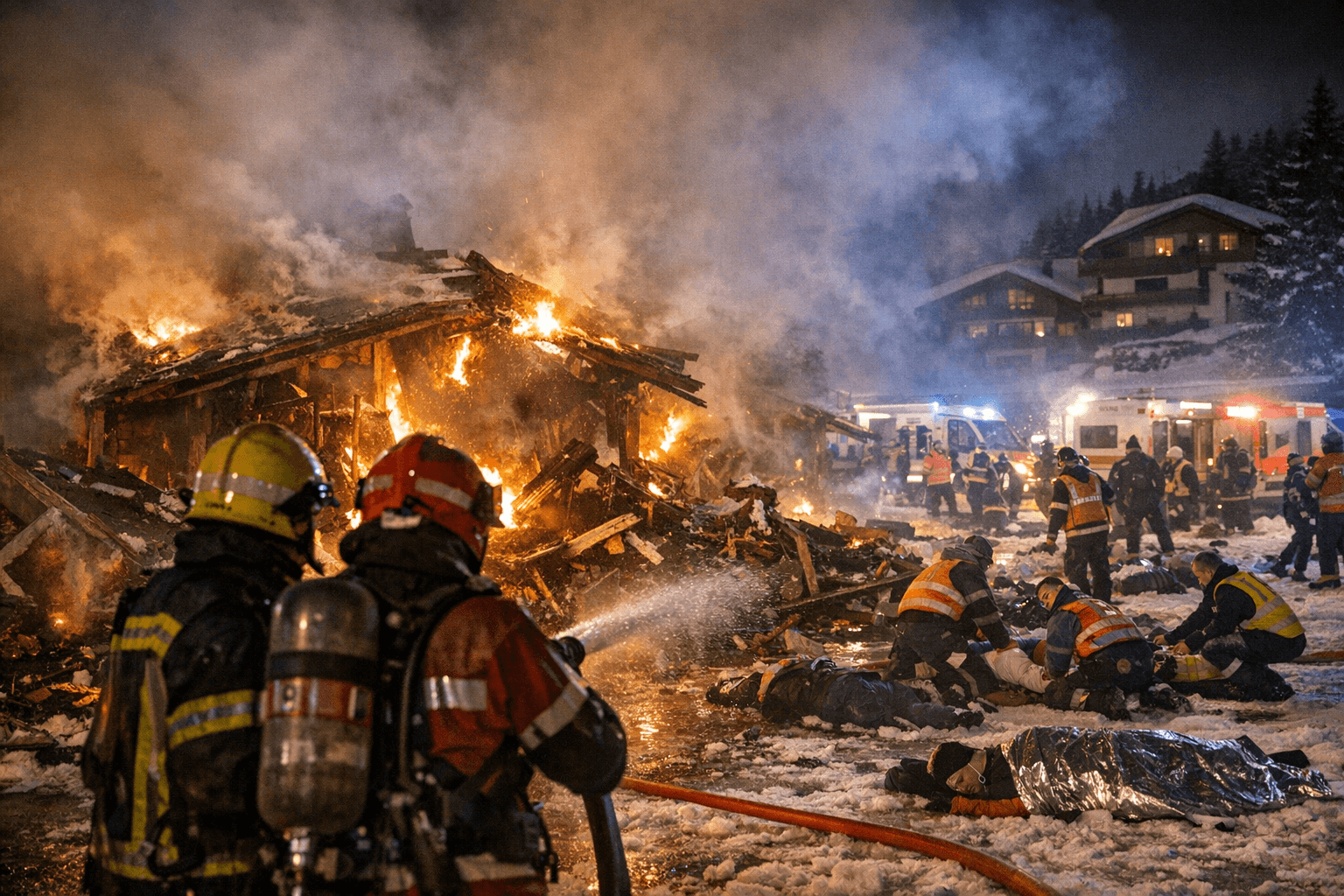
An explosion and subsequent fire tore through Le Constellation, a popular bar and lounge in the centre of the Crans-Montana ski resort, at about 1:30 a.m. local time on Jan. 1. Authorities say around 40 people have been killed and roughly 100 injured, many with severe burns, as emergency crews work through the night to rescue and treat victims. Valais canton police commander Frédéric Gisler said "several tens of people" were killed.
Emergency services mounted a large-scale response, deploying helicopters and ambulances and establishing a security perimeter as medical evacuations sent dozens of the wounded to hospitals across the Valais region. Officials imposed a no-fly zone over the resort to facilitate helicopter operations and cordoned off the scene while investigators began forensic work. Authorities say they have ruled out terrorism as a cause but have not released a definitive explanation for the blast and fire.
Crans-Montana is a luxury Alpine resort in the French-speaking canton of Valais that houses roughly 10,000 residents and about 2,800 hotel beds and is normally a magnet for holidaymakers at the turn of the year. The resort’s economy depends heavily on short-term seasonal visitors and high-value hospitality revenue, and the immediate human toll is likely to be followed by substantial economic and legal consequences.
In the short run, the disaster will strain local healthcare capacity and emergency budgets and will likely depress bookings and visitor traffic during a peak revenue period. Insurers can expect a wave of claims related to medical costs, property damage and business interruption for the venue and nearby hotels and restaurants. For a small resort where hotel capacity is concentrated, the loss of confidence among prospective visitors could reduce occupancy and ancillary spending, amplifying financial stress for businesses that depend on winter tourism.
Longer term, the incident is likely to spark regulatory and operational changes across Switzerland’s hospitality sector. Investigators will examine building safety systems, fuel and gas installations, emergency exits, crowding and licensing practices. If investigations identify negligence or regulatory gaps, municipalities and cantons may face pressure to tighten fire codes, increase inspections and raise compliance costs for venues, potentially pushing up insurance premiums and operating expenses for bars and nightclubs.
Swiss tourism has shown resilience after past shocks, but recovery will depend on the speed and transparency of the investigation, the handling of victims and families, and remedial measures taken by local authorities and industry operators. For now, the priority remains medical care and search operations, while officials prepare to provide more precise casualty figures, identify the victims and determine the cause of the explosion and fire. Further official updates are expected as the emergency response continues.
This article was produced by Prism’s automated news system from verified source data, official records, and press releases, then run through automated quality and moderation checks before publishing. The system is built and supervised by the people who set the standards it runs under. Read our full AI policy.
Did this article answer your question?


