BLM Paleontologist Emily Lessner Teaches Public to Read Fossil Landscapes
Dr. Emily Lessner taught a free workshop on reading fossil landscapes, showing how local geology and simple field skills help hikers spot and report paleontological finds.
Dr. Emily Lessner, the Bureau of Land Management paleontologist for eastern Utah, is teaching the public how to read fossil-bearing landscapes in a hands-on, accessible way. Lessner presented "Reading the Landscape" to the Gastonia chapter of the Utah Friends of Paleontology on January 28, using specimens, local rock samples, and photos of footprint sites to show how basic geology reveals ancient environments.
Lessner traced her path into paleontology from a biology undergraduate degree through extensive field work to a PhD from the University of Missouri. That background shapes her approach to public outreach: make the science tangible, bring real rocks and tracks into community rooms, and show how everyday hikes across the Colorado Plateau are also fieldwork opportunities. The free presentation included images of Grallator tracks in Grandstaff Canyon and local rock examples that illustrate how grain size, layering, and sedimentary structures point to lakes, rivers, or shorelines from deep time.
The Gastonia chapter carries a local connection; the group is named for Gastonia burgei, a dinosaur discovered in Grand County. That link underscores the message Lessner shared: the Colorado Plateau's exposed strata and low vegetation make paleontology unusually accessible here. Rocky outcrops and eroding badlands act like open pages in the geologic record, and simple observational skills can turn a casual walk into a discovery. Lessner demonstrated how to distinguish likely fossil-bearing layers from nonfossil rocks using color, bedding, and fossiliferous clasts, and she illustrated how small finds by hikers have led to new reports and formal investigations.
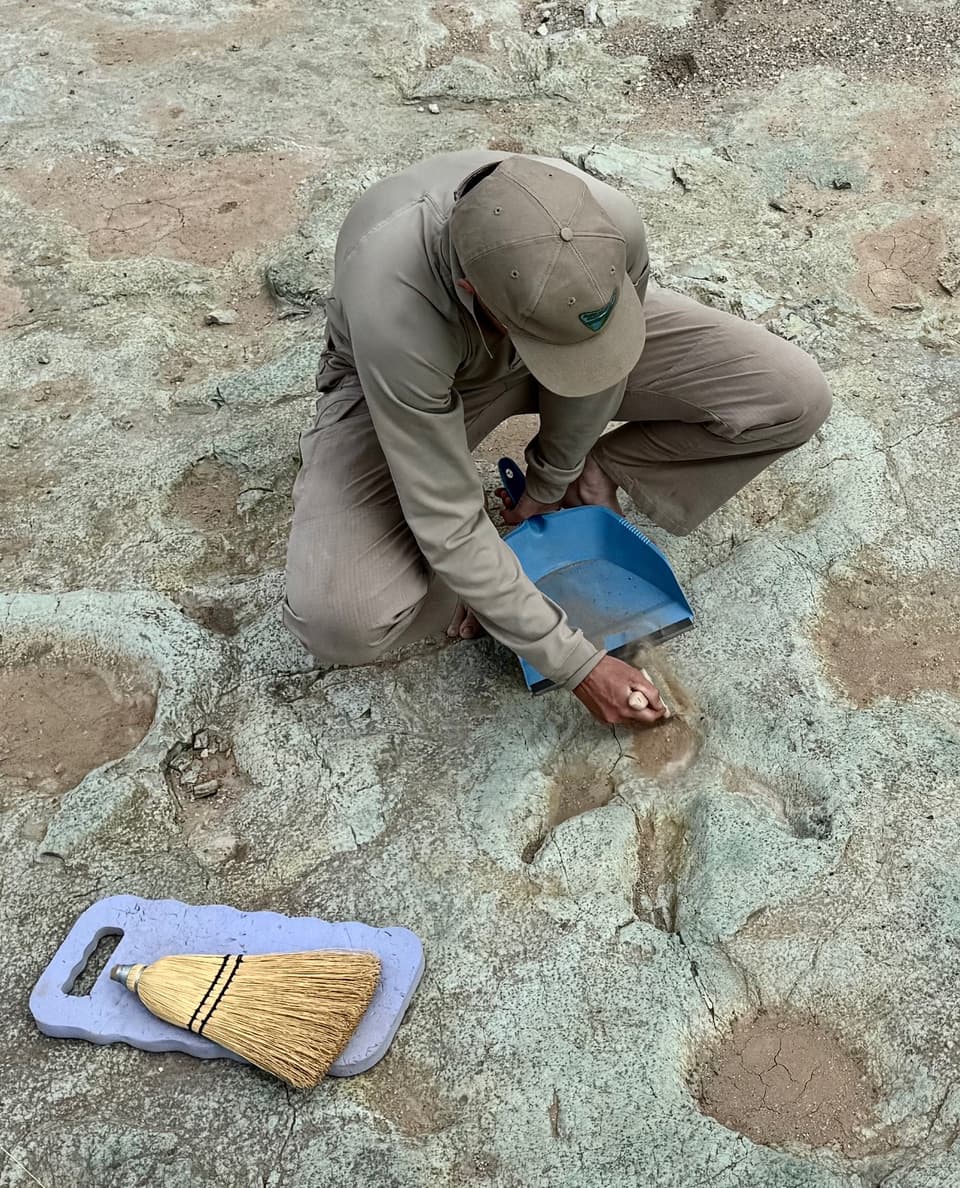
Lessner's work with the BLM combines conservation and education. Her public-engagement activities include school visits, track-site cleaning, installation of interpretive signs, and guided tours of field sites. Those efforts aim to protect sensitive discoveries while inviting community involvement. Track-site cleaning and interpretive signage help preserve prints like the Grallator tracks and teach visitors how to enjoy sites without damaging them.
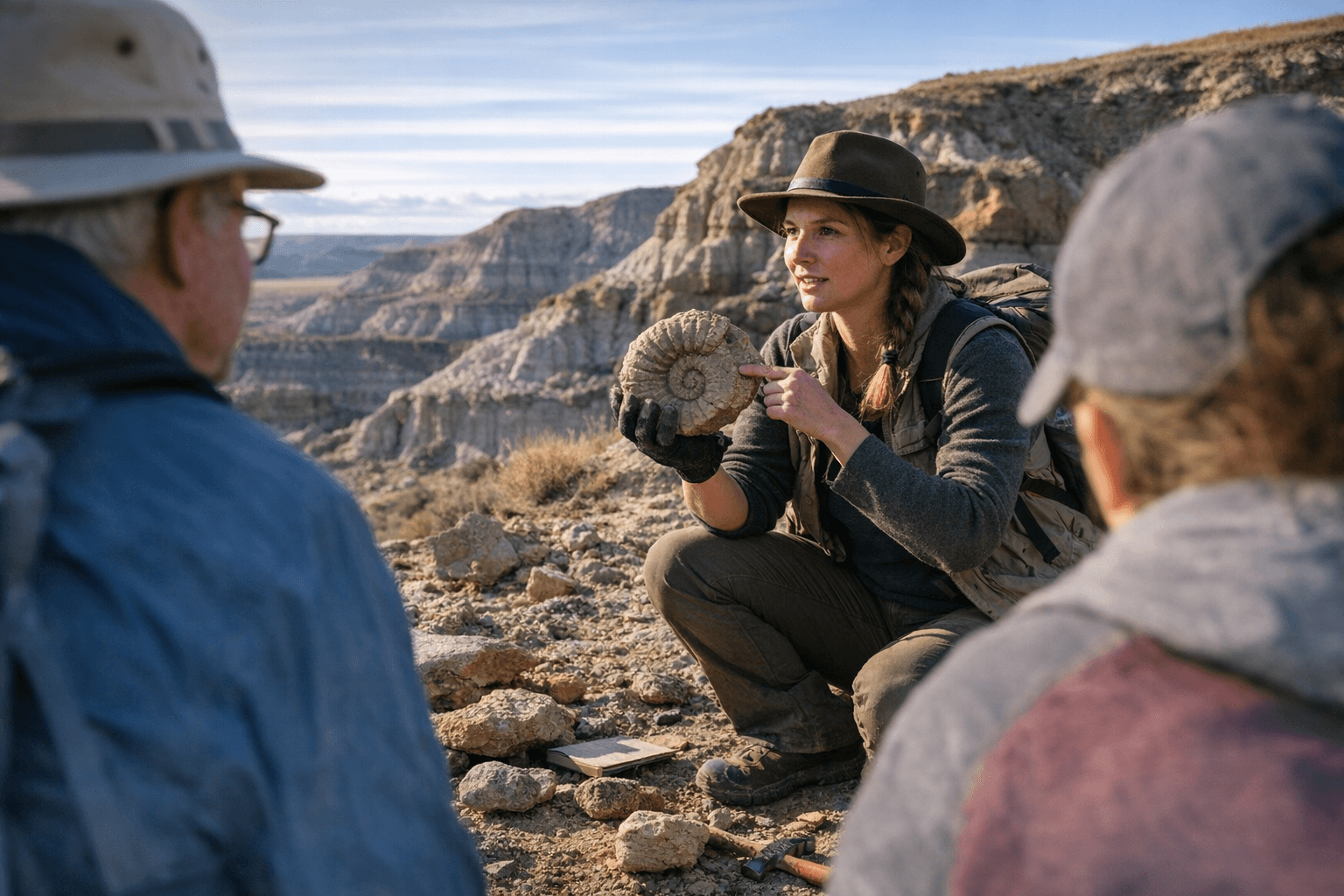
For readers who hike Muley and Mill Creek trails, visit Grandstaff Canyon, or explore slickrock near town, Lessner's message is practical: pay attention to bedding, take photos, and avoid disturbing exposed fossils. Local involvement matters because hikers and visitors are often the first to notice new material. Reporting notable finds to the BLM or local paleontology groups helps turn field observations into documented science.
Lessner's presentation made paleontology feel less like a remote lab discipline and more like a trail skill. For Four Corners Adventure readers, the takeaway is direct: learn the basic rock clues, bring a camera and a respect for sites, and you can help read the fossil record unfolding underfoot.
Know something we missed? Have a correction or additional information?
Submit a Tip