Blue beaches return as thousands of by-the-wind sailors wash ashore
Blue-tinted beaches and slicks of tiny sail-like creatures have returned from San Francisco to Southern California. The spectacle is usually harmless, but it tracks shifting winds and coastal upwelling.
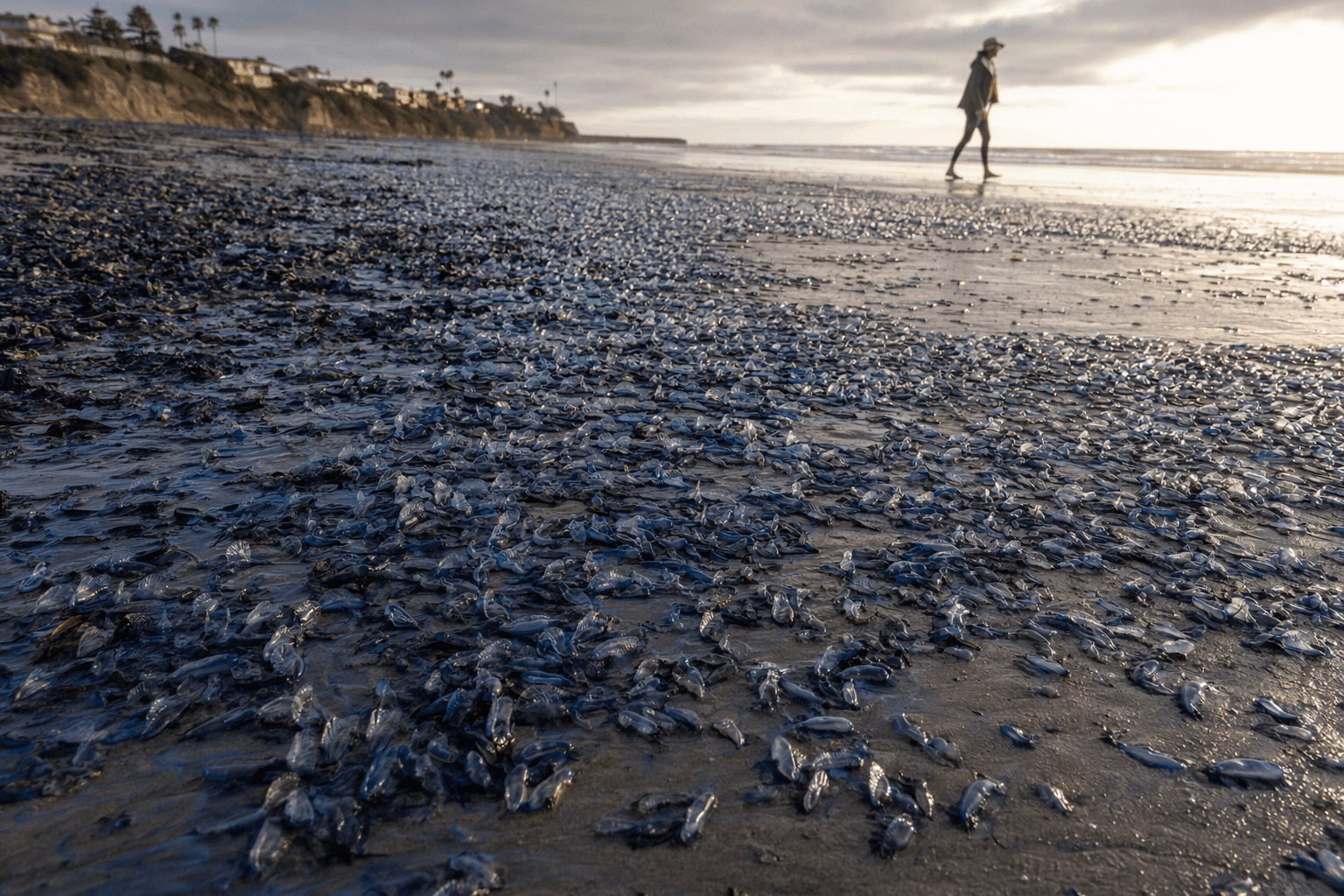
Beaches from Baker Beach and Crissy Field to Ocean Beach were once again lined with Velella velella, the translucent blue creatures known as by-the-wind sailors, as spring winds pushed them ashore along much of the California coast. Jackie Sones of the UC Davis Bodega Marine Reserve said some stretches of shoreline appeared blue from the sheer number of animals, a scene that has also been reported at Aquatic Park, Santa Cruz, Pescadero, Bodega Bay and Stinson Beach.
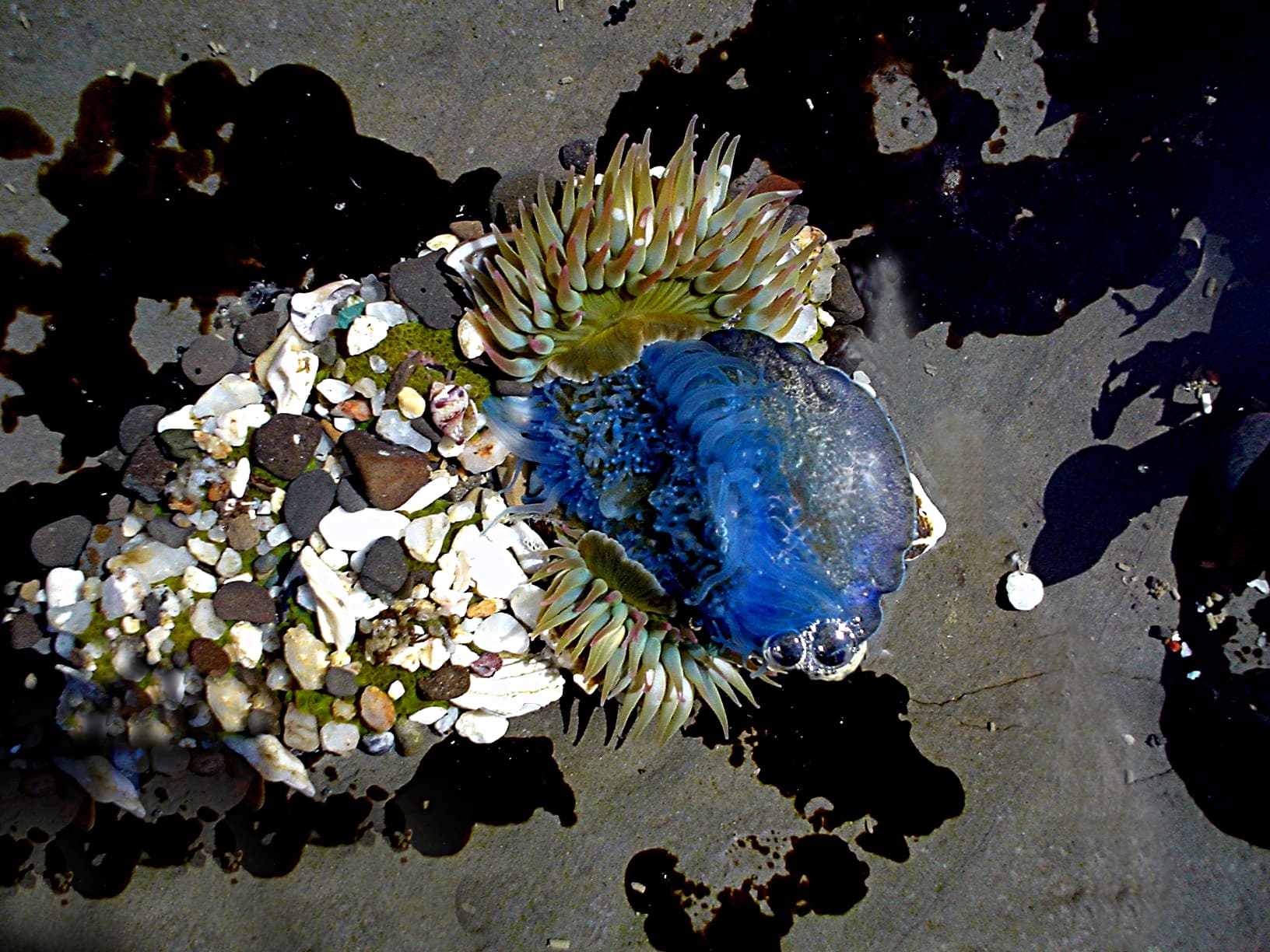
The animals are not true jellyfish. The National Park Service describes Velella velella as hydrozoans related to jellyfish, sea anemones, corals and hydroids, usually three to four inches long with a triangular sail that catches the wind. In the Northern Hemisphere, the sail tends to point left-handed, while in the Southern Hemisphere it is usually right-handed, a reminder that the species has adapted to life on the open surface of the ocean rather than the seafloor.
Their timing is tied to the same seasonal conditions that fuel coastal productivity. Raphael Kudela of the University of California, Santa Cruz said spring upwelling brings nutrients to the surface, which in turn supports phytoplankton and zooplankton, feeding the ecosystem that helps sustain these creatures. In Northern California, that combination of upwelling and favorable winds often brings Velella ashore in spring or early summer, and Point Reyes National Seashore has long treated the beachings as a regular seasonal sight when winds shift.
The reach of this year’s washup extended far beyond the Bay Area. Reports came in from Santa Barbara and Goleta down to La Jolla, with sightings also reported north to Oregon. The Santa Barbara Independent reported hundreds of thousands floating off the Santa Barbara Channel on April 20, and the same coastal pattern has produced mass strandings that can last from days to weeks, especially when winds or storms intensify the push toward land.
For people, the spectacle is mostly a curiosity rather than a threat. Velella velella are generally harmless to humans, but experts warn that dogs and toddlers should not mouth or eat beached specimens because ingestion can cause mouth irritation and gastrointestinal distress. As the animals dry out, they can also develop a strong fishy smell. NOAA has already had to correct one confusing coastal sighting, concluding that a March 2025 offshore sheen near Jenner was not pollution at all but masses of Velella velella.
This article was produced by Prism’s automated news system from verified source data, official records, and press releases, then run through automated quality and moderation checks before publishing. The system is built and supervised by the people who set the standards it runs under. Read our full AI policy.
Did this article answer your question?

