Bone fragments near Mexico City raise alarm before World Cup matches
More than 1,000 bone fragments near Lake Chalco have intensified outrage as Mexico City and Guadalajara prepare for World Cup matches.
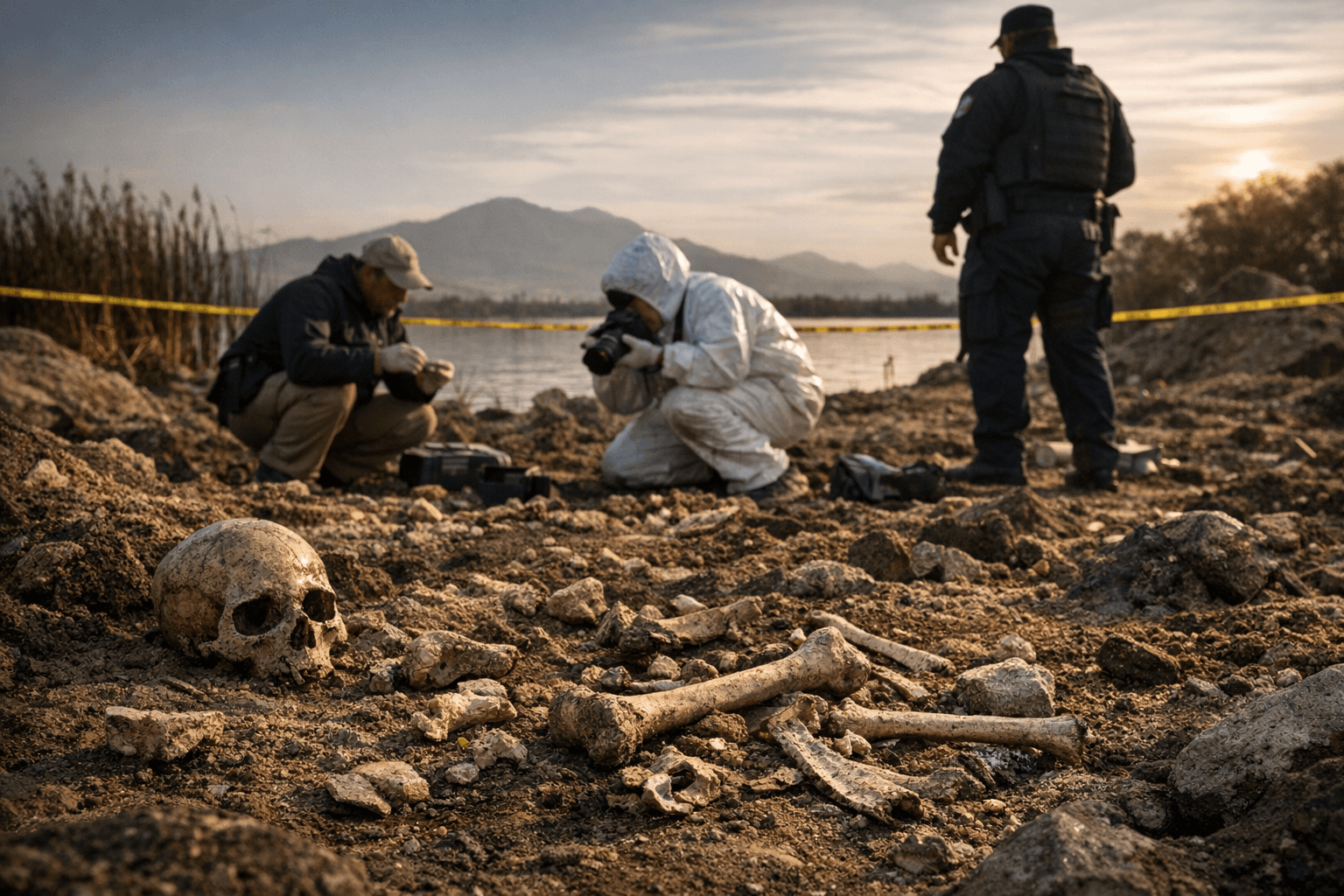
More than 1,000 bone fragments found near Lake Chalco on the edge of Mexico City have sharpened a painful contradiction, a country preparing to welcome the 2026 FIFA World Cup while families of the missing still wait for answers. Authorities and a volunteer search group said the remains were recovered just weeks before Mexico City and Guadalajara are set to host matches in June.
The discovery lands in the middle of a national disappearance crisis that has never been resolved. AFP has reported that more than 130,000 people have gone missing in Mexico since 2006, when the government deployed federal troops to fight drug cartels. In Jalisco, where Guadalajara will host games, CBS News reported more than 15,900 missing-person cases, with experts attributing many of those disappearances in part to the Jalisco New Generation Cartel.
Protesters in both host cities have turned the buildup to the tournament into a protest stage, denouncing the government’s failure to properly investigate disappearances. Their demands reach beyond one find near Lake Chalco. They point to a system that has left forensic teams, search collectives and families carrying the burden of identifying the dead and locating the missing while the official response remains fragmented and slow.
The United Nations has described the problem in stark terms. In 2021, the U.N. Committee on Enforced Disappearances said Mexico faced an “almost total, structural” lack of punishment for disappearances. In 2025, the committee invoked Article 34 of the International Convention for the Protection of All Persons from Enforced Disappearance, a step reserved for situations that may involve widespread or systematic enforced disappearances. The U.N. also said 2024 brought the highest increase in missing persons in at least two decades, with 56,559 new cases recorded, and stressed that accountability is crucial.
For Mexico, the World Cup brings international attention, stadium upgrades and a global spotlight on Mexico City and Guadalajara. It also raises a harder question: whether a mega-event can force real pressure for justice, or whether the country will simply manage the optics while the forensic backlog and the demands of families remain unanswered.
This article was produced by Prism’s automated news system from verified source data, official records, and press releases, then run through automated quality and moderation checks before publishing. The system is built and supervised by the people who set the standards it runs under. Read our full AI policy.
Did this article answer your question?