CBS News Finds Dozens of Ships Backed Up in Strait of Hormuz
Dozens of ships sat waiting off the Strait of Hormuz as CBS reporters slipped aboard a dhow, exposing a choke point that can jolt oil prices worldwide.
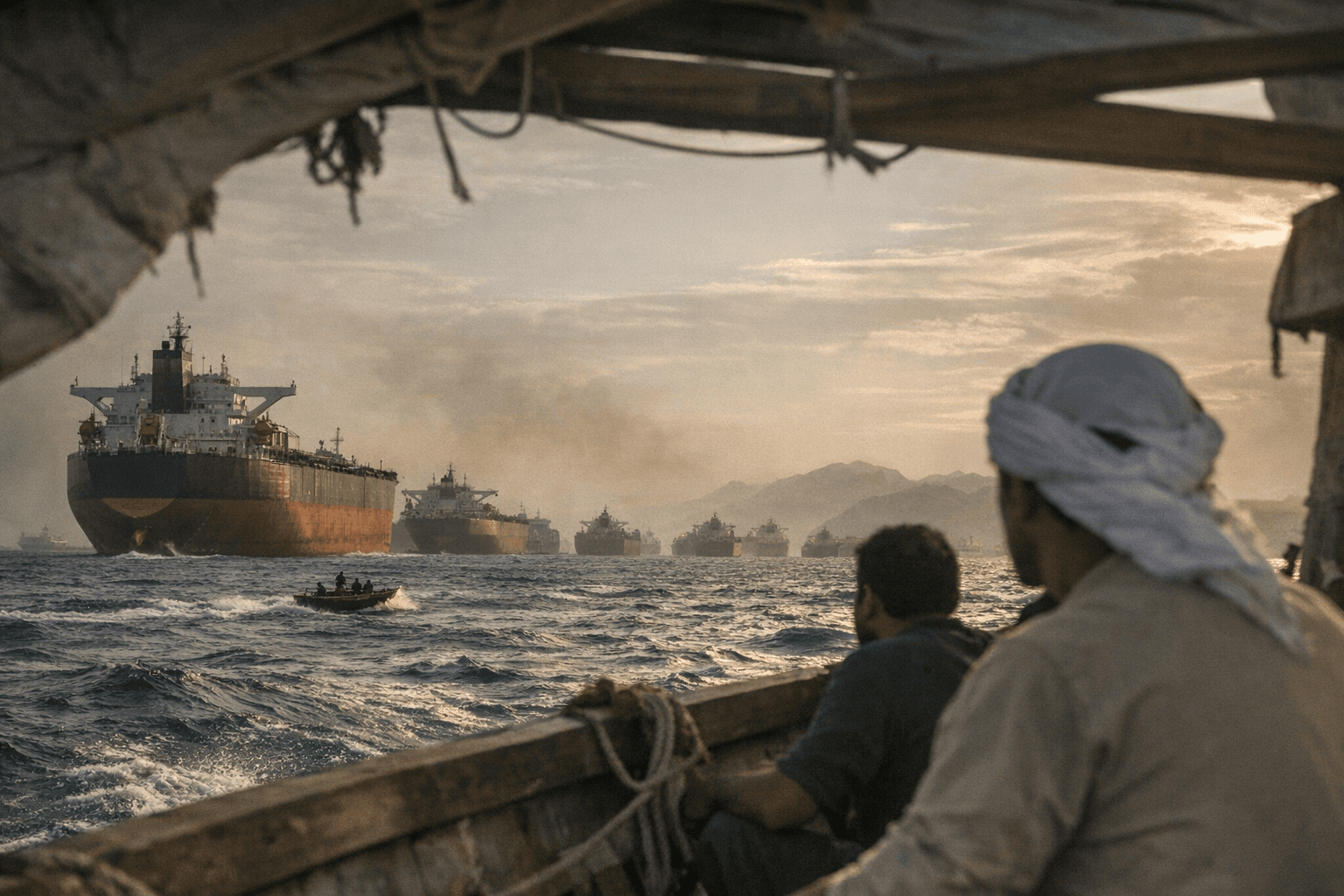
Dozens of ships sat still just offshore as CBS News reporters crossed into a tense coastal stretch near the Strait of Hormuz, a passage so closely watched that the team spent weeks planning how to get there and how to get out. To see the narrow waterway for themselves, the reporters posed as tourists at a small port, negotiated with a boat operator identified as Sharif, and paid $120 for two hours on a traditional wooden dhow used in these waters for generations.
The scene carried global weight. Roughly 20% of the world’s oil passes through the Strait of Hormuz, and the U.S. Energy Information Administration said oil flow through the passage averaged 20 million barrels a day in 2024, about 20% of global petroleum liquids consumption. Even in the first quarter of 2025, flows remained relatively flat compared with 2024, underscoring how much of the world still depends on this single corridor between the Persian Gulf and the Gulf of Oman.
The geography alone explains the risk. The International Energy Agency says the strait is only 29 nautical miles wide at its narrowest point, with shipping lanes just 2 miles wide in each direction and a 2-mile buffer zone between them. That leaves tankers, cargo ships, and liquefied natural gas carriers little margin for error if tensions rise, mines appear, or military maneuvers tighten.
UN Trade and Development said the strait carries around one quarter of global seaborne oil trade, along with large volumes of liquefied natural gas and fertilizers, and that daily ship transits fell sharply during the latest escalation. That helps explain why CBS saw ships waiting instead of moving normally. Reuters reporting said shipping companies welcomed Iran’s statement that the strait was open, but wanted clarifications before sending vessels through, including about mine risk.
The financial stakes are immediate. The World Economic Forum reported that major maritime insurers had repriced or withdrawn war-risk coverage in the Persian Gulf, prompting the U.S. government to step in and backstop insurance for ships transiting the strait. That support limits a broader shutdown, but it also shows how quickly a regional confrontation can ripple into freight rates, insurance costs, and household energy bills far beyond the Gulf.
The danger is not abstract. During the 1980s Iran-Iraq Tanker War, attacks on tankers and sea mines in and near the strait drew in the United States and led to escort operations. That history still shadows every threat against the waterway, where even a brief disruption can become a global shock.
This article was produced by Prism’s automated news system from verified source data, official records, and press releases, then run through automated quality and moderation checks before publishing. The system is built and supervised by the people who set the standards it runs under. Read our full AI policy.
Did this article answer your question?