Brain implants move closer to reality as medical brain-computer interfaces advance
Brain implants are leaving the realm of speculation, but the real story is medical: small trials, stronger AI decoding, and hard limits on who can benefit now.
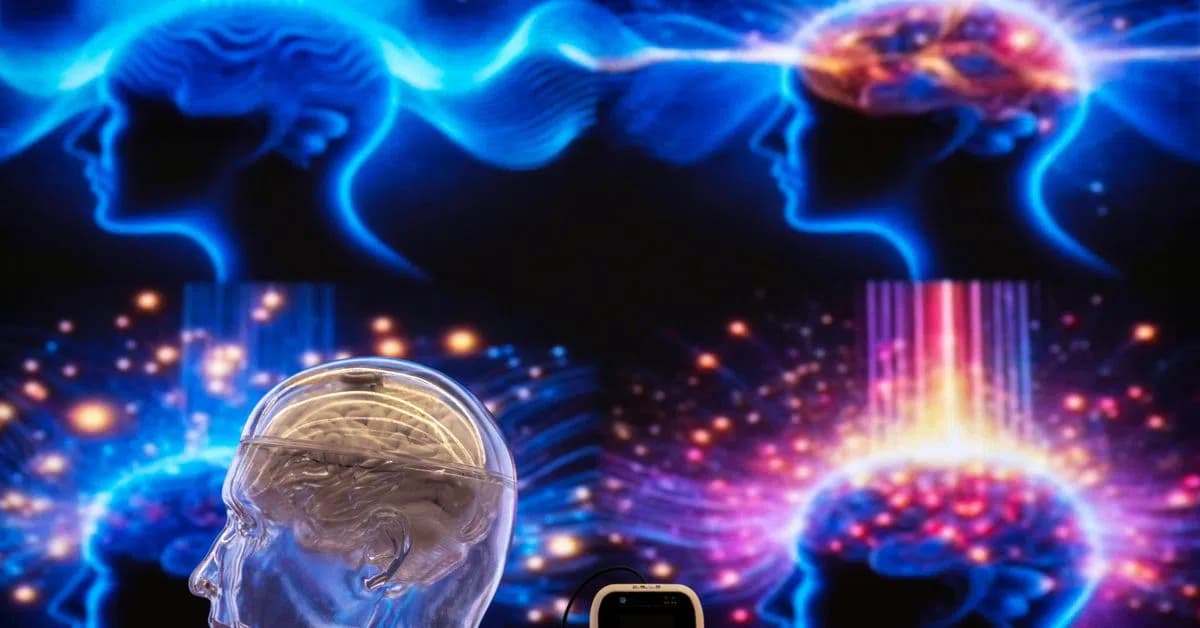
From science fiction to the clinic
Brain implants have long lived in the public imagination, a place where Star Trek and RoboCop make the idea feel both familiar and impossible. What has changed is not the fantasy, but the engineering: brain-computer interfaces are now being treated as a practical medical technology for people with paralysis, blindness, hearing loss, and other severe conditions that strip away basic function.
That shift matters because it reframes the entire debate. The first real use cases are not about upgrading healthy people or blurring the line between human and machine for spectacle. They are about restoring communication, movement, and independence for patients whose lives have already been profoundly altered by disease or injury.
Why the field looks different now
Several technical advances have pushed brain implants from theory toward limited real-world use. Better sensors can collect cleaner neural data, while AI-driven signal processing can help decode noisy brain activity into commands or words. Improved surgery, robotics, and software have also made implant procedures more precise and the systems more usable after implantation.
This is where the current wave of enthusiasm becomes more grounded than Silicon Valley futurism. The biggest change is not that brains have suddenly become easy to read, but that modern computing can interpret patterns that older systems could not manage as reliably. That makes the technology more plausible for narrow medical tasks, even if it remains far from a general-purpose interface.
Deep brain stimulation set the precedent
Long before today’s brain-computer interface projects, deep brain stimulation showed that implanted devices could alter brain circuits for therapy. The U.S. Food and Drug Administration first approved Medtronic’s DBS system on July 31, 1997 for unilateral thalamic stimulation to suppress tremor in the upper extremity in people with essential tremor or Parkinsonian tremor.
The National Institute of Neurological Disorders and Stroke says DBS later received FDA approval in 2002 for Parkinson’s disease symptoms including rigidity, tremor, and dopamine-induced dyskinesia. The Parkinson’s Foundation also tracks a broader regulatory arc, noting milestones in 1997 for Parkinson’s tremor, 2002 for advanced Parkinson’s symptoms, 2016 for earlier-stage Parkinson’s, and 2025 for an optional adaptive DBS programming feature in certain systems. That history matters because it shows how a once-controversial intervention can become standard treatment when evidence, engineering, and regulation align.
The clinical BCI field is still tiny
Implantable brain-computer interfaces are much more ambitious than DBS because they are designed to read from or transmit signals between the brain and machines. In practice, that could mean controlling a cursor, moving a prosthetic limb, or using brain activity to produce speech. The medical promise is real, but the evidence base remains small.
A 2024 Nature review found that 21 research groups worldwide had conducted 28 implanted BCI clinical trials involving 67 participants over 25 years. The same review said no implanted BCI had been approved for the medical device market, even though clinical trials have been underway since 1998. That gap between scientific possibility and routine care is the heart of the story: the field is advancing, but it is still operating on a very narrow clinical footing.
Who can benefit now
The people most likely to benefit today are those with severe neurological injury or disease, especially individuals with paralysis who cannot reliably speak or move. Neuralink said Noland Arbaugh became the first person to receive its implant in January 2024, and the company said a second PRIME participant received an implant in July 2024 at Barrow Neurological Institute and was discharged the next day. ClinicalTrials.gov describes the PRIME study as a first-in-human early feasibility trial evaluating the safety and device functionality of the N1 Implant and R1 Robot in participants with tetraparesis or tetraplegia.
The same medical logic is also expanding the target conditions beyond movement. Current and recent work includes efforts aimed at speech disorders such as laryngeal dystonia and broader communication restoration, which signals that implanted interfaces are no longer being imagined only as cursor controllers. That widening scope is important for public health because it addresses disabilities that can isolate patients socially as much as physically.
Speech is becoming a realistic frontier
One of the most striking developments came from the National Institutes of Health, which reported on April 29, 2025 that researchers had developed a BCI that quickly translates brain activity into audible words. For people who have lost speech to paralysis or disease, that points toward a future where conversation could become more natural and less dependent on clunky workarounds.
Even so, speech decoding remains a specialized task, not a solved one. The challenge is not only reading the brain signal, but doing it fast enough, accurately enough, and safely enough for daily life outside a lab. That is why the technology’s promise should be understood as incremental and patient-specific, not universal.
What remains experimental
The biggest barriers are still safety, scalability, and durability. A device that works in a controlled trial must also hold up in the messier reality of home use, long-term follow-up, and different patient needs. That is especially true for implanted systems, which require surgery, calibration, and ongoing monitoring.
Regulators are trying to accelerate useful innovation without lowering the bar. The FDA’s Breakthrough Devices Program is designed to speed development, assessment, and review for devices that treat life-threatening or irreversibly debilitating conditions, but it still requires rigorous evidence of safety and effectiveness. That balance is essential in a field where the consequences of failure are not abstract.
The equity question cannot be an afterthought
Brain implants also raise a basic social justice question: who gets access first. The earliest benefits are likely to go to patients who can reach specialized centers, enroll in trials, and navigate intensive follow-up care. That creates a risk that the technology will arrive unevenly, even when its clinical purpose is deeply humane.
There is also a policy issue hiding inside the hype. As AI becomes more central to decoding neural signals, the World Health Organization’s 2024 guidance on ethics and governance for AI in health becomes directly relevant, especially its emphasis on ethics, human rights, and safety. The more these systems rely on powerful models and sensitive data, the more important it is to protect patient autonomy, prevent harm, and make sure the benefits do not remain trapped inside a few elite hospitals.
The field is not at the finish line, but it is past the point of pure speculation. Brain implants are now a medical technology with defined patients, early results, and serious regulatory scrutiny, and that makes the next decade about something more concrete than science fiction: whether these devices can become safe, effective, and fair enough to matter at scale.
This article was produced by Prism’s automated news system from verified source data, official records, and press releases, then run through automated quality and moderation checks before publishing. The system is built and supervised by the people who set the standards it runs under. Read our full AI policy.
Did this article answer your question?