Brazil and US Launch Joint Effort After Seizing 1,168 US-Origin Weapons
Weapons from Orlando and Kissimmee fueled Brazil's deadliest gangs. After 1,168 seizures in a year, both governments launched a real-time tracking program.
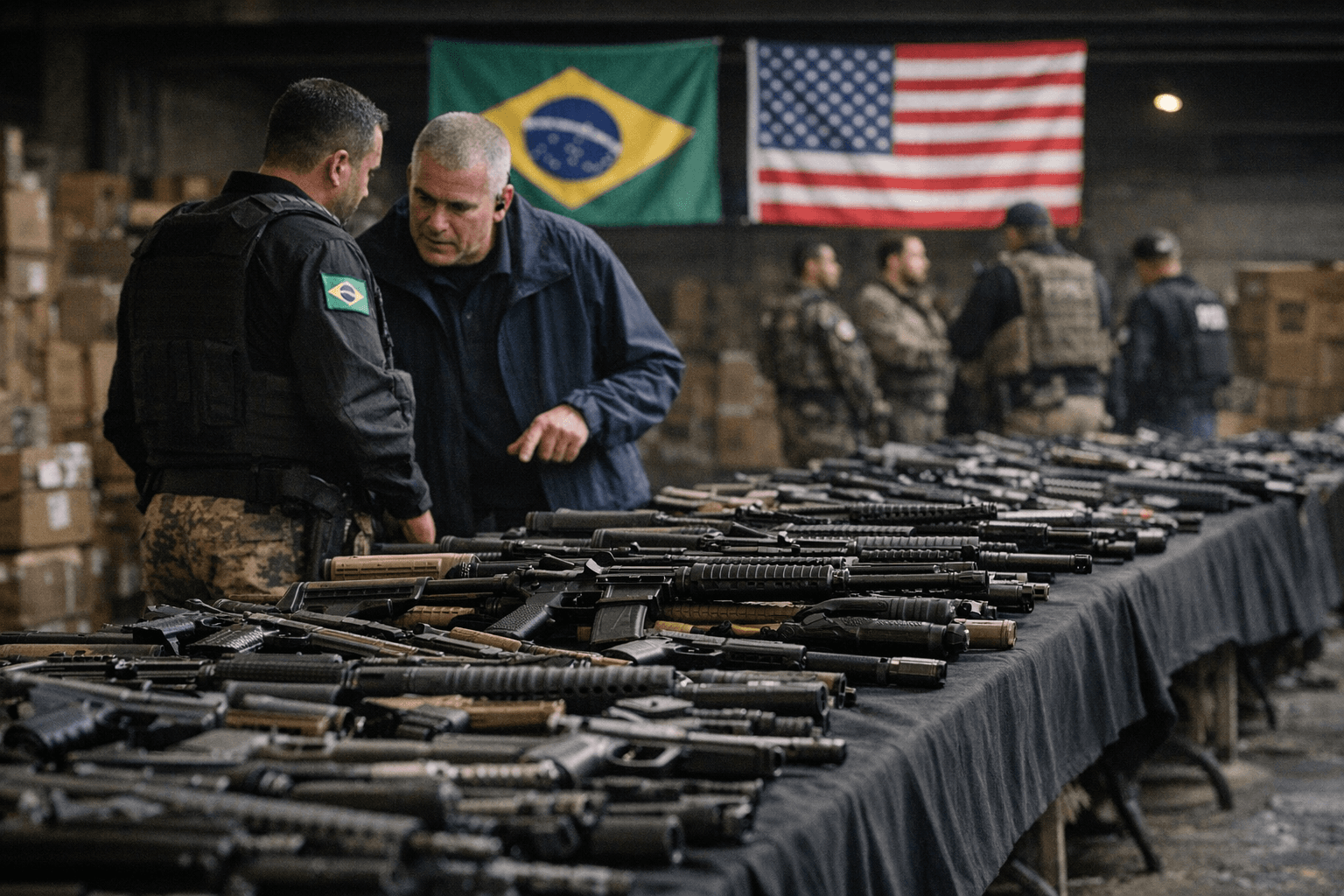
The supply chain connecting Central Florida to Brazilian crime syndicates is now under joint surveillance. Brazil and the United States launched a binational enforcement partnership on April 10 after Brazilian authorities revealed they had seized 1,168 illegally imported arms and weapons parts over the previous 12 months, spread across 35 separate incidents and weighing roughly 550 kilograms combined.
The weapons traced back primarily to Orlando and Kissimmee, Florida, shipped through commercial cargo channels using fraudulent declarations and physical concealment. Their end destinations were the armed wings of the Primeiro Comando da Capital and the Comando Vermelho, Brazil's two most powerful criminal networks.
The joint effort operates under two distinct programs. Project MIT, short for Mutual Interdiction Team, links Brazil's Federal Revenue Service with U.S. Customs and Border Protection to integrate intelligence and coordinate interdictions on shipments leaving the United States bound for Brazil. The second component, a computer system called DESARMA, enables both governments to exchange data in real time on goods entering Brazilian territory.
Brazil's Finance Minister Dario Durigan described the collaboration with CBP as "an important step in strengthening international cooperation" against organized crime, adding that concrete actions would include real-time data sharing and joint operational interdictions. He credited the agreement to high-level diplomatic exchanges, saying it became possible after talks between President Luiz Inácio Lula da Silva and U.S. President Donald Trump "gained momentum." The Brazilian government had originally planned to announce the partnership alongside an in-person Lula-Trump meeting, which had not yet taken place.
The scale of illicit cargo entering Brazil sharpened the urgency. Drug seizures at Guarulhos International Airport in São Paulo surged from 89 kilograms for all of 2024 to 1,562 kilograms in just the first three months of 2026, concentrated in shipments of synthetic drugs and hashish. Tax Revenue Secretary Robinson Barreirinhas disclosed the weapons figures and confirmed the government has already begun feeding the DESARMA system with data on incoming arms.
The arms flows are not a new phenomenon. The Florida Heat case, which ran from 2017 to 2022, documented smugglers importing components from at least seven U.S. firearms manufacturers and assembling what investigators called Frankenstein guns, untraceable assault rifles built to exploit gaps in U.S. export law. Operation Iron Tire, a joint operation between Homeland Security Investigations and the Brazil Federal Police, simultaneously executed warrants in Brazil and Florida targeting a transnational network moving weapons from Orlando and Kissimmee to São Paulo and Rio de Janeiro. Operation Patagonia Express, led by HSI Miami, resulted in more than two dozen arrests and thousands of weapons and explosives seized after components were found being shipped from South Florida to Brazil and Argentina.
The PCC, the primary beneficiary of those earlier trafficking routes, is estimated by a 2023 Economist analysis to have approximately 40,000 lifetime members and an additional 60,000 contractors, making it the largest criminal gang in Latin America.
The announcement carries distinct political weight. The Trump administration has been weighing whether to designate both the PCC and Comando Vermelho as Foreign Terrorist Organizations, a move the Lula government has categorically rejected. Brazil passed its own anti-faction law in March 2026, weeks before the Project MIT announcement. The joint initiative offers Lula a vehicle for demonstrating security cooperation with Washington without conceding on the terrorist label.
If DESARMA and Project MIT deliver consistent seizure results, they could establish a template for similar data-sharing frameworks elsewhere. The State Department announced a parallel firearms interdiction cooperation initiative targeting the Caribbean in February 2026, suggesting the architecture for this kind of bilateral enforcement is expanding across the hemisphere.
This article was produced by Prism’s automated news system from verified source data, official records, and press releases, then run through automated quality and moderation checks before publishing. The system is built and supervised by the people who set the standards it runs under. Read our full AI policy.
Did this article answer your question?