Golden Eagles Could Return to English Skies as Early as 2026
A £1 million government programme could see golden eagle chicks released in England this year, a decade after the last known bird vanished from a Cumbrian valley in 2015.
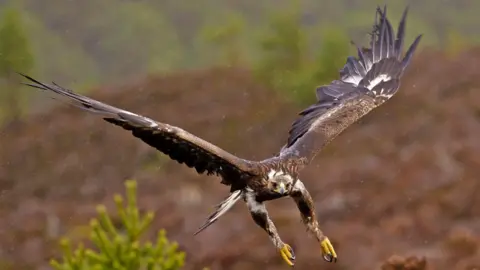
The government committed £1 million to reintroduce golden eagles to England, with Environment Secretary Steve Reed overseeing the programme and minister Ms Reynolds confirming that juvenile birds aged six to eight weeks old could be released before the end of 2026. Defra said any programme would prioritise public engagement and assess impacts on other wildlife, though the specific allocation of funding across tracking, habitat preparation, and community compensation has not been disclosed.
The species' English history is a study in slow erasure. Victorian sheep farmers and gamekeepers systematically persecuted golden eagles as threats to lambs and game birds. Golden eagles arrived in the Lake District from Scotland in the late 1950s; a pair bred at Haweswater between 1969 and 1996, fledging 16 young, while a second pair in the Lake District fledged four more between 1975 and 1983. England's last known individual, a solitary male at Riggindale near Haweswater in Cumbria whose mate had died in 2004, vanished in November 2015, presumed dead at around age 19 to 20.
The blueprint for any English reintroduction is southern Scotland, where the South of Scotland Golden Eagle Project launched in 2018 with just three or four breeding pairs. By translocating 43 birds, 28 chicks and 15 subadults, from the Scottish Highlands, the project grew the population to approximately 50 eagles, the highest recorded in the region in over 300 years. Satellite and fieldwork data recorded 17 occupied territories as of May 2025. That project has since relaunched as the charity Restoring Upland Nature in 2025; Scotland's overall golden eagle count stands at more than 500 breeding pairs.
Satellite tracking has already confirmed that several of these birds are moving south. The first to cross the border was C11, known as Beaky, who reached the North Pennines in April 2020. By 2025, eagles including a young male named Talla had been tracked across Northumberland, the Lake District, and as far south as the Forest of Bowland in Lancashire and Nidderdale in Yorkshire.
Forestry England's feasibility study, completed but not yet published, is understood to conclude sufficient habitat exists for a resident population. Any reintroduction requires licensing by Natural England and must comply with guidelines from the France-based International Union for Conservation of Nature.
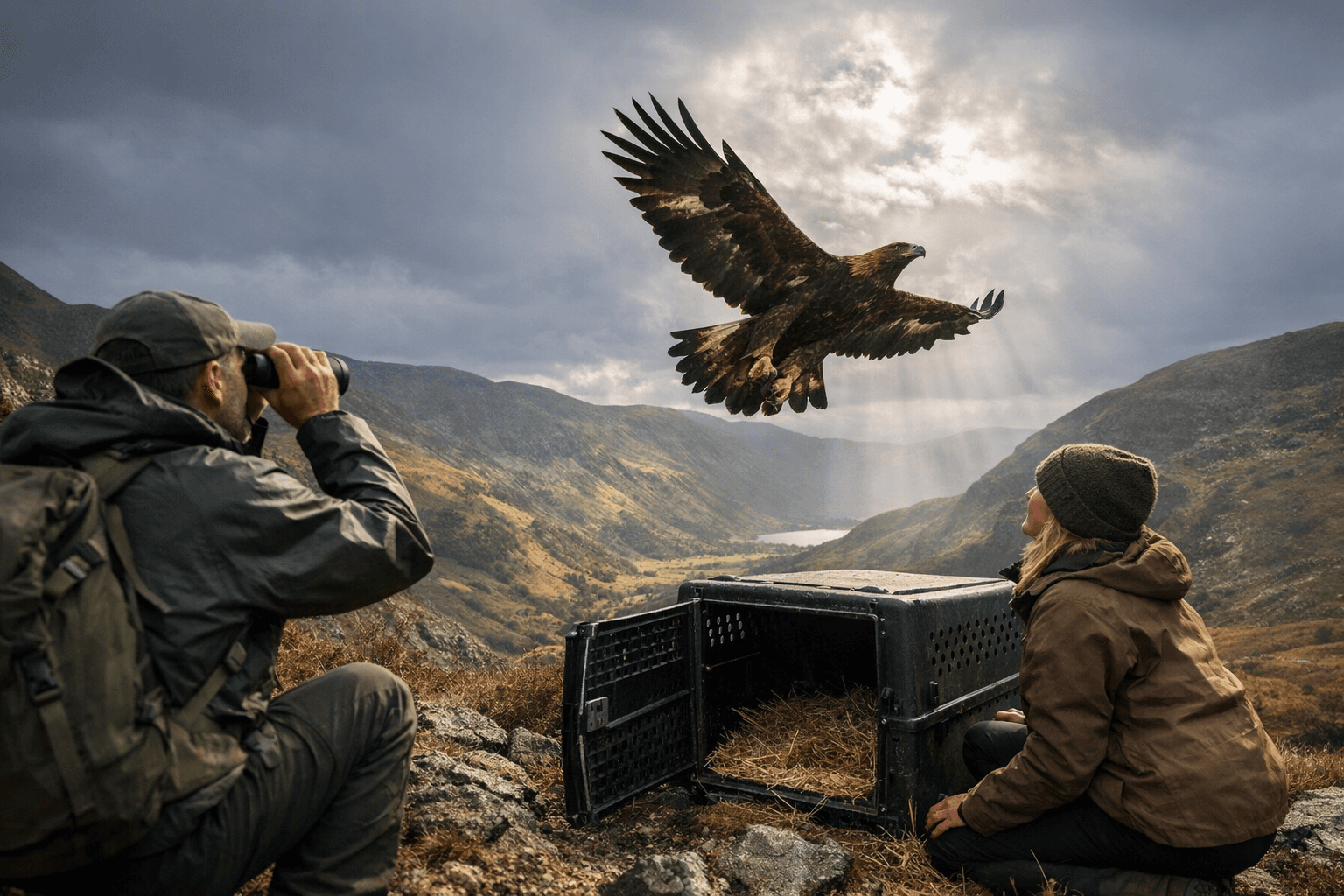
Duncan Orr-Ewing, head of species and land management at the RSPB, said the south of Scotland project "was only initiated after a lot of stakeholder engagement and also a full feasibility study," and described golden eagles as "extremely adaptable," capable of taking grouse, rabbits, hares, deer calves, badgers, and fox cubs. Mike Pratt, CEO of Northumberland Wildlife Trust, pointed to his organisation's recent purchase of 3,845 hectares on the Rothbury Estate, including the Simonside Hills, as a candidate eagle site, and of the Scottish birds already ranging into Northumberland, noted simply: "they don't see a border."
Farmer opposition is direct and vocal. Abi Reader, deputy president of NFU Cymru, told BBC Radio 4's Today programme that golden eagles "represent a threat to livestock farmers," adding: "If you're a farmer you've spent your entire year building up to a decent lambing crop, and suddenly it's decimated by these golden eagles, then it can be really damaging for farming businesses." Rewilding Britain has separately identified illegal persecution linked to grouse estate management as the biggest current threat to the species, a dynamic any English licensing framework will need to address before the first chick is released.
With a wingspan of up to two metres and a role as apex predator regulating whole ecosystems, the golden eagle's decade-long absence from English landscapes has reshaped upland food chains. The Moffat Golden Eagle Festival in southern Scotland has shown that reintroduction can generate tourism revenue for rural communities, offering a counterpoint to the land-use conflicts that the £1 million programme will have to navigate if it is to hold.
This article was produced by Prism’s automated news system from verified source data, official records, and press releases, then run through automated quality and moderation checks before publishing. The system is built and supervised by the people who set the standards it runs under. Read our full AI policy.
Did this article answer your question?


