US Destroyers Transit Strait of Hormuz as Iran Denies Crossing, Issues Threats
Two US destroyers crossed the Strait of Hormuz for the first time since the Iran war began, as Tehran denied the transit and threatened to strike any US vessel within 30 minutes.
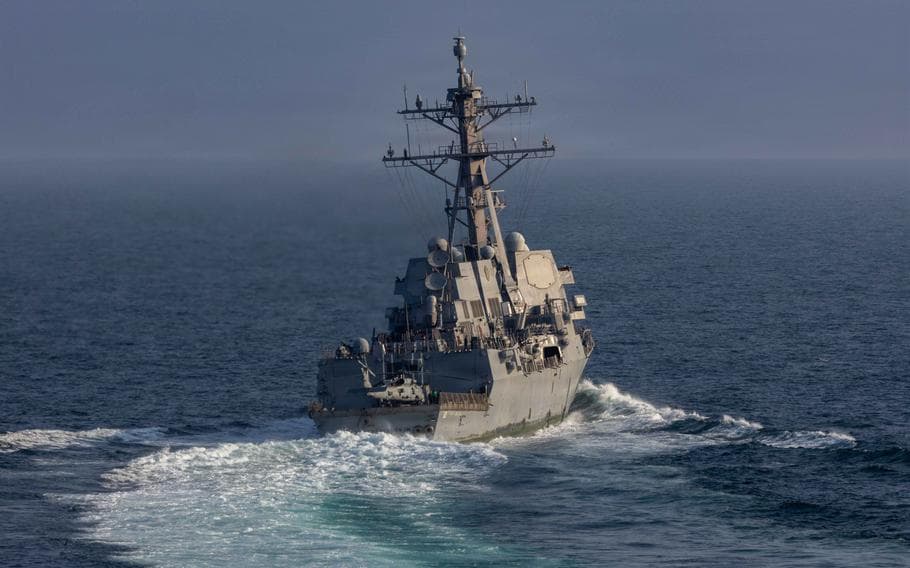
Two U.S. Navy guided-missile destroyers crossed the Strait of Hormuz on Saturday, marking the first American warship transit of the waterway since the Iran war began, even as Tehran flatly denied the crossing occurred and the IRGC warned that any military vessel attempting passage would be "dealt with severely."
U.S. Central Command confirmed that the USS Frank E. Peterson (DDG 121) and USS Michael Murphy (DDG 112), both Arleigh Burke-class destroyers, "transited the Strait of Hormuz and operated in the Arabian Gulf as part of a broader mission to ensure the strait is fully clear of sea mines previously laid by Iran's Islamic Revolutionary Guards Corps." Navy officials had previously described the waterway as an Iranian "kill zone," making Saturday's transit one of the most consequential military movements of the conflict.
President Trump framed the operation in broad terms hours before CENTCOM's announcement, posting on Truth Social that the United States was "starting the process of clearing out the Strait of Hormuz as a favor to Countries all over the World." The crossing was not coordinated with Iran, and Washington received no formal warning from Tehran beforehand.
Iran's response was immediate and contradictory. Minutes after CENTCOM's statement, a senior Iranian military official appeared on state television to deny any crossing had taken place. The IRGC Navy issued a formal statement declaring full authority over the strait and warning that any attempt by military vessels to pass through "will be dealt with severely." Iranian media went further, claiming any U.S. military ship would be attacked within 30 minutes of entry. Iran's government also called the transit a ceasefire violation. Bloomberg subsequently reported that the IRGC launched a drone toward the two destroyers and that the ships were forced to turn back, though no Iranian forces fired on either vessel.
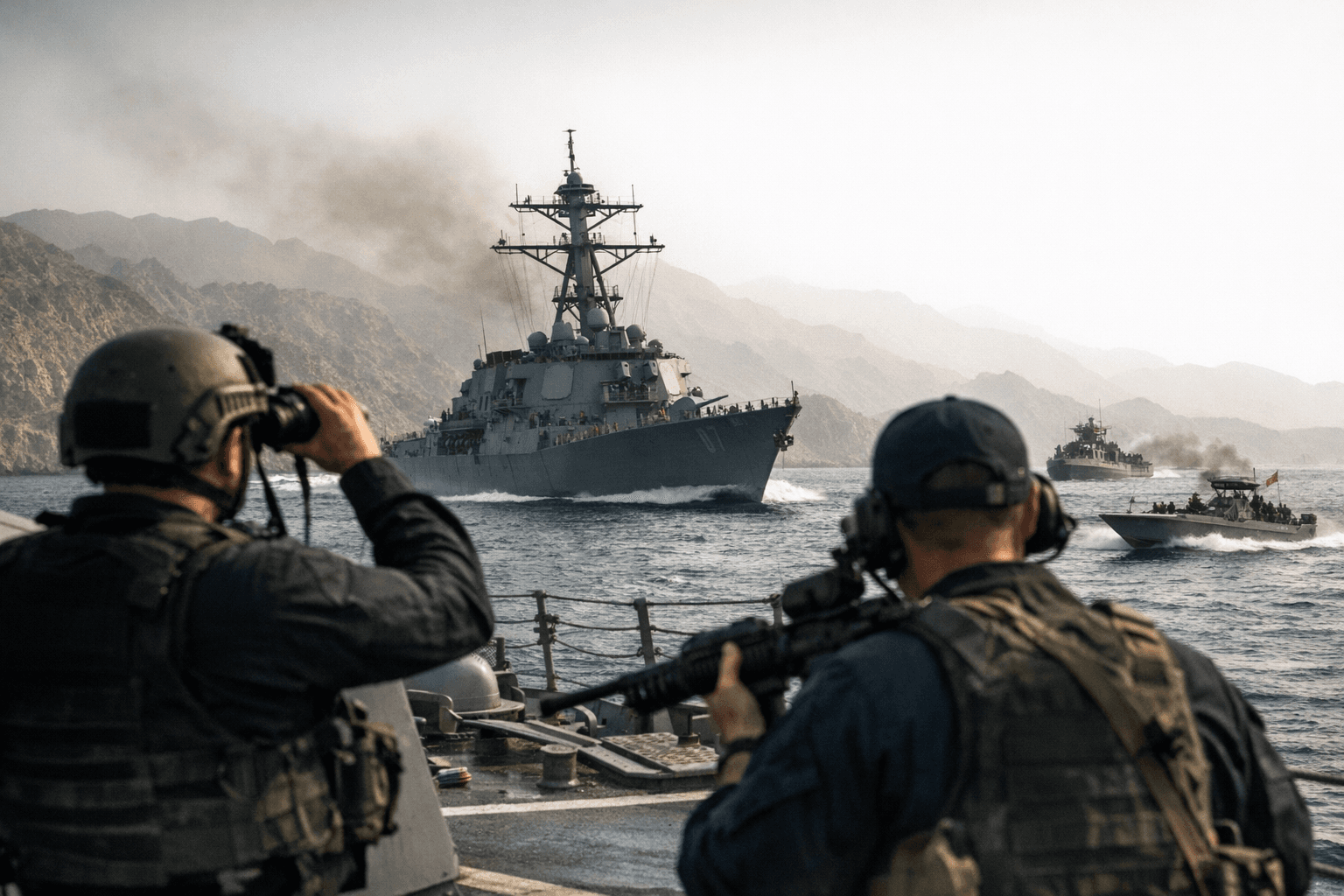
The mine-clearing mission is complicated by a critical intelligence problem: Iran reportedly cannot locate all of the mines it placed in the strait and is unable to remove them, a factor that has prevented Tehran from reopening the waterway despite sustained U.S. pressure. The specific devices include the Maham 3, a moored naval mine that uses sensors to detect passing vessels, and the Maham 7, a so-called "sticking mine" that rests along the seabed until a target moves within range. Both are Iranian-manufactured. CENTCOM said additional forces, including underwater drones and potentially Littoral Combat Ships equipped with mine-hunting systems, will join the clearance operation in the coming days. Since the conflict began, the IRGC has carried out at least 21 confirmed attacks on merchant ships in or near the strait.
The transit unfolded against the backdrop of collapsed ceasefire negotiations in Islamabad. A session that lasted approximately 21 hours, described by an Iranian spokesman as the longest single U.S.-Iran negotiating session in the past year, ended Saturday without agreement. Vice President JD Vance led the American delegation alongside special envoy Steve Witkoff and Jared Kushner. Iran sent Foreign Minister Abbas Araghchi and parliament speaker Mohammad Bagher Ghalibaf. Pakistan's Prime Minister Shehbaz Sharif facilitated the talks, expressing hope they would "serve as a stepping stone toward durable peace in the region." They did not. Vance announced there was no deal and departed Islamabad aboard Air Force Two. Pakistan's Foreign Minister Ishaq Dar urged both sides to continue honoring the existing two-week ceasefire. Iran's state media blamed Washington, saying the U.S. was "looking for an excuse to leave the talks." Iran had previously rejected a 45-day ceasefire framework, insisting on a permanent resolution to the conflict.
The stakes extend well beyond the two nations at war. The Strait of Hormuz carries approximately 20 million barrels of petroleum per day, roughly 25 percent of all global seaborne oil trade and about one-fifth of total world oil consumption. Around 82 percent of that crude flows to Asian markets, with China accounting for approximately 37.7 percent of total throughput. The strait also handles roughly 20 percent of global liquefied natural gas trade. As of Saturday morning, at least 16 ships had transited the waterway using alternative routes designated by Iranian authorities past Larak Island. Whether the mine-clearing mission succeeds or provokes a new escalation will determine whether those alternative routes remain the only viable option.
This article was produced by Prism’s automated news system from verified source data, official records, and press releases, then run through automated quality and moderation checks before publishing. The system is built and supervised by the people who set the standards it runs under. Read our full AI policy.
Did this article answer your question?


