Brazil Supreme Court convicts Eduardo Bolsonaro over Trump interference bid
Brazil’s top court gave Eduardo Bolsonaro 4 years and 2 months for lobbying Trump allies to hit justices, a move that could lead to arrest if he returns.
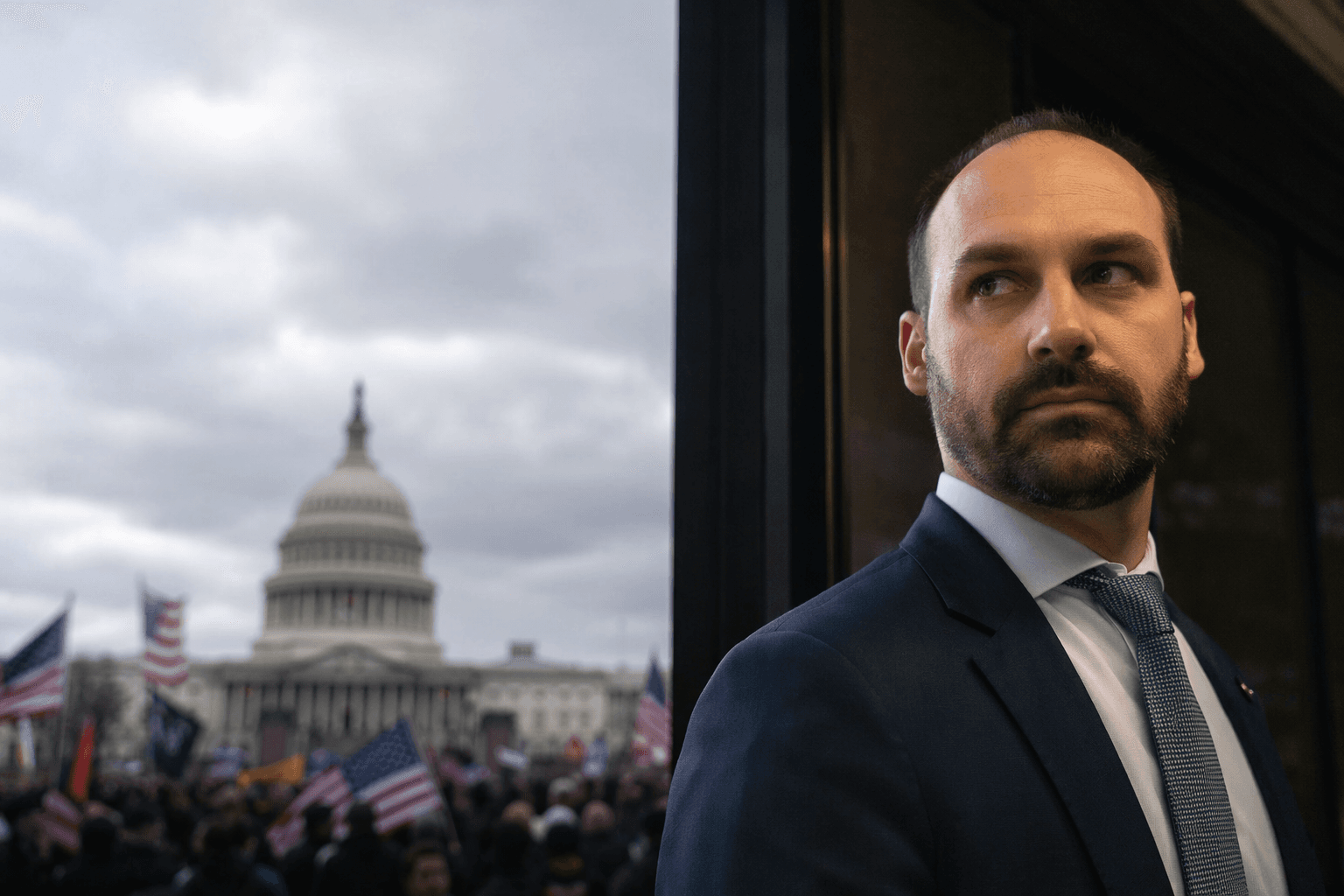
Brazil’s Supreme Court has drawn a hard line against cross-border pressure in a coup-related case, convicting Eduardo Bolsonaro after finding that he sought help from the Trump administration to influence the legal fight against his father. A four-justice panel unanimously backed the ruling and imposed a sentence of four years and two months in prison, a punishment that could expose the former lawmaker to arrest if he returns to Brazil.
The decision lands at the center of Brazil’s battle over democratic guardrails. Prosecutors said Eduardo Bolsonaro worked in Washington to push U.S. officials to punish Brazilian Supreme Court justices, including through sanctions and tariffs, in an effort to strengthen the case surrounding Jair Bolsonaro’s conviction over an alleged coup plot. Those sanctions and tariffs were later scaled back, but the effort itself became part of a broader confrontation over whether political power can be extended across borders to shield a domestic ally from judicial accountability.
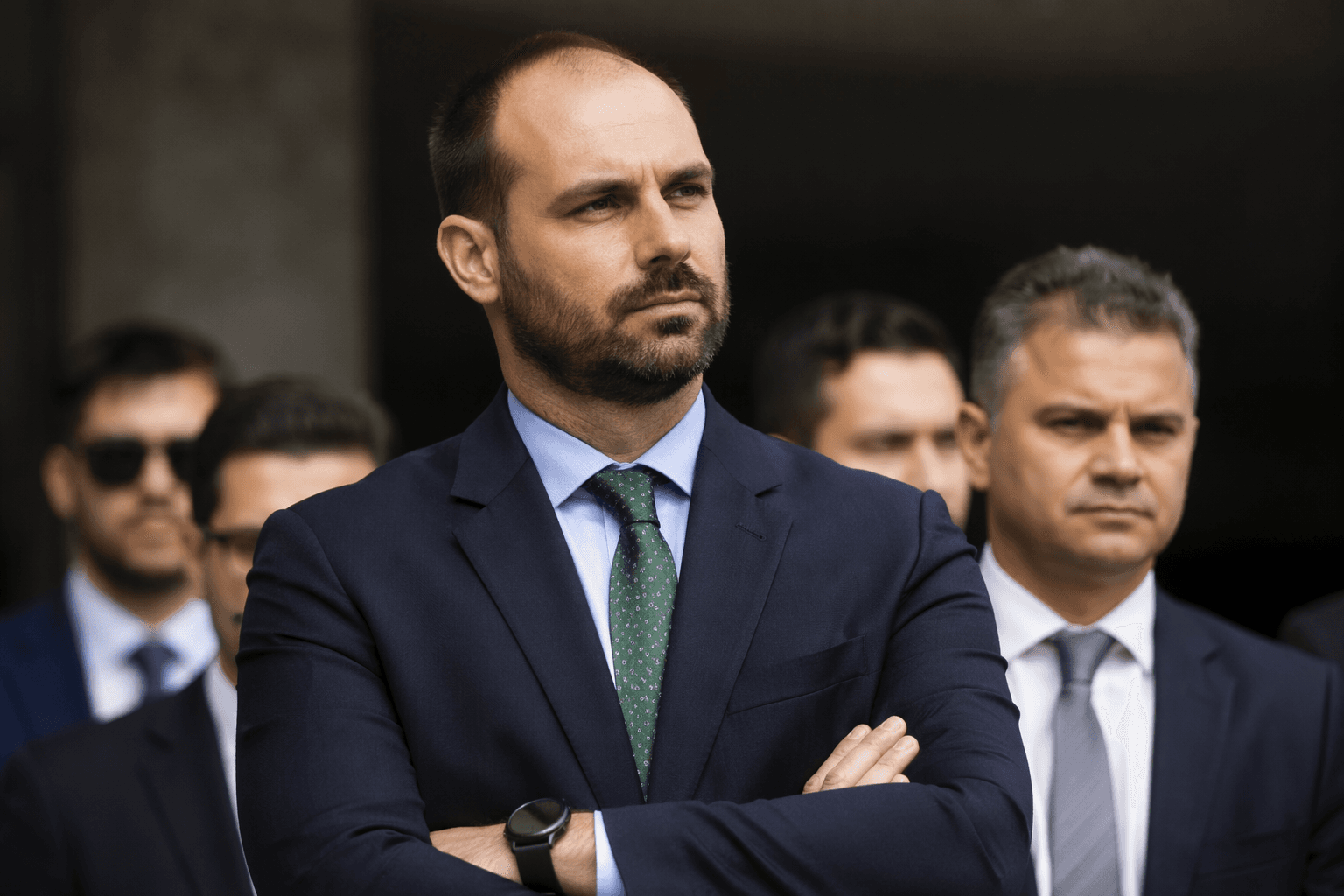
Eduardo Bolsonaro denied that he was trying to win an acquittal for his father. He said his goal was to see officials who, in his view, were not respecting Brazil’s constitution punished, and he argued that he had not been properly notified about the legal process. The court did not accept that defense, treating the Washington campaign as an effort to interfere with a domestic case rather than a legitimate political appeal.
The ruling also sharpens the pressure on one of Brazil’s most politically consequential families. Eduardo Bolsonaro moved to the United States in 2025, months before his father’s trial, and has since become a link between Brazil’s far right and Donald Trump’s political orbit. Eduardo and his brother, Senator Flavio Bolsonaro, have both met Trump, and Flavio is now seen as the strongest challenger to President Luiz Inacio Lula da Silva ahead of October’s election.
That makes the conviction more than a family setback. It is a warning shot about the limits of internationalizing domestic legal fights, especially when elected or politically connected figures try to enlist foreign power against their own courts. In Brazil, where the legacy of Jair Bolsonaro’s coup-related case is still reverberating, the court’s message was that outside pressure will not erase internal accountability.
This article was produced by Prism’s automated news system from verified source data, official records, and press releases, then run through automated quality and moderation checks before publishing. The system is built and supervised by the people who set the standards it runs under. Read our full AI policy.
Know something we missed? Have a correction or additional information?
Submit a Tip