Brazil’s Alckmin hails Mercosur-EU trade pact as antidote to protectionism
Alckmin said the Mercosur-EU pact is proof that big economies can still choose open markets, with tariffs due to start falling on May 1.
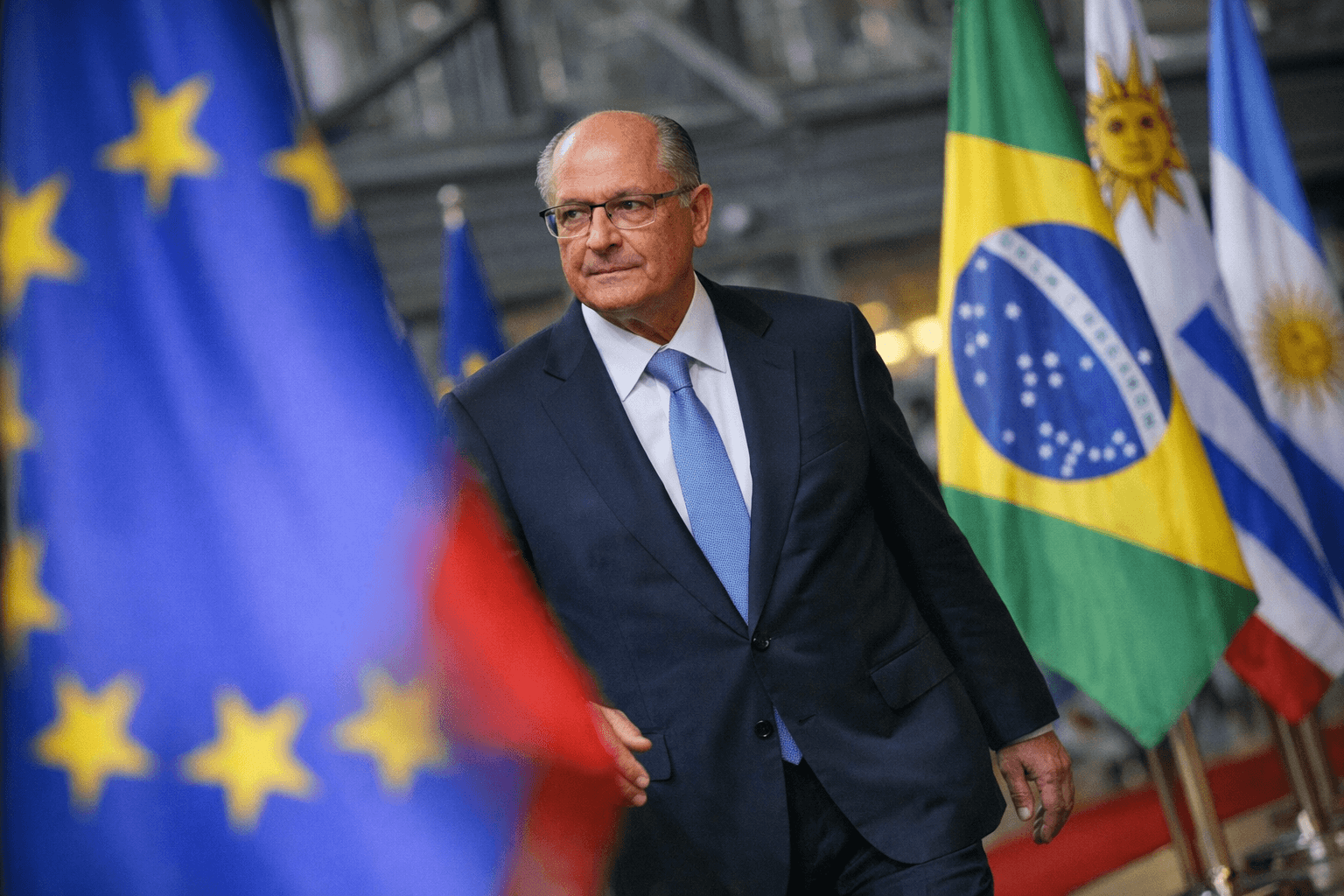
Brazilian Vice President Geraldo Alckmin used the long-delayed Mercosur-EU trade pact to make a broader case for open markets at a time when many governments are leaning harder on protection. In Brasília, he called the agreement "the biggest deal between trade blocs in the world" and said it showed that large economies can still resist fragmentation and choose rules over isolation.
The timing gives the pact outsized weight. The European Commission notified Mercosur countries on March 23 that the interim trade agreement would apply provisionally from May 1, after Argentina, Brazil and Uruguay had completed ratification procedures and informed Brussels by the end of March. The deal, first reached politically on Dec. 6, 2024 after a quarter-century of negotiations, is designed to create a trading zone of roughly 700 million people and to cut tariffs on selected products from day one.
For Brazil, the economic upside is concrete. Alckmin said the country could see exports to the European Union rise by about 13% annually if the agreement is fully enforced. Brazil’s foreign ministry has also cast the pact as strategically important, calling it one of the world’s largest bilateral trade deals and a sign that Brasília can shape global trade rules rather than simply react to them.
That message is landing in Europe despite persistent resistance. Farmers and environmental groups have argued that the pact could expose EU agriculture to cheaper imports and weaken environmental standards. The European Parliament voted in January 2026 to send legal questions on the agreement to the European Court of Justice, and the Council of the European Union adopted a safeguard regulation on March 5 to shield farmers from import surges tied to Mercosur products. The legal challenge does not stop provisional application, but it leaves the broader agreement vulnerable if the court later rules against it.
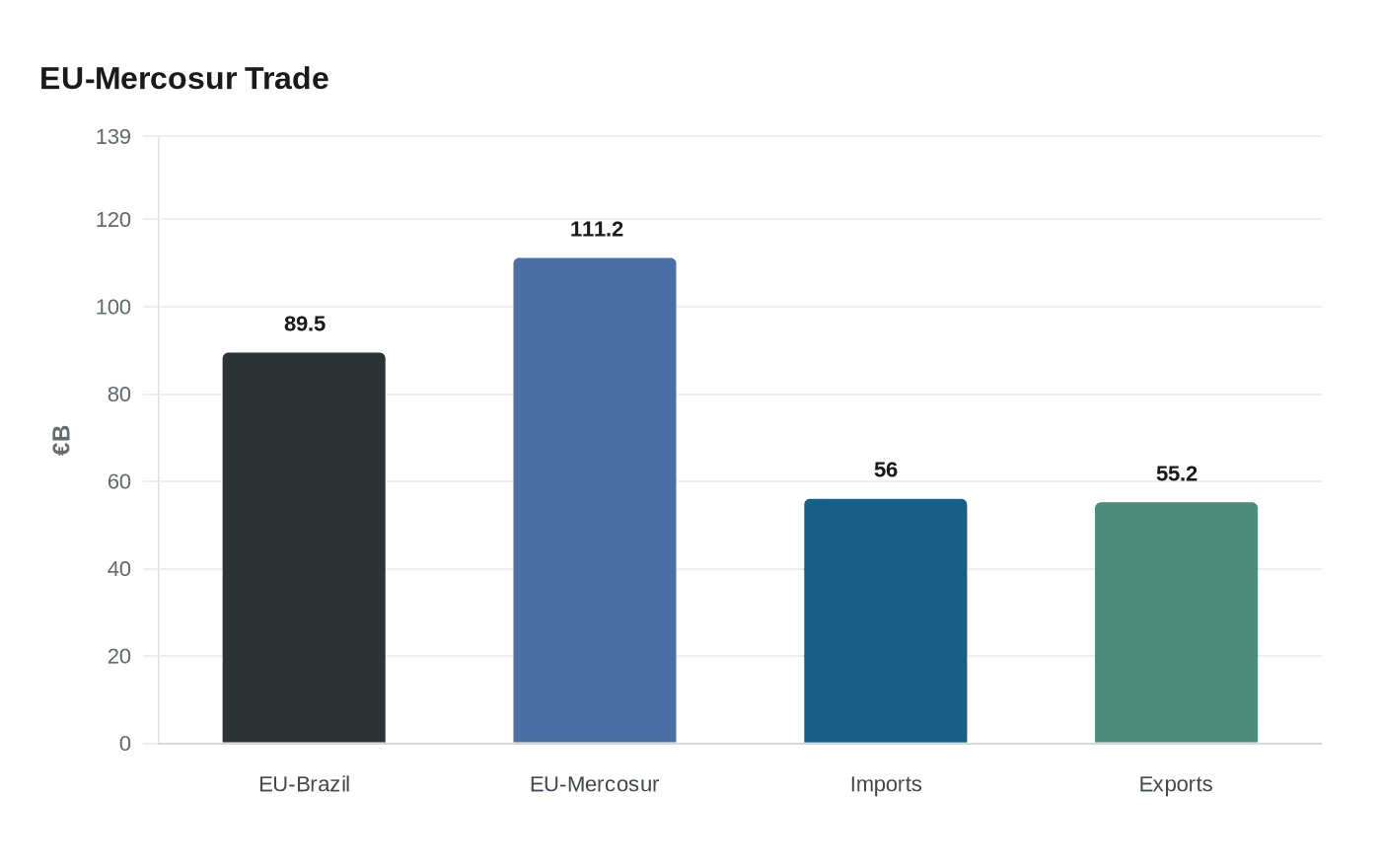
Trade already runs deep between the blocs. The European Union says Brazil was its tenth-biggest trading partner in 2024, accounting for 1.8% of total EU trade, while two-way trade between the EU and Brazil reached €89.5 billion. Eurostat put total EU-Mercosur goods trade last year at €111.2 billion, with €56.0 billion in imports and €55.2 billion in exports.
The pact also carries a geopolitical signal beyond commerce. As Washington talks tougher on trade, the EU and Mercosur are trying to lock in a bloc-spanning framework that still lowers barriers and sets predictable rules. For U.S. exporters, that matters because trade architecture shapes who gets easier access, who writes the standards and who gains influence when the global economy turns more transactional.
This article was produced by Prism’s automated news system from verified source data, official records, and press releases, then run through automated quality and moderation checks before publishing. The system is built and supervised by the people who set the standards it runs under. Read our full AI policy.
Did this article answer your question?

